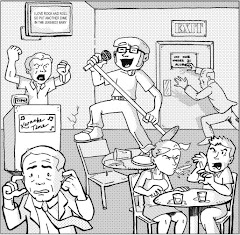
Star Trek: The Next Generation #39, October 1992, DC Comics
writer: Michael Jan Friedman
artists: Peter Krause, Pablo Marcos, Tom McCraw
letterer: Bob Pinaha
co-editors: Kim Yale & Alan Gold
Space. The final frontier.
I became a "Trekkie" as a 'tween, that awkward stage of life between childhood and adolescence. Star Trek makes sense to 'tweens. The general themes of exploration and cross-species communication, not to mention the melodramatic dialogue delivered through cookie cut characterizations, appeals to the junior high set. Believe me. Like many other geeks-in-training, I envied Data and his inability to feel. The clustered mind of an eleven-year-old is not a pretty place, and at the time I would have much preferred something easier to live with, like a positronic net. Call me old-fashioned.
I followed The Next Generation from its fourth season, catching reruns of past episodes at least five times a week, until I was completely caught up. You can understand how Trek, in its abbreviated form, fosters a comics mentality; the series clung tenaciously to its continuity, and the characters grew in small steps, with nothing to show for the space between episodes. Comics are the same way; although characters seem to age, we only catch 22-page glimpses into their lives, presumably a day's worth of events in the real-time span of an entire month. Does a year in the Marvel Universe consist of just twelve or so days? Writers depend on the readers' ability to suspend their belief in time as much as we believe a man can't fly. Like the heroes themselves, we roll with the punches. That's where this issue comes in.
With a television series, a comic book like this can fill in the gaps. These adventures take place between the episodes, and although we'd never see the ramification from any given issue played on the small screen -- that is, continuity never existed between the TV show and the comic -- the issue of time becomes a more linear thing to understand. What happens on the Enterprise when it's not on TV? Read the comics. More television shows would benefit from such embellishments, if only to ground their characters, but that's for another time.
In ST:TNG #39, the Enterprise finds an abandoned moon-sized (and shaped) ship adrift in space. Data, La Forge, and Worf go on an away team to check it out, but before they can return, enemy alien ships rush the Enterprise, and . . . well, the tale is "to be continued." Plot-wise, that's it. Pretty simple. Writer Michael Jan Friedman eats up a lot of the issue with characterization and subplot, including the Enterprise billiards tournament starring Chief O'Brien and an interrupted conversation between Data and Ensign Roe (sp?). The secondary characters really shine here, as the Enterprise's "big seven" (heh) spend more time with the stellar crisis at hand. As a fan, I liked the seemingly boring interplay, but a new reader would wonder, where's the Kirk-esque alien fist fights? The shallow love affairs with green chicks? As fan in this issue's letter column point out, the next generation was a much more laid back bunch. The comparisons are to be expected, but not well founded.
The art. Every panel is a carnival caricature of the actors that portray these characters. They aren't without expression; in fact, the artists often over emphasis bodily gestures to distract from the picturesque facial renderings. In one scene, Dr. Crusher is answering Commander Riker's summons to the bridge, but her body looks like she's delivering a Shakespearean silioquy! Another roll with the punches moment, I guess.
Well, I'm amused to find that a comic book effectively about the future conjures thoughts of the effects of time in comicdom altogether. Just goes to show that no cosmic stone was left unturned by the U.S.S. Enterprise. As for my emotional state, it's under control. I relate less with Data than I do with Worf, now, the Klingon that embraces his human side to remain with his Starfleet friends. Then again, if I used that analogy anywhere else, I'd feel more alien, I'm sure. Best keep those comments to these proverbial captains' logs.
Blogger and LiveJournal owe Star Trek a lot of thanks for that one!
Thursday, September 07, 2006


Wednesday, September 06, 2006
Fell #6
Fell #6, August 2006, Image Comics
writer: Warren Ellis
artist: Ben Templesmith
letterer: Chris Eliopoulos
For those of you following my other blogs, you know that I work for a non-profit after school program, which is a complicated way of saying that I work with kids. This morning, I had a meeting at our local school district office to discuss the implication of Proposition 49, the after school funding initiative that "Ahnold" rode to the California governor's seat a few years back. With an hour or so to spare, I thought I'd grab a coffee and read today's installment, Fell #6.
I've been collecting Fell since its inaugural issue, not because of its "controversial" format, but because I enjoy Warren Ellis's work, and I sought a monthly, detective-driven departure from capes and tights. Ellis delivered, with a Sherlock Holmes meets Law & Order concept that's right up my alley. The stories have been solid, too, with a "ripped from the headlines" sensibility that Ellis exploits in his supplemental essays. Despite their real-life inspiration, the macabre mysteries haven't cut me too deeply. Until today.
Detective Fell and his galpal Mayko stumble into a domestic custody dispute. Although the mother, a recovering crack addict, is initially perceived as "the bad guy," Fell exposes the father as the real source of their daughter's abuse. See, he isn't giving his diabetic daughter the insulin she needs. Instead, he's injecting her . . . with his own feces. To make her "more mine," as he put it. And this is inspired by a true story.
I work with kids, and I've met some weird parents, but as you can imagine, I've never encountered an incident like this. It's beyond words. Yet, Ellis finds a way to adapt the situation into an approachable comic, one that turns the stomach but doesn't completely break the heart. I mean, Fell saves the girl, if she can be saved. I guess that's the point, or the moral, of a strange tale like this. For every poor, demented parent, for every vile person that harms a child, others are out there willing to help. Kids can only fall so far.
So then I went to my meeting about Prop 49. You can imagine what the rest of my day was like.
Tuesday, September 05, 2006
All-Star Superman #4
All-Star Superman #4, July 2006, DC Comics
writer: Grant Morrison
penciller: Frank Quitely
inker/colorist: Jamie Grant
letterer: Phil Balsman
editorial assistance: Brandon Montclare
editor: Bob Schreck
Recent Grant Morrison stuff, part two. So sue me.
In my opinion, this issue of All-Star Superman epitomizes what the All-Star concept, not to mention the Marvel Ultimate concept that inspired it, is all about. With his usual brand of fantasy science, Morrison introduced black Kryptonite, which not only turns Superman evil like the red K from season three of Smallville, but also dumbs him down Bizarro-style, turning him into the exact opposite of his at-full-strength self. So who can stop a stupid, rampaging Superman, you ask? How about Jimmy Olsen pumped full of Doomsday juice? Right. Duh.
That's what I'm talking about. Morrison takes the best traits from Superman mythos, including the relatively recent addition of Doomsday, and kicks it up a notch. If you thought Jimmy Olsen was queer before, picture him in a literal coat of many colors, prancing excitedly around a lunar laboratory with a gee-whiz hairdo that would make Alfalfa wince. Artist Frank Quitely redefines "frumpy" with his depiction of Clark Kent. And, finally, Doomsday actually makes sense as an experimental super-soldier serum. Package these elements in a comic book that isn't ashamed to shine, and I mean literally, with bright primary colors and four to five panel pages that give its characters plenty of detailed background in which to play.
The Ultimate titles and All-Star Batman & Robin pressed restart on decades of mythology to make these timeless heroes "more approachable" for a new audience. Morrison hasn't changed anything too critical; he's simply positioned the proverbial camera at a different angle, and he's polished the lens a bit. Yeah, I like it. It's a Superman story I look forward to on a bimonthly basis, which is unfortunately for than many can say for his weekly adventures.
In many cases, I sympathize with this Jimmy Olsen. In the end, when he's saved Superman from himself, he shouts desperately, "Don't let anybody see him like this!" Looking at the way most writers tackle the Man of Steel, I've wanted to shout that, too. Now, Morrison knows what's worth writing. His take is worth a look. It's just a shame DC would have to put "star" in the title to remind us that Superman is.
Monday, September 04, 2006
Batman #655
Batman #655, September 2006, DC Comics
writer: Grant Morrison
artist: Andy Kubert
colorist: Dave Stewart
letterer: Nick J. Napolitano
associate editor: Michael Siglain
editor: Peter Tomasi
For the past ten years, the Batman titles have suffered from MTSAS: Multi-Title Story Arc Syndrome. From Knightfall to Zero Hour, from No Man’s Land to Bruce Wayne: Fugitive, to the latest Infinite Crisis, every few years or so the Dark Knight and his vigilant associates are distracted from their humble mission in Gotham to tend to personal or cosmic challenges. In the wake of each of these epics, a band of new creative teams take the reigns of the Bat-family’s tales and, supposedly, dare to steer them in bold new directions. I don’t envy the task, even when the teams are led by such capable writers as Grant Morrison and Paul Dini. Morrison and Dini already have noteworthy reputations with the Caped Crusader, but neither has been solely responsible for his solo, in-continuity adventures before. Needless to say, the next few months should be exciting one for Bat-fans.
Yes, if you can’t tell, I’m incorporating Detective #821, Dini’s first installment in his run, into this review of Batman #655, Morrison’s correspondingly inaugural issue. As far as I can tell, since the issues are so strikingly similar, this doesn’t break the A Comic A Day rules, nor does it eliminate ‘Tec as a future read, since Batman is the focal point of this review. (Heck, I wrote the ACAD rules, anyway. I can break ‘em if I want, so there.) Okay, enough housekeeping. Let’s get to work.
Batman #655 begins with a shocking sequence ripped right out of an Elseworlds tale, with a Joker-poisoned Commissioner Gordon plummeting from the rooftops, while the Clown Prince himself crotches over a bloodied, defeated Batman. While the Joker laughs over his triumph, Batman pulls a gun and shoots his arch nemesis in the face . . . just as the Batman swings overhead. Huh? Don’t worry. The gun-toting Batman is revealed as a manic ex-cop, the Commish and the Joker survive, and the kidnapped disabled kids (!) are saved, then, ironically, the real tale begins. Typical, knee-jerk storytelling from Morrison, whose deceptive sequence reminded me of: (1.) the first issue of Batman after Year One, another rainy rooftop encounter with the Joker that marked Dick Grayson’s post-crisis transition to Nightwing, and (2.) the Batman: The Animated Series episode “Over the Edge,” which was a half-hour red herring induced by the Scarecrow’s fear gas that warped the cornerstones of Batman’s world. Great company to keep, and a solid reference point to suck in a flip-flopping reader like me.
The ensuing story focused less on Batman and more on Bruce Wayne; Dini took a similar route in Detective. I don’t blame them. The mask has been seemingly glued to Bruce’s face lately, what with all of the crises going on. In Dini’s tale, Bruce uses his image as a party-hopping philanthropist to solve a string of high society murders, but in Morrison’s story, Bruce needs a crash course in Playboy 101 before hitting the scene. With a lull in crime, both Bruce and the Batman are idle, an interesting opportunity to explore the character’s relationships with others. Morrison takes the chance and handles it expertly. As a long-standing Bat-fan, some of my favorite issues were the stories that featured the Bat-family as a whole, with Batman, Robin, Alfred, Bathound, and Harold bumming around the Batcave, while Nightwing and Oracle checked in from the field. The ranks are significantly reduced of late, but Morrison conjured those old days. I’m grateful.
Of course, the most controversial aspect of Morrison’s run is his use of the old Son of the Demon story, which featured the underground birth of Batman and Talia’s son, who has only been seen again in the Elseworlds Kingdom Come mini-series. I think the existence of this child was presumably wiped out post-Crisis (sigh, the first Crisis), but I always liked that story, because Batman was exposed as a softy for family. I hope Morrison isn’t just using the boy, now around five or six years old I guess, as a sales gimmick, but that we actually see Bruce’s paternal side again. With Dick and Tim both in the family now, I’m curious to see how a legitimate heir to the Wayne fortune would shake things up.
Do I have to go on about Andy Kubert’s artwork, or J.H. Williams’, for that matter? Awesome. ‘Nuff said.
Unfortunately, as much as we can enjoy these stories, as this point in my reading career, I take them with a grain of salt. Hush promised to explore the torrid Batman/Catwoman romance, to no real avail. How can Morrison and DC in general expect us to accept any alteration to Batman’s canon as permanent? By the end of Morrison’s run, the kid could be living in Wayne Manor, his name on the will, and if the next writer wants to turn him into a Two-Face, Jr., so be it. Further, as much as I’ll enjoy Morrison’s and Dini’s respective runs, I don’t expect them to be around for more than a year. You want to talk about syndromes; I have abandonment syndrome. It’s only a matter of time before another crisis rears its ugly head. So, if you think the hypertime continuum is flimsy, compare that to my faithfulness to the Bat-books. It’s as consistent as they are.
Sunday, September 03, 2006
Savage Dragon #0
Savage Dragon #0, July 2006, Image Comics
writer/artist: Erik Larsen
letterer: Chris Eliopoulos
colorists: Reuben Rude & Abel Mouton
This weekend I sought to purchase some of the latest issues of series I’ve neglected since the A Comic A Day challenge began. I’ve been so consumed with finding eclectic titles to round out this experiment’s self-intended variety, I’ve frequented some bastions of comic book obscurity, from hobby shops to antique stores to the nucleus of all things pop culturally skewed, the San Diego Comic Con. So, you can imagine my excitement when we visited a standard run of the mill comic book shop yesterday . . . alas, to no avail. I won’t reiterate my disappointment detailed in yesterday’s post, only to comment that the store we visited today was the opposite side of the same coin. In a small, obscure location, this shop in Tustin, California was cramped but well organized, with an entire wall dedicated to new releases, and an extensive back issue collection that was alphabetized and accessible. The staff was helpful when I couldn’t find the recent issues I was looking for, and the new stuff was apparently and surprisingly discounted. I will definitely visit them again.
So, for the next day or two, I will review comics that were actually published this millennium. Believe me, I’m more thrilled than you are. Let’s start with one of the most anticipated issues of my fanboy career, Savage Dragon #0, the revelation of Dragon’s mysterious origin.
Speaking of origins, the beginning of my comic book collecting career began just over fifteen years ago. My dad was working for a moving company in Arizona and he saved a box of comics his latest customer was ready to throw away. When I woke up that morning, the box was at the foot of my bed; I had been a fan of comics and superheroes before, but I hardly acknowledged the consistency and continuity of their monthly adventures. With those forty or so issues, my life dramatically changed. I memorized each issue’s number, month, and year and made a conscious decision to pursue some of those series to their entirety, if within my power. Of course, I shortly realized the fortune I would need to accomplish that goal, so I settled with collecting complete runs of writers or artists. The first issue I devoured with this intent in mind was Amazing Spider-man #347, penciled by Erik Larsen. My young mind was instantly impressed by Larsen’s bubbly style, and since his run ended just a few issues later, I easily snatched up his complete Spider-man library.
Naturally, my obsession didn’t end there. Like many other collectors, I followed Larsen and his peers to Image, where I frantically collected his opus Savage Dragon until my taste for it simply fizzled out. Larsen had a decidedly easygoing storytelling style, with marathons of slugfests and entangled subplots that simply became too repetitive for my broadening horizons. I revisited the series often for nostalgia’s sake and eventually returned on a semi-devoted basis. Larsen is a love-him-or-leave-him artist, and I know many have left him over the years, but I can’t help it. I love the lug. He’s my personal canon for comic collecting. Throughout our torrid time together, one question has plagued his faithful fanboys like me: Where does the Dragon come from? We know he comes from Larsen’s creatively abundant childhood, but in the context of his ongoing adventures, where does he come from?
The origin has become a cornerstone for the superhero genre, a necessary evil that readers need as a reference point for why their champions do the things they do. The core characters of comics’ two largest superhero-driven companies have very definitive origins, from the explosion of Krypton to Peter Parker’s fateful spider bite. At this point in pop culture, if you know who Batman is, you know his parents were murdered before his young eyes, unlike, say, thirty years ago, when this violent sequence (especially reinterpreted through Frank Miller’s harsh lens) fundamentally clashed with the all-audiences Batman of the ‘60s, the incarnation many non-fans still accept as the norm. Image’s flagship heroes somewhat differ from this standard.
Frankly, Image’s characters haven’t been as timeless. For many of the original Image clan, their successful launch of that fledgling company became just another impressive mark on their resume, propelling their career to stellar heights . . . or, in a few cases, eventual nonexistence in the medium. Larsen clung to the effort with a tenacity uncommon in the industry, eventually earning the title of publisher, and he was just as stubborn about the mystery of Dragon’s origin. Who cares if it’s what’s expected of a superhero comic? Image was founded to produce the unexpected. Only on the company’s tenth anniversary, when the original creators came together to celebrate with a commemorative compilation hardcover, did Larsen loosen his grip. Unfortunately, the others’ contributions were expectedly late. Larsen’s piece may have been on time, but its content was unlike anything his fans anticipated, and for those that missed the special book (or for those that could care less about anything but the Dragon’s yarn, like me), the origin tale was offered this month in single-issue form for the first time. If I wasn’t determined to catch up on my favorite comics this weekend, I might’ve missed it again.
Throughout the years I’ve collected the Dragon, he was at various times a cop, a government agent, a bounty hunter, and an inter-dimensional renegade. Despite the twists Larsen took, Dragon was always an admirable hero, just trying to do the right thing. I never would have suspected that he was originally a ruthless alien despot looking for an inhabitable planet for his people. In a mere twenty pages, we witness the Dragon we know and love rape and murder his attendant’s helpless daughter, betray his people and their long-standing legacy, nearly devour an earthen test subject, and yearn for the extermination of the entire human race. Thankfully, his first officers blow his brains out, explaining Dragon’s amnesia, then retie his tubes so he can’t reproduce, explaining his (temporary) sterility. I’m baffled that a character so evil could become such a force for good, and I wonder if Larsen really expected his most faithful readers to buy it. He took a great leap of faith himself by revealing this story . . . faith, and maturity. I underestimated him.
Artistically, Larsen has his toes hanging over the edge of sloppy, the result of his growing responsibilities with the company. Don’t misunderstand; I like Larsen’s art, but I fondly remember those Amazing Spider-man days, and his early Savage Dragon work. As the years waxed, his inking became more diminutive, with thinner, seemingly more rushed lines that result in a Miller-esque imitation. While Larsen’s daring storytelling has grown more my liking, he has decidedly stepped away from the visual style that I was drawn to in the first place. Just goes to show that you can’t really live in the past.
Ironically, the origin story is the very definition of living in the past. True fanboys are a sappy and nostalgic lot, often demanding that their favorite characters remain true to their roots. What would Spidey be without Uncle Ben’s lesson of power and responsibility? How wonderful would Wonder Woman be without her mission of peace in man’s world? How noble is the Dragon’s heroism now that we know about his wicked past? (And does the A Comic A Day challenge seem more tangible now that you know how I began my collecting career? No? Okay, anyway.) Strip these stories away, despite the sixty years between some of them and now, and the most beloved superheroes in our culture become nothing more than spandex-clad mascots for lunchbox sales. The origin is just that important.
Saturday, September 02, 2006
Outcasts #1
Outcasts #1, October 1987, DC Comics
writers: John Wagner & Alan Grant
artists: Cam Kennedy & Steve Montano
colorist: Tom Ziuko
letterer: Augustin Mas
editors: Mike Carlin & Denny O'Neil
I must say, after reading so many comics featuring three, four, or five short stories each lately, I'm grateful for an issue with one linear plot today. Outcasts wasn't my first issue of choice, however. My girlfriend and I went to a comic book shop called the Batcave in Whittier, California this afternoon, where I hoped to pick up some of the latest issues of series I've all but abandoned since this challenge began. I still haven't read what Morrison and Dini are doing for the Batman books, who made the cut in the latest Justice League relaunch, or how the Savage Dragon managed to shake off his coma to fight the interdimensional conqueror Mr. Glum. Unfortunately, the Batcave was simply a mess, with a sparse selection of new releases, and a back issue e section jumbled by stacks of unfiled books and dusty, unpriced toys. On top of it all, when I found a few books I actually wanted to buy, their ATM/credit card machine was down. The poor girl asked if we'd wait ten minutes, but this was after killing time due to the "Out to Lunch, Back in 15 Minutes" sign on the door when we first arrived. Needless to say, that was one Batcave in desperate need for an Alfred. When will comics shop owners learn how to run a retail business? Comics shops are like the outcasts of the successful storefront market.
Fortunately, we killed those 15 minutes with a visit to the hobby shop we first hit when the A Comic A Day challenge began, where I picked up another eclectic batch of books for less than $1.50 each. (No, I haven't completely extinguished by Comic Con swag, but I'm saving a few choice titles for special occasions later this year.) I was drawn to Outsiders because of Alan Grant, one of my favorite Batman/Detective writers, and who also shares credit for Judge Dredd's and Lobo's rise to Reagan era popularity. In my opinion, his work packs an emotional punch often unexpected from a superhero comic. The Outsiders are a reclusive bunch, and although I cannot really sympathize with them, by the end of the issue, I found myself more invested in their future adventures than I would've imagined from a late '80s futuristic romp.
The year: 2049. America (I assume) is socially and economically divided into two distinct factions: the upper class that lives in Enclaves, and the desolate that live in the Grid. The mayor, Boss Angel, has enacted many efforts to eradicate grid-dwellers once and for all, including euthanasia clinics and his latest effort, the exile of all mutants. The brunt of the issue stars one particular mutant, a woman called Kaine, and her attempt to recruit a band of outcasts (hence the name) to rebel against the city. She gathers Shock, whose powers are self-explanatory, B.D. Rickenbracker, a Cyborg knockoff sans the smarts, and Yancy Queeg, who has been cursed with everlasting life. Interestingly, she coerces Queeg with the promise of death, as her touch ages her victims toward decomposition in seconds. I presume that by series' end, he will embrace his existence and continue to aid the oppressed. A hero with a death wish doesn't really conjure much inspiration in others, you know?
Artistically, this issue was standard, on par with other books of its kind from this era. Very Gibbons-ish, by way of The Watchmen. I do admire the artists for avoiding some of the trappings of late '80s comics; fresh from Dark Knight Returns, Grant and Wagner pepper their story with news narrative, that pop commentary that supplies a cultural context to the plot and a shallow perspective for satire's sake. Kennedy and Montero dodged the TV screen shaped panels shtick and simply depicted reporters in the thick of the action, or on a television somewhere in an established setting. I don't know why this element struck me as a visual relief, but the phenomenon speaks to the trends of the time. By the Reagan years, broadcast journalism became less about reporting the news than it was about making some of its own. (I'm looking at you, Geraldo.) Comics were all over that, and in futuristic tales like DKR and Outcasts, these artists took it to the next level.
Since Wagner and Grant's vision of the future is only forty years away at this point, I feel confident suggesting that this story is far from prophetic. As segregated as much of our society still is, we're nowhere near narrowing everyone into only two significant categories. Thank goodness. By the Outcasts' standards, I would need blue skin or a cybernetic implant just to join a super-team. I feel bad enough when a comic book store, presumably my own domain, rejects me . . .
Friday, September 01, 2006
Ripley’s Believe It or Not! #29
Ripley’s Believe It or Not! #29, October 1971, Western Publishing Company
When I was a kid, I was enamored by the unknown. My Childcraft encyclopedia set had a specific volume for “Mysteries and Fantasies, “with through chapters on aliens and UFOs, Bigfoot and the Loch Ness Monster, the Bermuda Triangle and the Egyptian pyramids. I remember this because the book is right here beside me as I type. Flipping through it, I remember wondering how so much of the world could still be shrouded in mystery, how so many creatures like the Yeti could still be officially undiscovered, considering how much of our fair planet has been explored and exploited. I still wonder about that. The Ripley’s Believe It or Not! franchise has made a living of off it.
Like yesterday’s offering, this issue contains four distinct stories, although the Ripley’s format is a bit more formulaic, if only to retain its corporate identity, I reckon. Each of these stories immediately introduces an unknown creature, from ghostly elephants, to coalmine demons, to sea creatures, to death-inducing banshees. Other commonalities string these stories together, as well: the skeptic, the expert, the fearful townsfolk. The creatures’ methods differ, but supernatural terror is their general trade. I guess they can’t help it. Their survival depends on their ability to shun the public, lest they become a sideshow like the mythic Fiji mermaid. On the other hand, perhaps their intimidating lifestyle is just as natural to them as our inquisitive nature is to us. Unfortunately, as one seems to threaten the other, man and elephant specter could never really coexist. Shame.
Surprisingly, this entire issue was incredibly well drawn. Don’t get me wrong; this comic was by no means groundbreaking or a standout by today’s standards. Still, each story had solid penciling and inking, with expressive characters, detailed backgrounds, interesting perspective, and creative shadowing. The writers were smart enough to realize that their stories hinged on the reader seeing the unbelievable, and the creators pull that off cooperatively by letting the panels breathe. For all of the media Ripley’s has utilized to tell their fantastic stories, comics seem like the most natural and effective means, as it’s a forum that usually already features the impossible. Somewhere, other kids are just as fascinated by the unknown as I was. They may not have the Childcraft library, but they’ll always have Ripley’s Believe It or Not!
Thursday, August 31, 2006
Space Adventures #52
Space Adventures #52, July 1963, Charlton Comics Group
Extraterrestrial bubbles that enslave humans.
A space explorer trapped on a silent planet with a half-cat/half-ape.
Two interstellar fighters that witness the end of their universe, unaware that they live in a forlorn fiancée’s snowglobe.
A stranded astronaut-ambassador that falls in love with a winged alien.
Two tiny cosmic scouts attacked by creatures of the planet they were sent to explore – some odd orb called Earth.
What do these subjects have in common? In 1963, they were worthy concepts for sci-fi comic shorts. Although these stories are cliché by today’s standards, through a culturally retrospective lens, they are quite amusing and entertaining. And, frankly, refreshing after yesterday’s dud. Unlike previous posts, in which I’ve offered a lengthy analysis of the issue’s contents and context in the grand scheme of comicdom, I feel compelled simply to list my impressions of the book as a whole, in the hopes that these brief observations provide the necessary insight. Away we go:
Although a part of me is growing tired of these four-or-more-in-one compilation comics – the “training grounds” for beginning illustrators, as I’ve called them – I appreciate efforts like Space Adventures that keep their conceptual exercises to a minimum. In other words, the reader is in and out of the writer’s idea, without the burden of unnecessary narrative or explanation. Further, these stories began in the midst of the action, sparing us the superfluous build-up many writers used to pad their skeleton plots back in the day. Like good sci-fi, some of these little tales actually left me in wonder. Go figure.
A few favorite lines: The half-cat/half-ape to the human explorer carving a spear, “How fortunately situated your digits are! You can do many things which I find impossible to achieve!” About time those alien animal hybrids realized how far up the cosmic food chain we earthlings are!
The chauvinist ambassador’s thoughts after an argument with his winged beloved, “Idiot, she called me . . . The Atwood women never spoke that way to their men! But she’d learn that in time . . .” Later, when his mission of peace is revealed and he scores the girl, “Peace treaty? With her sharp tongue and dictatorial ways, I had a strong hunch the war was just beginning . . . a war inevitably I’d lose but which promised some pretty stimulating battles!” Whoa! This guy’s talking about landing on the moon before the rocket even launches, for crying out loud!
As different as these stories were, all of them hinged on the strengths and capabilities of humanity – specifically, white, middle-aged earthmen. I wonder if a modern sci-fi jam comic would be any different. The first story in this issue was about bubbles, but the real bubbles of that era were perhaps the one these writers were living in.
Wednesday, August 30, 2006
Captain Paragon #1
Captain Paragon #1, December 1983, Americomics
editor: Bill Black
After an exhausting day of work, I come home hoping read an exciting comic book. Instead, I read Captain Paragon.
Captain Paragon is a patriotic hero that was trapped in suspended animation since the late ‘50s, now revived to fight for justice in the ‘80s. The first of three stories featured Cap hiring a private detective to help him remember his secret identity, but this chapter ends inexplicably when the dick’s investigation begins. Unfortunately, my interest in the issue ended, as well. Oh, I read it all to abide by the A Comic A Day regulations, but I won’t waste your time as much as this comic wasted mine.
If you turned in work that read twenty years out of date, obviously based on a colleague’s more notable, previous work, how would your boss react? Who was holding these derivative creators accountable for their well-shrouded plagiarism?
Tuesday, August 29, 2006
DC Super Stars #9
DC Super Stars #9, November 1976, National Periodical Publications (DC Comics)
various creative teams
I thought this series was titled The Man Behind the Gun, since those words were emblazoned across the cover and included in the introductory text of each of this issue’s stories. The publication print, however, reveals that this series is actually dubbed DC Super Stars, presumably with an emphasis on a different genre with every issue, as the next issue blurb boasted, “Strange Sports Stories on Sale 4th Week of September.” Guns, sports . . . is this a guy’s comic book or what?
This issue featured not one, not two, not even three, but five epic tales about, well, guns, from a variety of eras, and in the hands of a variety of characters. The feature story actually stars Superman, at the mercy of Lex Luthor’s former cellmate who has built a gun that can harness the Man of Steel’s powers and use them to repel him. More interesting than the X-Gun is its effects of old Big Blue, as it hurtles him first into the sun, then through the time barrier itself. Talk about an armor-piercing bullet! With the help of Jimmy Olsen, Superman willingly exposes himself to Kryptonite to taint the gun’s strength, proving that a weapon is only as strong as its target is vulnerable, I suppose.
The other stories aren’t as interesting, and in fact, they literally decrease in quality and entertainment factor until the reader finally stumbles upon a carefully shrouded futuristic history lesson in the creation of the first hand held destructive laser. I understand what these writers, including Batman scribe Bill Finger, were trying to do, to analyze the power of the gun through various contexts of fiction, but the structure obviously became more important to the concept than the intrigue. Although the settings ranged from the Old West to a crippled but still capable submarine, each yarn adapted a formula that became too apparent with five similar back-to-back stories. “Here’s a gun, here’s the guy pulling the trigger, and here’s what makes this yarn so interesting.” Okay. I get it. I’ll never sneak a peek inside that shoebox in Daddy’s closet again.
When I, as a reader, spend more time pondering why the creators took the artistic routes they did, an issue like this becomes less about the men behind the guns and more about the men behind the comic. Although this stratum of the reading experience is still a form of escapism, the comic just doesn’t pull you in enough. It just shoots blanks.
Monday, August 28, 2006
The Gunfighters #12
The Gunfighters #12, 1963, Super Comics
I never played cowboys and Indians as a kid. Westerns always struck me as too outdated to be fun. I mean, with the whole breadth of history and futuristic science fiction available to the young role player's imagination, why pretend to gunfight in a dusty old road with measly six-shooters? Why not drive an imaginary tank over enemy trenches in World War II or navigate a space class battle craft through mutated alien asteroids? To each his own, I guess. So, as you can imagine, I read this issue of Gunfighters with a reluctant heart. My inner child groaned.
Admittedly, if The Gunfighters wasn't so heavy with the excessive narrative and superfluous dialogue characteristic of its era, I might've enjoyed it more. (The authors and artists are uncreditied, as well.) As is, between the four comic tales and the two-page text short story, most of these yarns were too padded for my taste. Oftentimes I felt like the characters were dragging me through their adventure behind their carriage than inviting me to join them in the dynamics of the frontlines. Further, by the fourth comic strip, the issue seemed to forget its own concept, and none of the characters actually wielded guns during their conflict. Gunfighters and Arrow-slingers would've been a more appropriate title.
Interestingly, two of the strips were told from the Indians' perspective, an element I wouldn't have suspected from these old, usually stereotype-ridden tales. In both of these adventures, the Indians were generally characterized as suspicious and intolerant of "the palefaces," save the one post-modern-minded standout among them whose views were proven right by the end of story. Although I'm sure these tales were written by white men themselves, the idea that such stereotype-driven prejudice between cowboys and Indians was a two-way street is a welcome change from the "white guys as bad guys" trend that permeates most contemporary politically correct works of fiction.
Two of the stories, including the pulpy short detective story, deviated from the cowboys and Indians shtick for a welcome breath of fresh air. The short story featured a predictable murder mystery; it must have been written before red herrings were invented, because the primary suspect is proven guilty by the sheer tone of his shady introduction. Still, I liked the story, as it struck me as a Hardy Boys tale featuring Frank or Joe all grown up. The other comic strip starred a shady entrepreneur bent on establishing a crooked casino in a quiet Western town. Fortunately, an old cowpoke and his donkey expose the fraud and drive the swindler away. With this kind of track record, NBC should consider incorporating a donkey into their Las Vegas series.
The gem of the entire issue is this line of introspection from the young Indian chieftain Wolf Claw, who fancies the same woman as his rival Little Turtle. The squaw's name is what's inspiring:
WOLF CLAW: I would have Pretty Beaver for my own, but she has eyes only for Little Turtle! And by our laws that is her right!
Did I just quote a comic or a porno?
Despite anyone's genre of choice, this challenge proves that everyone's tastes find a common ground in comic books. Unlike the cowboys and the Indians, we don’t have to fight over that territory. The comic book is a fertile land we can all share. So keep that peashooter in its holster, ya varmit.
Sunday, August 27, 2006
Astronauts in Trouble: Space 1959 #1
Astronauts in Trouble: Space 1959 #1, January 2000, AiT/Planet Lar
writer/letterer: Larry Young
artist: Charlie Adlard
cover artists: Kieron Dwyer & John Heebink
editor: Mimi Rosenheim
editorial assistance: Adam Beechen
As I type this review, the Emmy awards are unfolding on television behind me, an appropriate soundtrack for a comic book about the dawn of pop culture’s two most important sciences: space travel and broadcast journalism. If these two professions have anything in common, it’s that its most notable pioneers often have their heads in the clouds. Heh.
This issue is the first in a miniseries and successfully establishes a murder mystery meets government conspiracy yarn, with an L.A. Confidential meets Armageddon feel that surprisingly blends in the gumshoe era of the '50s. While covering a police officer’s alleged accidental shooting of a janitor, a premiere field news team is led to an experimental island launching pad, where they are sequestered by the paramilitary group to secure America's successful role in the space race. Indeed, this first issue is that easy to summarize, and just as pleasant to read, with a dialogue occasionally too bulky for the panel, but consistently rife with noir and intrigue. Adlard's art is crisp and fitting for the black and white format, by way of Brian Stelfreeze and with some similarity to Phil Hester, in my opinion. AiT was just as fun to look at as it was to read.
As I've written here before, issues like this offer not only a glimpse into a series, but also a company, as I’ve never read an AiT book before. (I take that back: I believe Brian Wood's Channel Zero is from AiT. Let's just over look that, shall we?) Just as the Valiant sampling from over a month ago revealed a superhero comic book universe desperate to establish its own identity and continuity, AiT seems less concerned with weaving an ongoing tapestry than it does just telling a good story. I know Young has a foundation laid for his Astronauts in Trouble books, but this issue didn't obligate me to dig up any back issues to fully understand it. In fact, I dare say it's a good jump-aboard book for interested newcomers like myself. Rather than ally his company with the superhero genre, Young obviously sought to exploit another niche of adventure fiction, to his benefit, I reckon. His company, its logo, and its library have created a productive impression on the industry.
John Stewart and Stephen Colbert just finished presenting the award for best reality show competition series, or some such category that I'm sure didn't exist five years ago. Entertainment is changing. Larry Young could really be one of its new architects.
Saturday, August 26, 2006
World's Finest #263
World's Finest vol. 40 #263, June/July 1980, DC Comics
various creative teams
As a superhero fan with an inclination toward DC's roster of icons, I've been looking forward to reviewing this issue. Packed with five full-length features, I've been saving this dose for a day with little else on the agenda; obviously, today's the day. I read the headlining story this morning (like 3 a.m. this morning), and the rest of the issue piece by piece throughout the day, to fully digest all of its campy '80s goodness. I've concluded that the more I devour books like this, which multiple stories starring multiple characters, the more I miss the format in contemporary comics. Characters are much more accessible in episodic installments, and B-listers like Adam Strange and Captain Marvel, Jr. share the spotlight with Superman and Batman. Without books like this laying the foundation of the DCU's versatility, epics like Identity Crisis and Infinite Crisis may not have been possible. Well, maybe I can live without these titles, then . . . but that's another topic entirely.
In the first story, written by Denny O'Neil, the "Final Secret of the Super-Sons" is revealed, with enough shoddy science and contrived emotion to fuel an entire season of Deep Space Nine. Not to mix mediums. The tale begins with a computer simulation of Superman's and Batman's sons in combat, which is apparently an exercise in paternal fulfillment on the heroes' part. Nevermind that Batman raised Dick Grayson as a surrogate father, and that Superman has a young Kryptonian cousin in need of guidance in the real world. Anyway, when Batman forgets to end the simulation, the computer overloads, and thanks to Superman's deposit of a radioactive ore in the Fortress of Solitude's disintegration pit, the boys come to life. Their existence is brief, as their radioactive forms create an instability that threatens the very Earth itself. With as much grief as one silent closing panel can offer, the World's Finest tell their faux spawn to hop in the pit from whence they came. Even Superman's fake son is selfless 'til the end: "Aw, I didn't really want to exist anyway!" Nice. The best parts of the story revealed Denny O'Neil's unwavering faithfulness to Batman's investigative intelligence: when the boys were still in the simulation, Batman, Jr. deduced that they were "only two dimensional creatures living in a three dimensional universe!" Close enough. Later, in the real world, when they first confront the Caped Crusader, a speechless Batman excuses himself to sit and analyze the possibilities of the kids' existence. As much as these characters are driven by action, quiet moments of thought and introspection like this are just as compelling. Compelling, yes, but not enough to garner any real sympathy with the Super-Sons. O'Neil took a fifteen-page story concept and wrote an appropriate story without overdoing it. That's a legacy we all can live with.
The other stories varied slightly in plot and artistic quality, but were all essentially fodder for their respective hero's canon and character. In "Hell's Acre Savior," Green Arrow uses his dual positions as a vigilante and an editorial columnist (?) to expose a business man's plans to build a reclamation center as a plot to cover up a decades old mob burial ground. The activism that O-Neil -- there's that name again -- established with Arrow back in his Green Lantern team-up dates was still ripe for the plucking, apparently. In "Zeta-Death," Adam Strange infiltrates an enemy compound to secure technology necessary to win their ironic Peace War. Those Zeta beams are as fickle as an alternator in an old '67 Chevelle; you never know if you're really going to get where you're going, you know? "Return to New Venice" is essentially an Aquaman origin piece, with a prelude or two of adventures to come, apparently including an inter-dimensional quest to save the mayor's brother. Finally, in "The Graybeard Gang," Captain Marvel, Jr. battles a threesome of extremely elderly gunslingers, seemingly still alive by their sheer desire to do evil. They may be performing in next year's Superbowl half-time show.
Oh, and I should note that the Flash makes an appearance in this issue, foiling the Destroyer's attempt to topple a dam with those tasty Hostess Twinkies, the world's finest sweet treat!
Although some of these stories have some tragic undertones, including a touching (and potentially fatal?) shedding of tears from Aquaman, all of these yarns were light, fun, and easy to read by today's standards. Those were the days when a hero could face a crisis and stand tall, maintaining their integrity as an icon and incorporating the moment as an inspiration to continue their mission. Further, as dire as some of these circumstances were, none of these stories dramatically altered the character beyond their recognizable core. Adam Strange faces the possibility of never seeing his family again, of certain death, and emerges with a quip on his lips. Remember those days, when heroes smiled? As I said in the beginning, epics like Whatever Crisis might not have had the desired impact without series like World's Finest establishing the totality of DC's heroic role call. Still, these epics should remember what makes these heroes the finest in the first place.
Friday, August 25, 2006
Invincible #1
Invincible #1, Image Comics (from the Ultimate Collection compilation)
writer: Robert Kirkman
artist: Cory Walker
I spent more quality time at the library today, this time with the Invincible hardcover that dominated a shelf space suitable for three or four lesser graphic novels. I had to see what all the fuss was about, both in its size and the rave reviews I've read of the series. I was impressed as much as I wasn't. Before you call me a son of a hero-turned-alien-dictator, let me explain.
First of all, the last time I read an offering at the library, I scribbed the comic's credits so I can list them in my heading, as I've done from day one. This time, I figured I'd be able to dig 'em up in the Internet, as Invincible has become a premiere book for Image's new all-genre . . . well, image. Sure, Kirkman, Walker, and his artisitic successor Ryan Ottley were often credited for their work; the letterer (probably Kirkman himself, but nevertheless) and the colorist were both no where to be found. Of course, I spent mere minutes scrolling through Google results, clicking on the occassionally promising link, and if I had spent a few more minutes I'm sure I would've been successful, but alas, misson incomplete. In this creator's rights driven age of give-me-credit-or-else, why aren't the colorists and letterers getting their due in print? Sometimes poor quality in either department can break a book; other times, either element can save an issue. They are artists, too, and their work should be critiqued. I'm not going to analyze them this time, but you catch my drift. Letters tell the story, and colors wrap the gift. Without them, comics would be glorified coloring books.
Furthermore, my Internet search tainted my review, because my impression of Invincible hinged on its similaries with Ultimate Spider-man, another acclaimed series I intentionally avoided, albeit for different reasons. I wasn't the only one to realize this. I mean, lanky high schooler gets super-powers, gets in trouble beating up the school bully, and wise-cracks his way through muggings and bank robberies? Classic Spider-man. In the first issue, Invincible does have a relatively happy home life, unlike young Spidey's ongoing strife with girls and the ever ill Aunt May, but his bliss was nearly contagious if not consequential to the formulaic structure of the story.
Therein lies my problem with Invincible #1. I know future issues expose his father as an uber-villain, establishing a melodramatic subplot that has made the series the darling of Oedipal complexes everywhere (sans the mother-lust, I think), but in this issue, the kid's too darn happy. He gets his powers, and he mutters, "Finally," as if his father's abilities inevitably entitled him to super-skills. Further, seemingly hours later, he's on the street knocking bad guys around, in what Kirkman could've only described as "garb from the clearance section at Home Depot." Mom and Dad have no problem with their son's recklessness, with willingness to put himself in harm's way when there's no proof that his abilities are permenent or as limitless as his father's? He's half human, too, isn't he? Without these basic conflicts coming into play, Invincible #1 makes for a boring read. I only enjoyed the tale as a superhero romp because I knew (through on-line press, mostly) of the drastic domestic dispute in his future.
The formula is the same, and I know so because I've written it myself: introduce character in action, flashback to origin sequence, introduce supporting characters in stride, one page at a time, then return to introductory moment to resolve conflict. Established the status quo for a dozen issues or so, then take the story in a "bold new direction." Been there, done that. Apparently, even Invincible isn't impervious to this structure. Still, again like Ultimate Spider-man, the series is a success. Perhaps superhero fans simply needed a fresh start. Maybe a few issues into the series, I'll get it. As is, I'm ready for another revamp.
Is Formulaic a good name for a superhero?
Thursday, August 24, 2006
Flaming Carrot Comics #31
Flaming Carrot Comics #31, October 1994, Dark Horse Comics
writer & artist: Bob Burden
letterer: Shannon T. Stewart
assistants: Gabrielle Greene, John Eaton, Chris Hunter
I don’t know how Bob Burden was inspired to create the Flaming Carrot, but I’m sure if he hadn’t, some ‘90s grunge band would have secured the name in no time. Smashing Pumpkins, Red Hot Chili Peppers . . . Flaming Carrots. Makes sense, doesn’t it?
As much sense as this issue. In the first of two Flaming Carrot stories, Herbie, a robust young man that derives super abilities from lollipops, recruits the Carrot in his time-traveling quest to determine if Shakespeare truly wrote his plays. The Flaming One and Herbie find “Billy Bob Shakespeare” only to learn that the Bard is a simple-minded hick, ably assisted by fellow time traveler Buddy Hackett, who simply seeks a legitimate forum for his less comedic artistic expressions. I loved this story for its sheer frivolity factor. If Burden had a point, it’s fairly far-fetched, best summed up by Hackett, “Ya know, nobody respects anything unless it was written long, long ago . . . if it ain’t old, it ain’t good! And I agree! I feel so creative, so full of inspiration in these old days!” Oh-kay. So where in the plotting process did Burden conclude, “I can analyze the irony of classic versus contemporary literature with a team-up between Buddy Hackett and Shakespeare?” You won’t see this stuff in the X-Men.
Reading Burden’s supplemental essay, I realize that his story was potentially an expression of his frustration with the comics medium, more specifically, his inability to produce new material as quickly as he was writing it. Prior to its success on the silver screen, Burden apparently had three or four Mystery Men comics scripts collecting dust on his desk, with no available artists to help him complete the creative and publication process. His compromise was surprisingly ingenious by early ‘90s standards: Burden sought to publish the scripts as text-intensive comics, with a colorfully illustrated cover and a few interior pieces here and there for the feint of heart, dubbed Version-A Comics. Although scripts have since been included in trade paperbacks and graphic novels as “Easter eggs” for the faithful collector, the creative process for comic books was still a mystery to many of its fans at this time. A few books from Eisner and the classic How to Draw Comics the Marvel Way were the only reliable texts with true behind-the-scenes insight. No Warren Ellis e-newsletters. No Wizard magazine or Scriptwriters on Scriptwriting. Yet. Burden’s Version-A Comics may have been alternative form of comics reading, but ultimately, they were the foundation for the educational angle scribes like McCloud have capitalized on since then.
I wonder what came of the idea. When Mystery Men took off as a franchise, did Burden toss Version-A to the wayside? Would the market embrace a project like that from another established creator? Interestingly, Burden comments that, “I have a small but loyal audience, and a need to keep my work in front of them with a monthly book.” This commitment and humility was shocking to read from a comic book creator, who, from my limited experience, usually act like God’s gift to graphic literature, like a month or two off here or there is worth the reader’s wait when it comes to their work. Further, I never would have thought that a writer would reveal the size of his audience. That’s proverbial locker room squabble I thought comic professionals reserved for after their signings at comic book conventions. More so than his actual comic, Burden’s insight into his process and the industry in general is enough to make me want more. The carrot may be flaming, but here is an artist truly on fire.
I don’t need a time traveling grandfather clock to prove that Burden is the genius behind this literature. If only he had one to see where his work would end up.
Wednesday, August 23, 2006
Strangers in Paradise vol. III #36
Strangers in Paradise vol. III #36, November 2000, Abstract Studios
by Terry Moore
Strangers in Paradise is perhaps the most celebrated contemporary independent series in the comic book industry. More so than any effort distributed by Image, Dark Horse, or any of the other hundreds of small press publishers, SiP has always struck me as the most successful one-man show on the shelves, right alongside Cerebus and Bone as contenders for the title. Even if you don’t read it, you’ve heard of it. That’s me. Further, as much as I’ve heard of it, I have no idea what it’s about. And this issue certainly didn’t help.
Don’t get me wrong. I enjoyed the read. In this issue, Tambi and Katchoo rescue David from presumably dangerous adversaries, one of whom is Tambi’s sister. While Katchoo rushes David to safety, Tambi battles her sister and her cohort to the death. That’s it, near as I can tell. From the letter column (which deserves an essay in its own right – I thought lettercols were extinct until I read some of these popular indie series), I deduced that this issue is the penultimate installment in a longer arc, so I don’t feel terrible for my disorientation. I get Moore’s point. The only two guys in this book are either whimpering kidnappers or helpless kidnap victims. The chicks have the upper hand . . . without even chipping a nail.
The success of SiP undoubtedly stems from its inherent feminism, in its ability to depict strong women in stereotypically masculine roles. Additionally, these women are modestly dressed. I’m sorry, “modestly” isn’t the right word. “Appropriately” is perhaps more accurate. See, these ladies are obviously tough, but also vulnerable, and despite Moore’s feeble attempts at character distinction (if all of the women were bald, they’d look exactly the same), I think we’re being led to believe they’re cute, too. What they aren’t is scantily clad, or spandex shrink wrapped, or even tremendously top heavy in the biological sense. Even the most established female leads in comicdom, like Wonder Woman, Storm, and Witchblade, have to show off a little skin to sell comics. Moore’s women truly are strangers in this regard.
Unfortunately, this issue does not pass the investment test. That is, based on this impression, I wouldn’t invest further in this series. I picked up this issue cold, from a back issue bin at the Comic Con, and this deep into the SiP mythos, the title is obviously one long in thing with its core readership. If it pays Moore’s bills, there’s nothing wrong with that. I just wish a series with so much mass-market appeal could appeal more to the mass market. I’m taking my mother’s advice on this one. No talking to strangers.
Oh, like you weren’t thinking that line.
Tuesday, August 22, 2006
Wyrd the Reluctant Warrior #3
Wyrd the Reluctant Warrior #3, September 1999, Slave Labor Graphics
writer/artist: Jim Starlin
Comicdom has always had its superstars. Stan Lee, Jack Kirby, Frank Miller, Todd McFarlane – pseudo celebrities that have generated exposure for the industry through their talent and dynamic personalities. Students of pop culture know these names even if they don’t actually read comics, and diehard collectors pursue their careers as if the very medium hinged on their works and reputation. As often as I’ve seen his name in print, I would not count Jim Starlin among these ranks.
I’m not trying to be mean. I’ve just never heard a fanboy go nuts over a Jim Starlin comic book. I wonder if his name, almost as bold on this issue’s cover as the title itself, actually boosted sales for Wyrd the Reluctant Collector. If not . . . what’s the point? If Wyrd needs the credibility of his creator to sell his stories, maybe his stories are best left untold.
For your consideration: Wyrd (I presume pronounced “wired”) is the sixty-ninth hero in the Wyrd legacy and, with the help of an imaginary gremlin, is dedicated to saving the world from the inter-dimensional Nexus Combine corporation. Unhindered by his predecessor’s gay lifestyle and his father’s association with the enemy, Wyrd 69 uncovers the Combine’s telemarketing scheme and defeats his demonic pursuers’ leader. It’s actually less harrowing than it sounds. Starlin’s thin allegory of the office cubical lifestyle is as insightful as a Dilbert strip, and his attempts at controversial humor – this parallel dimension’s answer to Superman is the former Wyrd’s lover – are too divisive to be effective. Do I need to be specific?
WYRD: We must thwart this nefarious plot!
D’GINN (the imaginary gremlin): Nefarious plot? By any chance, did you read a lot of comics when you were a kid?
Please. Why must writers with weak concepts insist on including some inane commentary on the inherent “campiness” of comics to boost the supposed cleverness of their story? Just a few pages later, that same scoffing specter identifies himself by explaining, “I’m a mentor-class construct not a demon warrior. I observe and advise.” Which sounds more hokey?
Artistically, Wyrd is a combination of hand-drawn characters, by Starlin himself, on a computer-generated background, which, in a digitally printed black and white comic, makes for some obscured visuals. The “camera” was often pulled back too much to show off this use of multimedia, clipping the action’s already low-flying wings. I was impressed with how unimpressed I was.
Can you tell that this issue left a bad taste in my mouth? Perhaps I was just frustrated by the gratuitous use of the creator’s name on the cover, as if who he is in the industry is enough to sell what he’s doing. Even if I knew who Starlin was (a former Marvel EIC, right?), it doesn’t matter whose name is on it: crap is crap.
Monday, August 21, 2006
Monster Hunters #2
Monster Hunters #2, 1977, Modern Promotions
writers: Nicola Cuti, J. Molloy, T. Sutton
artists: Gumer(?), Steve Ditko, T. Sutton
What do you think of when you hear the word monster? Do you think of Frankenstein or Bigfoot? Do you think of a mass murderer or the bully that beat you up in grade school? Maybe your thoughts aren’t so morbid, and you think of the furry, friendly My Little Monster from the ‘80s. Whatever your reaction to the term may be, it clings to its basic definition: an unknown, most likely intimidating creature. Not the kind of thing someone in his right mind willingly pursues. So, I don’t know who the real stars of the show are in today’s issue: the fiends hunted, or the nutjobs doing the hunting. Both really boggle the mind.
Monster Hunters is another hodgepodge of Bronze Age talent, with three tales featuring three distinct storytelling style and three different artistic interpretations. The one element each story does have in common is its muse-like narrator, Colonel Whiteshroud. Apparently, the rich old codger’s travels around the global supplied him with plenty of tales of the obscure and unknown, and this series is his opportunity to recount them. The colloquial way the Colonel addresses the reader is an interesting break from the medium’s usual form and function. The comic book as an artistic entity has written so many restrictive rules for itself, despite any given issue’s material, they all read essentially the same. Whiteshroud was a welcome change of pace.
The first tale, “The Phantom of the Moors,” was a brief account of a surprisingly clever monster that nearly got the drop on his predators. Jason Travers picked up where his father left off, pursuing the Phantom of the Moors, reminded of his mission by the beastly statue his departed dad erected in their yard. After saving a beautiful woman from the Phantom’s clutches, Jason shows her around his grounds, but not before the monster actually takes the place of his stone look-alike! Fortunately, Travers and his aid Wilkins elude the monster and kill it. That’s it. I liked this story because the twist was truly unexpected, and writer didn’t dawdle with the action. Short and sweet, the way it should be.
The second yarn, “Fish Fry,” wasn’t as courteous. Illustrated by Steve Ditko, of early Amazing Spider-man fame, “Fish Fry” features a mysterious college campus epidemic of death by electricity, not from lightning, but seemingly from the ground up. The kooky professor experimenting with electric eels is the primary suspect, but when he turns up dead, as well, a butt-kissing student/adventurer(?) tracks down the real killer: a mutant with Electro-like abilities. A no-brainer for Ditko to envision, I imagine. The student doesn’t defeat the mutie in combat but manages to flee the fire that consumes him, apparently developing a macabre fear of peculiar smells. Something stinks, all right.
The final story, “The Kukulkaton,” is one of the worst I’ve read during this challenge. The first two featured monsters in this issue, the Phantom and the electric mutant, are tangible creatures with motive, method, and fatal measure. At the end of this tale, starring a greedy bounty hunter, his eager elderly guide, and the geezer’s beautiful airhead of a daughter, the monster is revealed to be a gaggle of human hearts. Yeah. The hearts sacrificed to this monster in the first place, I reckon. By the third page, the real monster was the story itself. It was a bear to finish.
But I did. Another issue down. I’m curious to research how long this series lasted. Its concept is interesting, but I can’t imagine that its potential is limitless. This is issue two, and the last story was so far-fetched that I had a hard time believing that the writer even conceived it. Monsters may come in many different incarnations, but another thing they have in common is, we rarely know where they come from. It’s one thing to hunt them. How nuts is the guy that conceives them?
Sunday, August 20, 2006
Batman: Legends of the Dark Knight #50
Batman: Legends of the Dark Knight #50, Early September 2003, DC Comics
writer: Dennis O’Neil
artist: Bret Blevins
colorist: Digital Chameleon
letterer: Willie Schubert
editors: Goodwin & Kaplan
After a weekend of unfortunately brief reviews, I’m hoping to make up for lost time with this anniversary issue of the Legends of the Dark Knight. This series has been touch and go with many Batman fans because of its intended steady rotation of creative talent. Some story arcs have been extremely well written, but visually lacking the impact to elevate the tale to canon status. Sometimes the title has been an obvious showcase for artistic talent with a scab story for momentum’s sake. In this issue’s case, the story and the art are enough to make an impression, if only for forty pages’ time.
I’m a Bret Blevins fan. When I see his name in any given comic’s credits, I’m confident that I will enjoy it on an artistic level, regardless of its plot. I actually liked Marvel’s Sleepwalker, particularly because of Bret’s ability to balance Rick Sheridan’s awkward adolescence with Sleepwalker’s surreal dreamscape. (Proof: I didn’t even have to dig up any back issues to remember Rick’s name.) This experience paid off in his run on Shadow of the Bat, as Bret’s depiction of Batman combined a strategic use of shadow and perspective to help the hero appear mysterious and sometimes even less human. Until I read this issue’s letter column, I didn’t realize that this work was first, prior to Blevins Shadow run, because he handles the Dark Knight incredibly confidently right out of the gate. As a fan, if I picked up this issue at the time of its release, I would’ve wanted more. Mission accomplished.
Denny O’Neil, on the other hand, needs no introduction. His experience with Batman and the hero’s rich history entitles him to handle a story of this caliber: the Joker’s first crime spree. Now, The Killing Joke is by far the definitive Joker tale, featuring his tragic origin and arguably his greatest feat, the abduction of Commissioner Gordon and the molestation of his daughter. As I’ve asserted on some message boards recently, I believe that, since Alan Moore masterfully crafted the hallmark narrative, flashbacks or developments of that story neuter its effects and create an unnecessary logic to the Joker’s supposedly chaotic persona. Fortunately, in this proverbial sequel, O’Neil uses TKJ as a catalyst, not an outline. This Joker isn’t as crazy as his latest incarnations, not unsure, mind you, but simply inexperienced. In fact, the first physical confrontation between Batman and Joker is so ironically anticlimactic, outside of the context of his legend the Clown Prince could come off as a petty pasty one-hit wonder. But we know the truth, don’t we?
I’m listening to the news behind me as I type, with headline reports including the return of that accused child killer to Los Angeles and the pedestrian disguises of international terrorists. The dramatic element to these stories reminds me of O’Neil’s responsibility in this issue: to establish the evil essence and career of a true criminal. The Joker has such a reputation as Batman’s arch nemesis, I wonder what O’Neil endured to prepare for this retelling of the classic Finger/Kane yarn. Of course, only a comic book villain would use a virtually untraceable acid to make his victims literally die of laughter. Still, the implication is the exploitation of happiness to achieve fatal and dreadful ends, happiness derivative from, say, America’s liberty or a child star’s innocence. The name of this story, “Images,” says it all: evil has many faces, but just one mentality. The Joker is a good ambassador. He’s a tough nut to crack.
The Joker’s origin is another potential point of contention among hardcore Batman fans. In the 1989 Tim Burton film, the Joker was a mobster before his uncanny transformation; on the other hand, his awkward inability to pull off a crime in The Killing Joke makes an attempt to establish a sympathetic element to the character. Who knows how his upcoming role in the next Batman film will reshape the villain? No matter how the tale is told, this series best sums it up: it’s a legend. Legends can’t help but find themselves on the lips of many storytellers.
Saturday, August 19, 2006
Kamandi: The Last Boy on Earth #29
Kamandi: The Last Boy on Earth #29, May 1975, National Periodical Publications
writer and penciller: Jack Kirby
inker and letterer: D. Bruce Berry
Let's talk the end of the world. A cheerful topic, no?
Still on the work retreat, but I had a half hour to read and review Kamandi, yet another Kirby classic. Like The Mighty Samson, Kamandi is stranded in a post-apocalyptic world of ruin, apparently run by tribes of intelligent apes. In this issue, Kamandi and his friend Ben Boxer encounter an ape clan dedicated to the memory of "the Mighty One," a hero from yesteryear that demonstrated great feats of strength and selflessness . . . oh, and that wore an "S" on his chest. The desperate believers dub Boxer their super man's reincarnated successor, and Kamandi encourages his friend to endure their tests to preserve the Mighty One's memory. Forced to dodge bullets and move a mighty boulder, dubbed the "daily planet," Boxer almost succeeds, until the threatened cult's leader reveals a certain super suit under their encampment and tries to claim the title once and for all. After a struggle, Kamandi vanquishes the power-hungry ape, and as victors, he and Boxer demand that the suit remain preserved until its true owner emerges from exile. In the end, the legend lives.
Like the allusions in Superman Returns, Kirby uses this narrative to boast about Superman's legacy in comics and pop culture. As a story, it's an enthralling homage and allegory, and perhaps the first of its kind. I enjoyed it, and with Back to the Future II playing on TBS in the background, I truly felt the effects of a hopeless future. The lesson: our need for heroes, especially in our darkest hour, often makes us heroes, as well -- perhaps even the heroes we longed for in the first place. It's no wonder I'm on a leadership retreat.
That's the joy and anomalous nature of this A Comic A Day challenge. Much of the material I read will be perceived through the context of my day, and how many comics can offer an insight into the big scheme of real life. Okay. Back to work.
Subscribe to:
Posts (Atom)