Resurrection #0, Oni Press
Marc Guggenheim & Jim Massey (w), Justin Greenwood & Robbi Rodriguez (a), Dan Jackson & Dave McCaig (c), Douglas E. Sherwood (l)
SIGNIFICANCE: According to Editor-in-Chief James Lucas Jones' inside back cover essay, Resurrection #0 bridges the gap between series' first seven-issue volume and a new incarnation premiering next month. So, this issue is a resurrection in a very literal sense of the term, bringing back a title old readers might recognize yet establishing a fresh start for new readers like me. A wise use of Free Comic Book Day on Oni's part -- and including the reprinted Tek Jansen back-up story, capitalizing on the mainstream popularity of Stephen Colbert, isn't a bad idea, either.
STORY: In Resurrection #0, Dwight Miller is a self-professed alien abductee that survives a global, ten year long extraterrestrial invasion to document the entire experience from his unique perspective and seek out his estranged wife in a barren New York. In the Big Apple, Dwight meets Wendy, a self-taught computer tech that has maintained monthly communications with the only other person on-line, Carlo in Italy. Unfortunately, Carlo has been befriended by the mysterious Paul Cole, who somehow played a part in Dwight's perspective of events, and when Cole captures Dwight in New York, the mystery man discovers that Dwight's journal is missing. His truth being out there is undoubtedly the catalyst that launches the new Resurrection series, and surprisingly it elicits intrigue about an extraterrestrial invasion without actually showing any aliens.
Fortunately, the Tek Jansen back-up story makes up for that in spades, as the Alpha Squad 7 agent is sent undercover to convert a tyrannical alien faction to the ways of equal party treatment, with hilariously violent results.
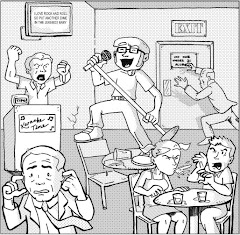
ART: Artist Justin Greenwood at his best elicits shades of Eduardo Rizzo, and at his worst a rushed Rick Leonardi -- neither of which is a bad thing, but the comparisons never congealed into a truly memorable, unique visual experience. Robbi Rodriguez, however, captures the cocky caricature of Stephen Colbert in an exaggerated interstellar environment with ease, transcending the story's satirical roots to tell a real sci-fi adventure with its own merit.
PACKAGE: As I eluded, the Resurrection/Tek Jansen combination is an excellent way to attract old and new readers alike, with ample ads for other successful Oni projects like Maintenance and Scott Pilgrim vs. the World and that behind-the-curtains editorial by Jones. Considering that these comics were free, Jones' appreciation for the editorial and marketing talent that make the production of comics possible beyond the writing and artistic process of the printed page is an interesting insight for anyone interested in the medium as an industry. His essay could be akin to Dwight's lost chronicle, documenting the way things really happen -- and it's up to us to look beyond the story we're given, to give the concept of comics a second look.
DO I WANT MORE? If Resurrection revives the apocalyptic intrigue it promises to deliver, I'm in! An alien invasion is fun escapism compared to the swine flu scare of real life.
Showing posts with label Douglas E. Sherwood. Show all posts
Showing posts with label Douglas E. Sherwood. Show all posts
Sunday, May 10, 2009


Tuesday, February 19, 2008
Jumper: Jumpscars #1
Jumper: Jumpscars #1, January 2008, Oni Press
writers: Nunzio DeFilippis & Christina Weir
artist: Brian Hurtt
colorist: Jared M. Jones
letterer: Douglas E. Sherwood
editor: James Lucas Jones
Blogger's note: Entry for Sunday, February 16, 2008.
“Anywhere is possible.”
This is what the number one movie in America, Jumper, would have us believe. This tagline-turned-mantra has appeared on countless movie posters, Internet ads, and television promotions over the past few months, and, while it hasn’t inspired me to go see the film, it has rung true in one aspect of its shameless self-endorsements: its comic book. I found this free issue of Jumper: Jumpscars at a Gamestop in Buena Park, California, and I confess I prefer this strategic marketing technique over a pop-up of the film’s lead character obscuring two-thirds of my TV screen while I’m trying to watch Prison Break. If you’re going to kick off a science fiction franchise and feel compelled to initiate a back story, what better way than to publish a free comic distributed at video game stores? Talk about a target audience.
Unfortunately, Jumper: Jumpscars #1 didn’t blow me away. This prologue doesn’t feature a jumper but a paladin, a jumper-hunter with the solemn task of killing these superhumans before they realize their full potential. Did I mention that her target, a fifteen-year-old, is apparently older than most jumpers? So, her job is to kill confused children, a detail carelessly overlooked as we explore her past via a flashback in which she goes undercover and sympathizes with a young jumper/petty thief. When a store clerk gets caught in the jumper’s wake, materializes in the middle of the street and gets his by a car, I presume the cold look in the kid’s eyes is enough to elicit our hatred of all jumpers. This issue ends too abruptly for us to feel anything different. The guy gets run over and our paladin and her mentor bound after him, then . . . the end? The back cover ad dubs Jumpscars a graphic novel, so I presume that this issue is just a teaser for the larger product, but this explanation is an inference at best. Therefore, this freebie didn’t hook me so much as it just poked me. Made an impression, not enough to stick.
(Plus, "jumpscars" isn't really a word. Was "scars" just not enough? How 'bout "Hopbooboos?")
Frankly, when I saw the movie trailer for Jumper, I wasn’t that impressed in the first place. I thought, “Huh. Somebody must have liked the first few minutes of X-Men 2 and decided to make it a whole movie. Nightcrawler as a Laguna Beach reject with a conspiracy at his heels.” Some reviews have elevated Jumper to a greater degree, likening its developing mythology to The Matrix. I wonder if every superhero flick unconnected to a previously established comic book franchise is destined to this designation, so that a “mainstream audience” has a reference it can understand. I can appreciate its mimicry of The Matrix’s utilization of comics and animation to capture an audience, that’s for sure. Alas, when courting an audience as critical as the average fanboy lot, the only jump I perceive here -- is a leap of faith.
Anywhere is possible. Is that their assertion, or their hope?
writers: Nunzio DeFilippis & Christina Weir
artist: Brian Hurtt
colorist: Jared M. Jones
letterer: Douglas E. Sherwood
editor: James Lucas Jones
Blogger's note: Entry for Sunday, February 16, 2008.
“Anywhere is possible.”
This is what the number one movie in America, Jumper, would have us believe. This tagline-turned-mantra has appeared on countless movie posters, Internet ads, and television promotions over the past few months, and, while it hasn’t inspired me to go see the film, it has rung true in one aspect of its shameless self-endorsements: its comic book. I found this free issue of Jumper: Jumpscars at a Gamestop in Buena Park, California, and I confess I prefer this strategic marketing technique over a pop-up of the film’s lead character obscuring two-thirds of my TV screen while I’m trying to watch Prison Break. If you’re going to kick off a science fiction franchise and feel compelled to initiate a back story, what better way than to publish a free comic distributed at video game stores? Talk about a target audience.
Unfortunately, Jumper: Jumpscars #1 didn’t blow me away. This prologue doesn’t feature a jumper but a paladin, a jumper-hunter with the solemn task of killing these superhumans before they realize their full potential. Did I mention that her target, a fifteen-year-old, is apparently older than most jumpers? So, her job is to kill confused children, a detail carelessly overlooked as we explore her past via a flashback in which she goes undercover and sympathizes with a young jumper/petty thief. When a store clerk gets caught in the jumper’s wake, materializes in the middle of the street and gets his by a car, I presume the cold look in the kid’s eyes is enough to elicit our hatred of all jumpers. This issue ends too abruptly for us to feel anything different. The guy gets run over and our paladin and her mentor bound after him, then . . . the end? The back cover ad dubs Jumpscars a graphic novel, so I presume that this issue is just a teaser for the larger product, but this explanation is an inference at best. Therefore, this freebie didn’t hook me so much as it just poked me. Made an impression, not enough to stick.
(Plus, "jumpscars" isn't really a word. Was "scars" just not enough? How 'bout "Hopbooboos?")
Frankly, when I saw the movie trailer for Jumper, I wasn’t that impressed in the first place. I thought, “Huh. Somebody must have liked the first few minutes of X-Men 2 and decided to make it a whole movie. Nightcrawler as a Laguna Beach reject with a conspiracy at his heels.” Some reviews have elevated Jumper to a greater degree, likening its developing mythology to The Matrix. I wonder if every superhero flick unconnected to a previously established comic book franchise is destined to this designation, so that a “mainstream audience” has a reference it can understand. I can appreciate its mimicry of The Matrix’s utilization of comics and animation to capture an audience, that’s for sure. Alas, when courting an audience as critical as the average fanboy lot, the only jump I perceive here -- is a leap of faith.
Anywhere is possible. Is that their assertion, or their hope?
Subscribe to:
Posts (Atom)