Resurrection #0, Oni Press
Marc Guggenheim & Jim Massey (w), Justin Greenwood & Robbi Rodriguez (a), Dan Jackson & Dave McCaig (c), Douglas E. Sherwood (l)
SIGNIFICANCE: According to Editor-in-Chief James Lucas Jones' inside back cover essay, Resurrection #0 bridges the gap between series' first seven-issue volume and a new incarnation premiering next month. So, this issue is a resurrection in a very literal sense of the term, bringing back a title old readers might recognize yet establishing a fresh start for new readers like me. A wise use of Free Comic Book Day on Oni's part -- and including the reprinted Tek Jansen back-up story, capitalizing on the mainstream popularity of Stephen Colbert, isn't a bad idea, either.
STORY: In Resurrection #0, Dwight Miller is a self-professed alien abductee that survives a global, ten year long extraterrestrial invasion to document the entire experience from his unique perspective and seek out his estranged wife in a barren New York. In the Big Apple, Dwight meets Wendy, a self-taught computer tech that has maintained monthly communications with the only other person on-line, Carlo in Italy. Unfortunately, Carlo has been befriended by the mysterious Paul Cole, who somehow played a part in Dwight's perspective of events, and when Cole captures Dwight in New York, the mystery man discovers that Dwight's journal is missing. His truth being out there is undoubtedly the catalyst that launches the new Resurrection series, and surprisingly it elicits intrigue about an extraterrestrial invasion without actually showing any aliens.
Fortunately, the Tek Jansen back-up story makes up for that in spades, as the Alpha Squad 7 agent is sent undercover to convert a tyrannical alien faction to the ways of equal party treatment, with hilariously violent results.
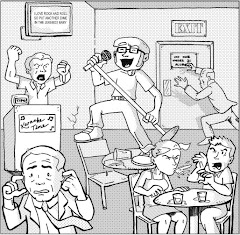
ART: Artist Justin Greenwood at his best elicits shades of Eduardo Rizzo, and at his worst a rushed Rick Leonardi -- neither of which is a bad thing, but the comparisons never congealed into a truly memorable, unique visual experience. Robbi Rodriguez, however, captures the cocky caricature of Stephen Colbert in an exaggerated interstellar environment with ease, transcending the story's satirical roots to tell a real sci-fi adventure with its own merit.
PACKAGE: As I eluded, the Resurrection/Tek Jansen combination is an excellent way to attract old and new readers alike, with ample ads for other successful Oni projects like Maintenance and Scott Pilgrim vs. the World and that behind-the-curtains editorial by Jones. Considering that these comics were free, Jones' appreciation for the editorial and marketing talent that make the production of comics possible beyond the writing and artistic process of the printed page is an interesting insight for anyone interested in the medium as an industry. His essay could be akin to Dwight's lost chronicle, documenting the way things really happen -- and it's up to us to look beyond the story we're given, to give the concept of comics a second look.
DO I WANT MORE? If Resurrection revives the apocalyptic intrigue it promises to deliver, I'm in! An alien invasion is fun escapism compared to the swine flu scare of real life.
Showing posts with label Robbi Rodriguez. Show all posts
Showing posts with label Robbi Rodriguez. Show all posts
Sunday, May 10, 2009


Sunday, October 05, 2008
Embracing Your Vices: The Night Club #3
Thursday night's Vice Presidential debates launched a very viable weekend's worth of news, including a visit from Republican candidate Sarah Palin to Southern California and another round of parody from SNL and Tina Fey, whose career could only benefit from a McCain/Palin victory, considering her spot-on impression of the Alaskan governor and the entertainment media's well-impeded bitterness toward all things conservative. Seriously, what happens to SNL and The Daily Show if Obama wins? Not that Republicans don't frequently provide critics plenty of comedic fodder, but without strong leading men like Bush or Cheney, only the feigned conservatism of The Colbert Show profits from a Democratic victory. Sure, Obama's campaign is change we can believe in, but it's hardly anything worth laughing at.

So, considering these tumultuous political times, I thumbed through the unread, leftover issues from the now defunct A Comic A Day: Year Two, which quaintly fill a small comic book box on the side of my bed, and I found The Night Club #3, the cover of which reflects many bipartisan fears of our country's immediate future. Yes, that's the devil at the Presidential pulpit. Whether the devil was raised in Hawaii or Alaska is entirely up to you, though that both of the pseudo-celebrities of this election were raised in the two states not connected to the nation's mainland is suspect no matter what side of the fence you straddle . . .
I pulled The Night Club #3 from a twenty-five cent back issue bin several months ago and hoped to read it for Election Day, so the relaunch of A Comic A Day possessed me (Get it?) to dust it off on Friday, and while its plot wasn't as engaging or substantial as I'd hoped, it does reflect a few trends common in politically-minded comics: (1.) The Conspiracy Theory, and (2.) The Righteous Rebels. In this case, "righteous" is the appropriate term, as Reverend Walter Bishop and his "rag-tag misfits" combat the devil, dubbed Screwbarb, and his plot to hasten Armageddon apparently through American politics. At the end of this issue, the President is horrifically assassinated (okay, if you must know, a demon flies through his chest -- so much for the good ol' days of grassy knolls), and the Vice President, deep in Screwbarb's pocket, assumes office. You betcha.
Now, to quite a few folks' chagrin, religion and politics really are eternal bedfellows, whether or not the Constitution has ever clearly distinguished church from state; further, I liken religion and politics to the proverbial Siamese twins of human philosophy, with two heads and respective thought processes designed to deal with mankind's inherent need for law and order differently. Hyperbole aside, though, I hope the two are never so intertwined that the devil, if he exists, infiltrates the White House and instigates the apocalypse through gay rights legislation, or something. I don't remember reading about that in the book of Revelation. In fact, depending on one's interpretation of John's apocalyptic allegory, the United States is scarcely mentioned at all, so our persistent belief that we've birthed the Anti-Christ or will play Ground Zero to the end of the world is arguably the most nationalistic trite ever. "A shining city on a hill?" Perhaps . . . but overlooking the lake of fire? Not likely.
What's the point of all this? The Night Club asks us to look at the big picture. The grand scheme of this election season has been episodic at best, packaging the most critical events into makeshift installments not unlike seasons of one's favorite television show. This Vice Presidential chapter might not seem as important come Tuesday's Presidential debate (round two), but The Night Club #3 reminds us that we're just a flying demon away from 1963 all over again. Of course, the night between Election Day and its results will seem like the longest summer between a series' season finale and fall premiere, the anticipation will be that great, but in the meantime citizens' selection processes shouldn't be so compartmentalized. If it were a TV series, I'd encourage everyone to have a Presidential election marathon the night before voting day, to remind themselves of their chosen candidates' record before becoming leader of the free world was on their to-do list, to experience the twists and turns in their characters' development toward becoming the protagonists we see them as now. Then, remember that this story is very real.
Hopefully the part where the devil takes the podium stays the stuff of fiction.
The Night Club #3 was published in April, 2006, by Image Comics, and was written by Mike Baron, illustrated by Robbi Rodriguez, colored by Russ Lowery, lettered by Marshall Dillion, and edited by Marshall Dillion and Chris Crank.

So, considering these tumultuous political times, I thumbed through the unread, leftover issues from the now defunct A Comic A Day: Year Two, which quaintly fill a small comic book box on the side of my bed, and I found The Night Club #3, the cover of which reflects many bipartisan fears of our country's immediate future. Yes, that's the devil at the Presidential pulpit. Whether the devil was raised in Hawaii or Alaska is entirely up to you, though that both of the pseudo-celebrities of this election were raised in the two states not connected to the nation's mainland is suspect no matter what side of the fence you straddle . . .
I pulled The Night Club #3 from a twenty-five cent back issue bin several months ago and hoped to read it for Election Day, so the relaunch of A Comic A Day possessed me (Get it?) to dust it off on Friday, and while its plot wasn't as engaging or substantial as I'd hoped, it does reflect a few trends common in politically-minded comics: (1.) The Conspiracy Theory, and (2.) The Righteous Rebels. In this case, "righteous" is the appropriate term, as Reverend Walter Bishop and his "rag-tag misfits" combat the devil, dubbed Screwbarb, and his plot to hasten Armageddon apparently through American politics. At the end of this issue, the President is horrifically assassinated (okay, if you must know, a demon flies through his chest -- so much for the good ol' days of grassy knolls), and the Vice President, deep in Screwbarb's pocket, assumes office. You betcha.
Now, to quite a few folks' chagrin, religion and politics really are eternal bedfellows, whether or not the Constitution has ever clearly distinguished church from state; further, I liken religion and politics to the proverbial Siamese twins of human philosophy, with two heads and respective thought processes designed to deal with mankind's inherent need for law and order differently. Hyperbole aside, though, I hope the two are never so intertwined that the devil, if he exists, infiltrates the White House and instigates the apocalypse through gay rights legislation, or something. I don't remember reading about that in the book of Revelation. In fact, depending on one's interpretation of John's apocalyptic allegory, the United States is scarcely mentioned at all, so our persistent belief that we've birthed the Anti-Christ or will play Ground Zero to the end of the world is arguably the most nationalistic trite ever. "A shining city on a hill?" Perhaps . . . but overlooking the lake of fire? Not likely.
What's the point of all this? The Night Club asks us to look at the big picture. The grand scheme of this election season has been episodic at best, packaging the most critical events into makeshift installments not unlike seasons of one's favorite television show. This Vice Presidential chapter might not seem as important come Tuesday's Presidential debate (round two), but The Night Club #3 reminds us that we're just a flying demon away from 1963 all over again. Of course, the night between Election Day and its results will seem like the longest summer between a series' season finale and fall premiere, the anticipation will be that great, but in the meantime citizens' selection processes shouldn't be so compartmentalized. If it were a TV series, I'd encourage everyone to have a Presidential election marathon the night before voting day, to remind themselves of their chosen candidates' record before becoming leader of the free world was on their to-do list, to experience the twists and turns in their characters' development toward becoming the protagonists we see them as now. Then, remember that this story is very real.
Hopefully the part where the devil takes the podium stays the stuff of fiction.
The Night Club #3 was published in April, 2006, by Image Comics, and was written by Mike Baron, illustrated by Robbi Rodriguez, colored by Russ Lowery, lettered by Marshall Dillion, and edited by Marshall Dillion and Chris Crank.
Subscribe to:
Posts (Atom)