Most contemporary Christmas stories pivot around one or more of three well-established dynamics: (1.) exploring Santa Claus mythology, (2.) converting an anti-Christmas rascal, and (3.) saving Christmas itself from impending doom. Consider Fred Claus, the latest Vince Vaughn opus released on DVD. Regarding Santa lore, Fred Claus answers the heretofore unasked question, "What if Santa Claus had a brother?" Variations of this inquiry common in contemporary storytelling include, "What if Santa Claus had a child," "What if Santa Claus needed a successor," and "What if Santa Claus was institutionalized for claiming he was, well, Santa Claus?" Further, Kevin Spacey plays an efficiency expert determined to end Christmas -- like the Grinch that tried to steal it, or the Scrooge that tried to ignore it. I don't envy Christmas its rogues gallery. Fortunately, in Fred Claus' case, an ailing Santa still fulfills Spacey's childhood wish (which is, ironically, a Superman cape) and fills him with the Christmas spirit . . . and not a moment too soon, as Spacey's plans to halt the holiday are nearly fulfilled, if not for a last minute miracle.
Sound familiar? That's what I mean. Every secular Christmas story retains at least one of those characteristics. Heck, if it didn't, audiences would be reduced to watching happy people celebrate a peaceful holiday. We can't have that, can we?
Christmas comic books are no exception to these rules. In fact, the comic book, a medium dependent on visual iconography and conflict-driven storytelling, is the perfect forum for a contemporary Christmas story. (I've mentioned this before.) The comparisons are palpable -- Christmas has its make-believe heroes, complete with magical origins and supernatural abilities, determined to deliver good will to the world. That Santa delivers toys and doesn't battle mad scientists is just a footnote. Rudolph's red nose is just a turn on the color wheel from being a magic green ring.
So, for the next twelve reviews, I'm going to take a look at some of these comics and see how they hold up to tradition and expectation. In true A Comic A Day fashion, I've never read these comic books before; like a child on Christmas morning, I really don't know what to expect.
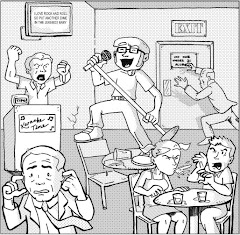
Which is why I've decided to begin, like everything else in my comic book collecting career, with Erik Larsen, with his beloved Savage Dragon. Contrary to what my blog might lead you to believe, I haven't read every issue of Savage Dragon; in fact, I have a few significant holes in my Dragon collection. Sometimes, at three bucks a pop, one just has to discriminate when staring at the new release shelf week after week. Also, despite my love for his work, I've acknowledged, like many fans, that Larsen's work has been inconsistent in recent years, thanks in large part to his role as publisher for Image Comics. Fortunately, this holiday issue of Savage Dragon predates that erratic work and reflects the best of post issue #100 Dragon -- featuring Dragon and his family battling Chicago's freakish underground. Specifically, in this issue, Dragon's former fellow cop Rita is missing; coincidentally, Santa has disappeared, too, and some of his elves have offered their services on the hunt for Rita if the finned-one can save Christmas. While practice-flying the sleigh, the villainous, jet-sled riding Seeker arrives, and as Dragon defeats him, his friends find Rita and finish off her captors. It's a happy ending, albeit a bit typical for Dragon, what with both of his hands blown off.
Don't worry. They'll grow back.
That's the thing about Savage Dragon -- the outrageous is totally normal, and with Larsen's recent foray into cutting edge Presidential politics, in every way, from Rita's long-standing struggle with side effects from a Martian shrinking ray, to Barack Obama congratulating Dragon on his return to the police force. Interestingly, Larsen doesn't actually show Santa in this issue (browse through some Dragon back issues for the only Santa appearance that suits the series), and in fact Saint Nick's abduction is reduced to a fleeting, tongue-in-cheek caption on the last page, but this dismissive tone is satirical to the very point I posed in the beginning. When Santa's helper first appeared, Dragon expressed his disbelief. Then, with Christmas in peril, the reader gets a sneak peak at the North Pole, a glimpse at how some of "the magic" works. Then, finally, Christmas is saved.
Sound familiar?
I confess, I haven't seen A Miracle on 34th Street in its entirety. I haven't read A Christmas Carol. But I remember that time the gray Hulk battled Rhino as a mall Santa Claus. I remember when a Scarecrow-gas victim dressed as Santa and went on a killing spree in Gotham City just for the fun of it. I remember the first episode of The Simpsons, and every Christmas episode since. While literature and film have established the traditions of holiday storytelling, one need not indulge them considering the strength of the Christmas spirit. From Ebenezer Scrooge to the Savage Dragon . . . the essence of selflessness is the gift that keeps on giving.
Savage Dragon #106 was published in December 2002 and is by Erik Larsen, with lettering by Chris Eliopoulos and coloring by Reuben Rude.
Monday, December 01, 2008


Friday, November 28, 2008
Of Neglected Traditions: Comics Starring Native American Heroes & Thanksgiving
I feel sorry for Thanksgiving. Wedged between the tummy-ache aftermath of Halloween and the hustle-bustle of Christmas, Thanksgiving has been reduced to a holiday footnote -- its decorations barely worthy of an entire aisle at department stores, its celebration diminished by headlines about Black Friday. It's definitely the most structured of the holidays, for those that follow its established traditions: parade, football game, meal, nap. That's Thanksgiving, in a nutshell, sans the obligatory turkey, pilgrim, and Indian arts and crafts, which have become the unfortunate target of political correctness.
Well, A Comic A Day isn't going to let this wayward holiday go down without a fight! After all, beneath its harvest hues and garnished gluttony, Thanksgiving is really about the battle between what one has and what one wants. So what if the pilgrims made nice for dinner? We're still into the business of acquisition -- if, hundreds of years later, the lines outside of Best Buy haven't taught us anything else. That's the Mayflower of the 21st century!
So, in the days leading up to Thanksgiving, I read three comic books starring Indian, a.k.a. Native American, protagonists. When one lists the different genres of comics, the "Indian protagonist" category is often lost to the western, or in some extreme cases sci-fi/fantasy, so I was genuinely curious to see if these issues, from three different publishers to boot, offered some legitimacy to this native niche. (More pointedly, when did "pilgrims vs. Indians" become "cowboys vs. Indians?") Here are the issues I read, with brief descriptions:
Showcase #87 (DC Comics, December 1969): I liked this issue right away, because its featured character, Firehair, is a red-headed Indian. Also, Joe Kubert's definitive style made this supernatural adventure all the more vivid, as Firehair is injured in a tussle with a Grand Canyon cougar and stumbles into a voodoo shaman's camp, where the mystic puts our wayward hero through some rather incredible paces, including a showdown with the very beast that "holds the world!" In the end, Firehair awakens and discovers that his terrible trial was just a fever dream, that the shaman and his people have been working tirelessly to nurse him back to health. Right . . .?
Shaman's Tears #1 (Image Comics, May 1993): I've read and reviewed Shaman's Tears #2, so I was eager to its prequel, to see how this series began. In this inaugural issue, Josh, the prodigal son of his tribe, returns home just in time to hear his mother's dying wish, that he fulfill his role as their people's "chosen one." As Josh endures a ritual that attunes his soul with the Earth, an organization dubbed Circle Sea Enterprises begins its legal battle to retain the rights to produce human/animal hybrids, presumably for military application. Thus, in both a scientific and spiritual sense, a connection and reliance upon the animal kingdom pervades this issue and promises a confrontation of food chain-climbing proportions!
Turok, Dinosaur Hunter #0 (Valiant Comics, November 1995): Following the "zero issue" trend of the early '90s, this installment with a concise synopsis of Turok's origins, including all of the significant Valiant crossovers up 'til then, too. Apparently, Turok, a strong teacher crossbred between two tribes, wandered into a mystical land of dinosaurs one day, where his protege married a jungle woman and many other Valiant heroes periodically ended up as different evil forces sought to capture the dimension's power. Turok eventually destroyed the land to prevent its power from falling into the wrong hands, and all of its inhabitants except him ended up in their respective eras. Now, in present day, Turok continues the traditions of his people, seasoned by the lessons he's learned from battle.
So, what do these issues have in common? I discovered two significant, prevalent themes amongst these three decidedly different issues:
1. Each issue boasts a tradition vs. progression diatribe, specifically between two characters that epitomize either side of the conflict. Firehair versus the Shaman. Josh versus his mother. Turok versus his apprentice. Interestingly, Turok is the only hero among these title characters that prefers "the old ways," but that his moniker is "dinosaur hunter" implies an inevitable sense of impending extinction, undoubtedly unintended by his creators. Still, this dichotomy makes for an interesting subplot, brewing beneath the surface of each series' main conflict and promising a simmering development of character dynamic. The real question is, can tradition and progression ever meet in the middle? Surely, one issue from these characters' multitude of adventures isn't enough to answer that, for them or us.
2. Similarly, each issue contains a definitive element of the supernatural, often contrasted by science, as if Native American culture is a source or beacon for all earthen spiritual phenomena. Firehair's trials, while eventually revealed as a fever dreams, are nevertheless presented with the expectation that readers will accept voodoo as a part of Indian culture. Shaman's Tears presents this contrast most decisively, adapting one's quest for an anthropomorphic spirit guide into freak hybrid genetics. While Turok's dinosaur land has unexplained origins (and reminded me of the recent IDW one-shot Lost and Found), the arrival of technology-based militant forces exposed its mystical context and was strangely reminiscent of the Nazi magic mythology of World War II. Are we really supposed to believe that Native Americans are this naturally transcendent? Further, is that the only basis for creating Indian-centric graphic fiction, as if they have nothing else to offer the comic book landscape?
Perhaps the two consistencies are tied together by their battle for identity. While the easy go-to for Indian-centric stories is their inherent spirituality, the juvenile voices of opposing progression might reflect the authors' need to find more -- to delve into the depths of their characters' more human side.
Now there's something to chew on this Thanksgiving. Really, before anyone claims political incorrectness or offense in the face of stereotypical Indian imagery, they should make an effort to understand the culture they've decided to "protect." Fire, tears, and dinosaurs . . . if these images are in any way analogous to Native American culture, these comic books might actually be a start. I'm always thankful when comics do more than simply entertain!
Well, A Comic A Day isn't going to let this wayward holiday go down without a fight! After all, beneath its harvest hues and garnished gluttony, Thanksgiving is really about the battle between what one has and what one wants. So what if the pilgrims made nice for dinner? We're still into the business of acquisition -- if, hundreds of years later, the lines outside of Best Buy haven't taught us anything else. That's the Mayflower of the 21st century!
So, in the days leading up to Thanksgiving, I read three comic books starring Indian, a.k.a. Native American, protagonists. When one lists the different genres of comics, the "Indian protagonist" category is often lost to the western, or in some extreme cases sci-fi/fantasy, so I was genuinely curious to see if these issues, from three different publishers to boot, offered some legitimacy to this native niche. (More pointedly, when did "pilgrims vs. Indians" become "cowboys vs. Indians?") Here are the issues I read, with brief descriptions:
Showcase #87 (DC Comics, December 1969): I liked this issue right away, because its featured character, Firehair, is a red-headed Indian. Also, Joe Kubert's definitive style made this supernatural adventure all the more vivid, as Firehair is injured in a tussle with a Grand Canyon cougar and stumbles into a voodoo shaman's camp, where the mystic puts our wayward hero through some rather incredible paces, including a showdown with the very beast that "holds the world!" In the end, Firehair awakens and discovers that his terrible trial was just a fever dream, that the shaman and his people have been working tirelessly to nurse him back to health. Right . . .?
Shaman's Tears #1 (Image Comics, May 1993): I've read and reviewed Shaman's Tears #2, so I was eager to its prequel, to see how this series began. In this inaugural issue, Josh, the prodigal son of his tribe, returns home just in time to hear his mother's dying wish, that he fulfill his role as their people's "chosen one." As Josh endures a ritual that attunes his soul with the Earth, an organization dubbed Circle Sea Enterprises begins its legal battle to retain the rights to produce human/animal hybrids, presumably for military application. Thus, in both a scientific and spiritual sense, a connection and reliance upon the animal kingdom pervades this issue and promises a confrontation of food chain-climbing proportions!
Turok, Dinosaur Hunter #0 (Valiant Comics, November 1995): Following the "zero issue" trend of the early '90s, this installment with a concise synopsis of Turok's origins, including all of the significant Valiant crossovers up 'til then, too. Apparently, Turok, a strong teacher crossbred between two tribes, wandered into a mystical land of dinosaurs one day, where his protege married a jungle woman and many other Valiant heroes periodically ended up as different evil forces sought to capture the dimension's power. Turok eventually destroyed the land to prevent its power from falling into the wrong hands, and all of its inhabitants except him ended up in their respective eras. Now, in present day, Turok continues the traditions of his people, seasoned by the lessons he's learned from battle.
So, what do these issues have in common? I discovered two significant, prevalent themes amongst these three decidedly different issues:
1. Each issue boasts a tradition vs. progression diatribe, specifically between two characters that epitomize either side of the conflict. Firehair versus the Shaman. Josh versus his mother. Turok versus his apprentice. Interestingly, Turok is the only hero among these title characters that prefers "the old ways," but that his moniker is "dinosaur hunter" implies an inevitable sense of impending extinction, undoubtedly unintended by his creators. Still, this dichotomy makes for an interesting subplot, brewing beneath the surface of each series' main conflict and promising a simmering development of character dynamic. The real question is, can tradition and progression ever meet in the middle? Surely, one issue from these characters' multitude of adventures isn't enough to answer that, for them or us.
2. Similarly, each issue contains a definitive element of the supernatural, often contrasted by science, as if Native American culture is a source or beacon for all earthen spiritual phenomena. Firehair's trials, while eventually revealed as a fever dreams, are nevertheless presented with the expectation that readers will accept voodoo as a part of Indian culture. Shaman's Tears presents this contrast most decisively, adapting one's quest for an anthropomorphic spirit guide into freak hybrid genetics. While Turok's dinosaur land has unexplained origins (and reminded me of the recent IDW one-shot Lost and Found), the arrival of technology-based militant forces exposed its mystical context and was strangely reminiscent of the Nazi magic mythology of World War II. Are we really supposed to believe that Native Americans are this naturally transcendent? Further, is that the only basis for creating Indian-centric graphic fiction, as if they have nothing else to offer the comic book landscape?
Perhaps the two consistencies are tied together by their battle for identity. While the easy go-to for Indian-centric stories is their inherent spirituality, the juvenile voices of opposing progression might reflect the authors' need to find more -- to delve into the depths of their characters' more human side.
Now there's something to chew on this Thanksgiving. Really, before anyone claims political incorrectness or offense in the face of stereotypical Indian imagery, they should make an effort to understand the culture they've decided to "protect." Fire, tears, and dinosaurs . . . if these images are in any way analogous to Native American culture, these comic books might actually be a start. I'm always thankful when comics do more than simply entertain!
Tuesday, November 25, 2008
Take a Hard Look at Yourself: Hardware #8
"Dead men."
"Rising from their graves."
"Trying to drag me down."
Are these the first three captions of Hardware #8, or President Elect Barack Obama's first thoughts every morning since Wednesday, November 5? After all, every President has had to face the ghosts of the presidency's past, and in these months of transition between George W. Bush's and Barack Obama's terms in office, who knows how many skeletons the good Senator from Illinois has found in the closets of the White House?
Well, the Internet is full of blogs ready and willing to unearth those specters. Actually, it's full of blogs that review comic books, too . . . Anyway, yes, those three captions kick off a haunted issue of Hardware, the inevitable Milestone book I've decided to review in the context of preparing for Obama's anticipated presidency. If Tom Strong taught us about the vulnerability of our reality, and the Seekers showed us subtlety of spirituality, what insight can Hardware offer about black men in positions of power? Simply put, it's like I said . . .
They're haunted.
I've never read Hardware before; in fact, my experience in the Milestone Universe is limited to some select issues of Static Shock and Icon. Near as I can tell, Hardware is a black Iron Man, plain and simple. Brilliant inventor . . . armored alter-ego . . . it's all there on the first page's obligatory origin blurb. This issue, a transition between storylines, I assume, as it seems both tethered to the character's established baggage yet approachable for new readers like me, explores the demons that come with such genius, an aspect of the "self-made armored hero" paradigm firmly established in the mainstream by last summer's blockbuster Iron Man flick. "Woe is me for not using my inventive intellect for good instead of apathy-that-has-led-to-evil sooner! I'll spend the rest of my career in repentance!" The most tender moments in Iron Man, and this entire issue of Hardware -- in a single sentence. No wonder Hollywood never calls.
Seriously, though, writer Dwayne McDuffie uses these twenty-two pages to do what he does best: tell a compelling character-driven story, laced with plenty of societal commentary and action. In Hardware #8, the title character faces the ghosts of his past, from the victims of his superheroic adventures, to the family he forsook to become an inventor, to his mentor-turned-nemesis, to his lost love, to . . . himself. Every episodic encounter boasts a similar theme -- Wake up! -- which, while initially interpreted as a call to integrity, becomes the literal solution when Hardware awakes and realizes the misadventure was a nightmare. McDuffie definitely seizes this opportunity to pull aside the veil on Hardware's inspirations, citing the traditional African trickster tale as the proverbial outline for his armored hero's literary basis. While some might consider this a writer's faux pas, I perceive the move as shedding light on what is to pave the way for what's to come. In the end, Hardware muses, "I can't make up for what I've done. But I can live up to my ideals from now on. I can do better." In other words, some skeletons are best dragged out of the closet so they can finally be buried.
The Obama connection is obvious. First of all, any man, white, black, or green (that's if he's choking at an ambassador's dinner table or something), must face the legacy of his leadership before tackling the role as his own. From the department store manager that inherits a part-time team he didn't hire to the CEO of a corporation facing the realities of America's capitalism and economy, any and every position of authority is burdened some degree of context and challenge that demands sacrifice to be overcome. In the case of the presidency, the concept of collateral damage ranges from firing federal employees to the loss of human life on the battlefield, both of which are ironically equally criticized. How many nightmares will Obama suffer his first year in office? Will they look anything like McDuffie's analysis in Hardware #8?
The comic book medium isn't without similar ghosts. I mentioned McDuffie's "Teenage Negro Ninja Thrashers" pitch a few posts ago -- which is a hilariously biting treatise for Marvel Comics' penchant for jive-talking, skateboarding, young black superheroes. His Milestone line (slated to return to DC continuity soon enough) is essentially the fulfillment of that brief in-office satire, establishing a canon of black heroes with a wide range of nobility and strife -- everything that makes for a fun superhero story. He took his own advice and decided to do better. That's all anybody can do, face to face with the past. The key is one's capacity for honest introspection . . . and I don't think that's something one can learn. The ability to examine oneself . . . should come with one's hardware.
Hardware #8 was published by DC Comics and Milestone Media in October 1993 and was written by Dwayne McDuffie, illustrated by J.J. Birch and Jason Minor, colored by Noelle Giddings, and edited by Steve Dutro.
"Rising from their graves."
"Trying to drag me down."
Are these the first three captions of Hardware #8, or President Elect Barack Obama's first thoughts every morning since Wednesday, November 5? After all, every President has had to face the ghosts of the presidency's past, and in these months of transition between George W. Bush's and Barack Obama's terms in office, who knows how many skeletons the good Senator from Illinois has found in the closets of the White House?
Well, the Internet is full of blogs ready and willing to unearth those specters. Actually, it's full of blogs that review comic books, too . . . Anyway, yes, those three captions kick off a haunted issue of Hardware, the inevitable Milestone book I've decided to review in the context of preparing for Obama's anticipated presidency. If Tom Strong taught us about the vulnerability of our reality, and the Seekers showed us subtlety of spirituality, what insight can Hardware offer about black men in positions of power? Simply put, it's like I said . . .
They're haunted.
I've never read Hardware before; in fact, my experience in the Milestone Universe is limited to some select issues of Static Shock and Icon. Near as I can tell, Hardware is a black Iron Man, plain and simple. Brilliant inventor . . . armored alter-ego . . . it's all there on the first page's obligatory origin blurb. This issue, a transition between storylines, I assume, as it seems both tethered to the character's established baggage yet approachable for new readers like me, explores the demons that come with such genius, an aspect of the "self-made armored hero" paradigm firmly established in the mainstream by last summer's blockbuster Iron Man flick. "Woe is me for not using my inventive intellect for good instead of apathy-that-has-led-to-evil sooner! I'll spend the rest of my career in repentance!" The most tender moments in Iron Man, and this entire issue of Hardware -- in a single sentence. No wonder Hollywood never calls.
Seriously, though, writer Dwayne McDuffie uses these twenty-two pages to do what he does best: tell a compelling character-driven story, laced with plenty of societal commentary and action. In Hardware #8, the title character faces the ghosts of his past, from the victims of his superheroic adventures, to the family he forsook to become an inventor, to his mentor-turned-nemesis, to his lost love, to . . . himself. Every episodic encounter boasts a similar theme -- Wake up! -- which, while initially interpreted as a call to integrity, becomes the literal solution when Hardware awakes and realizes the misadventure was a nightmare. McDuffie definitely seizes this opportunity to pull aside the veil on Hardware's inspirations, citing the traditional African trickster tale as the proverbial outline for his armored hero's literary basis. While some might consider this a writer's faux pas, I perceive the move as shedding light on what is to pave the way for what's to come. In the end, Hardware muses, "I can't make up for what I've done. But I can live up to my ideals from now on. I can do better." In other words, some skeletons are best dragged out of the closet so they can finally be buried.
The Obama connection is obvious. First of all, any man, white, black, or green (that's if he's choking at an ambassador's dinner table or something), must face the legacy of his leadership before tackling the role as his own. From the department store manager that inherits a part-time team he didn't hire to the CEO of a corporation facing the realities of America's capitalism and economy, any and every position of authority is burdened some degree of context and challenge that demands sacrifice to be overcome. In the case of the presidency, the concept of collateral damage ranges from firing federal employees to the loss of human life on the battlefield, both of which are ironically equally criticized. How many nightmares will Obama suffer his first year in office? Will they look anything like McDuffie's analysis in Hardware #8?
The comic book medium isn't without similar ghosts. I mentioned McDuffie's "Teenage Negro Ninja Thrashers" pitch a few posts ago -- which is a hilariously biting treatise for Marvel Comics' penchant for jive-talking, skateboarding, young black superheroes. His Milestone line (slated to return to DC continuity soon enough) is essentially the fulfillment of that brief in-office satire, establishing a canon of black heroes with a wide range of nobility and strife -- everything that makes for a fun superhero story. He took his own advice and decided to do better. That's all anybody can do, face to face with the past. The key is one's capacity for honest introspection . . . and I don't think that's something one can learn. The ability to examine oneself . . . should come with one's hardware.
Hardware #8 was published by DC Comics and Milestone Media in October 1993 and was written by Dwayne McDuffie, illustrated by J.J. Birch and Jason Minor, colored by Noelle Giddings, and edited by Steve Dutro.
Sunday, November 16, 2008
Seek, and Ye Shall Find: The Seekers #1
Continuing my feeble exercise to explore black comic book heroes in an attempt to understand the idolism around Senator Barack Obama's approaching presidency, I dug up my unread copy of The Seekers #1, acquired for a quarter at Frank & Sons. Judging this issue by its cover (not recommended), The Seekers is a series deliberately targeting black youth, not unlike a title from DC's Milestone Comics, right down to the obligatory skateboard. (If you haven't read Dwayne McDuffie's poignant pitch for Teenage Negro Ninja Thrashers, you can find it at this installment of Comic Book Resources' "Comics Should Be Good.") It even features art from Shawn Martinbrough, a Milestone alumnus whose work I first encountered and appreciated in Detective Comics a few years ago. Alas, I'm saving a legitimate Milestone issue for a near-future review, and, besides, The Seekers has a different target audience in mind.
The Seekers is a . . . gulp . . . religious comic book!
A Comic A Day has only touched the surface of religion in comics, from the comically devout modernization to the harsh, preachy condemnation. Thankfully, The Seekers establishes a third, more likable category: the fun, Bible-driven misadventure. Actually, the cartoon series Superbook and The Flying House really established the fun, Bible-driven misadventure, but The Seekers adapts the concept for a new, definitively more urban generation. In this issue, Jesse discovers an iPod that transports its user to different periods of time. Stashed in Jesse's church by its desperate inventor, the iPod is sought by community icon Steven Dark, a suspicious, sometimes ominously red-eyed man in cahoots with an errand raven. When Jesse's new friend, the issue's token white kid named Brooklyn, needs to research the Revolutionary War, they select a song by Paul Revere and the Raiders to experience the era personally, but when Jesse returns to his bedroom, Brooklyn doesn't. To be continued indeed.
The Seekers is published by Urban Ministries, Inc., a company that describes itself as an African-American Christian publisher, and is just one of four titles in their Guardian Line imprint. Although this issue is laced with overtly religious advertisements, its content is the furthest from preachy a supposedly Christian comic can get, and honestly I rather enjoyed the story, told boldly through Martinbrough's broad, expressive brushstroke. The tale's overarching mythology retains a bit of obligatory spirituality, considering that keepers of the iPod are called seekers and that the kids' first journey takes them to 10 B.C. Galilee, but sugar-coating the message by actually utilizing the comic book medium to its fullest potential makes the pill go down that much easier.
So, what's the Obama connection? Well, you don’t need me to tell you that religion was a critical component of this year’s Presidential election. Speculation about Senator Obama's religious affiliation ran from ardent analysis to conspiratorial craziness, culminating in a statement by Colin Powell that seemed to hush up anyone duly concerned. To paraphrase, Powell said, Senator Obama is not a Muslim, but if he were, so what? Indeed, as if the racial undertones weren’t enough . . .! On a surface level, Powell's inquiry is applicable in any instance of discrimination; for example, recent headlines report that a batch of retired generals are condemned the military’s old "don't ask, don't tell" policy. Basically, they're asking, if some soldiers are gay, so what? In the context of this review, here’s a Christian comic book. So what? A Muslim might make a great President, a gay guy or gal might make a great solider, and a Christian comic might make for a great read.
Of course, while a comic book comes and goes in twenty-two pages and is relatively immaterial in the grand scheme, a President has four long years to mess everything up. Gulp.
On a more spiritual level, The Seekers tells an entertaining story with a religious context, proving that religion can be present without being overbearing. That Jesse finds the iPod in a church, and that his first trip back in time reflects a Biblical account of world history, is almost more writer's prerogative than publisher's mission statement, at least in this single issue. And, yes, I do want to read #2, if I ever find it, which goes to show just how effective good storytelling is in comparison to preachy editorializing. Besides, considering that the iPod time-travels based on definitively secular bands or song titles, these spiritual matters seem grounded enough in the real world to remain entertaining despite the potential for a sappy moral. Further, that the browsing button on mp3 players is commonly called the "seek" button is a pun that hasn’t escaped me here, especially with the rewind and fast forward symbols affixed in The Seekers logo. We're all seeking something sometime, even if it’s just a song by Genesis. That's as spiritual as Phil Collins gets!
In regards to the Presidency, very few Presidents have actually asserted their religion (specifically, their particular faction of Christianity, at least thus far!), with the exception of the occasional comforting Bible verse in the midst of tragedy, which seems acceptable enough in our politically correct society. Then again, if you're looking for something to offend you -- seek, and ye shall most definitely find.
The Seekers is a . . . gulp . . . religious comic book!
A Comic A Day has only touched the surface of religion in comics, from the comically devout modernization to the harsh, preachy condemnation. Thankfully, The Seekers establishes a third, more likable category: the fun, Bible-driven misadventure. Actually, the cartoon series Superbook and The Flying House really established the fun, Bible-driven misadventure, but The Seekers adapts the concept for a new, definitively more urban generation. In this issue, Jesse discovers an iPod that transports its user to different periods of time. Stashed in Jesse's church by its desperate inventor, the iPod is sought by community icon Steven Dark, a suspicious, sometimes ominously red-eyed man in cahoots with an errand raven. When Jesse's new friend, the issue's token white kid named Brooklyn, needs to research the Revolutionary War, they select a song by Paul Revere and the Raiders to experience the era personally, but when Jesse returns to his bedroom, Brooklyn doesn't. To be continued indeed.
The Seekers is published by Urban Ministries, Inc., a company that describes itself as an African-American Christian publisher, and is just one of four titles in their Guardian Line imprint. Although this issue is laced with overtly religious advertisements, its content is the furthest from preachy a supposedly Christian comic can get, and honestly I rather enjoyed the story, told boldly through Martinbrough's broad, expressive brushstroke. The tale's overarching mythology retains a bit of obligatory spirituality, considering that keepers of the iPod are called seekers and that the kids' first journey takes them to 10 B.C. Galilee, but sugar-coating the message by actually utilizing the comic book medium to its fullest potential makes the pill go down that much easier.
So, what's the Obama connection? Well, you don’t need me to tell you that religion was a critical component of this year’s Presidential election. Speculation about Senator Obama's religious affiliation ran from ardent analysis to conspiratorial craziness, culminating in a statement by Colin Powell that seemed to hush up anyone duly concerned. To paraphrase, Powell said, Senator Obama is not a Muslim, but if he were, so what? Indeed, as if the racial undertones weren’t enough . . .! On a surface level, Powell's inquiry is applicable in any instance of discrimination; for example, recent headlines report that a batch of retired generals are condemned the military’s old "don't ask, don't tell" policy. Basically, they're asking, if some soldiers are gay, so what? In the context of this review, here’s a Christian comic book. So what? A Muslim might make a great President, a gay guy or gal might make a great solider, and a Christian comic might make for a great read.
Of course, while a comic book comes and goes in twenty-two pages and is relatively immaterial in the grand scheme, a President has four long years to mess everything up. Gulp.
On a more spiritual level, The Seekers tells an entertaining story with a religious context, proving that religion can be present without being overbearing. That Jesse finds the iPod in a church, and that his first trip back in time reflects a Biblical account of world history, is almost more writer's prerogative than publisher's mission statement, at least in this single issue. And, yes, I do want to read #2, if I ever find it, which goes to show just how effective good storytelling is in comparison to preachy editorializing. Besides, considering that the iPod time-travels based on definitively secular bands or song titles, these spiritual matters seem grounded enough in the real world to remain entertaining despite the potential for a sappy moral. Further, that the browsing button on mp3 players is commonly called the "seek" button is a pun that hasn’t escaped me here, especially with the rewind and fast forward symbols affixed in The Seekers logo. We're all seeking something sometime, even if it’s just a song by Genesis. That's as spiritual as Phil Collins gets!
In regards to the Presidency, very few Presidents have actually asserted their religion (specifically, their particular faction of Christianity, at least thus far!), with the exception of the occasional comforting Bible verse in the midst of tragedy, which seems acceptable enough in our politically correct society. Then again, if you're looking for something to offend you -- seek, and ye shall most definitely find.
Wednesday, November 12, 2008
The Dragon Bump
Awesome developments in Savage Dragon/Barack Obama relations:
http://weblogs.redeyechicago.com/geektome/2008/11/the-savage-drag.html
http://weblogs.redeyechicago.com/geektome/2008/11/the-savage-drag.html
Monday, November 10, 2008
What Could Have Been: Tom Strong #20
What a difference a week makes.
Last Monday, skeptical Americans, on the brink of an undoubtedly historical Presidential election, wondered about the fate of their country. A week later, Americans either celebrating a victory or lamenting a loss can still be proud that their nation has made a giant step forward in abolishing its reputation for racism, perhaps setting a standard for the rest of the world. That's how I see it, anyway.
The question is, did Barack Obama win because of the Dragon bump? Pundits will argue that one for the next four years, I'm sure . . .
To acknowledge America's celebration of change, I decided to read a few of the comic books in my stable of unread issues that star black protagonists -- a theme I've traditionally utilized in February for Black History Month, but black history has been made this month, so the obligatory wait would be a disservice. My hope in these next few reviews is to find some parallels between the black heroes of comics and our President Elect, who has become a real life hero to many, many people (and who has now starred in a few comics of his own!). Leave it to Alan Moore to kick off the concept with practically prophetic results.
When the Comic Bookie closed last month, I was delighted to find several issues of Tom Strong in the fifty cent bins. Tom Strong remains one of those series I regret not buying monthly, yet also remains a guilty pleasure when I flip through discounted back issue boxes, as it isn't foremost on my mind but always climbs the must-buy list when I find a cheap issue. With all the publicity surrounding the release of The Watchmen movie, Moore's other works are likely to take a backseat in these coming months, until of course each of them are optioned for film production, too. I dare say that Tom Strong is one of the writer's most ambitious works, though, with thirty-six issues spanning eight years (the longest Moore has been associated with any one character or story, with the exception of Swamp Thing, unless someone can cite another example). Reflecting, sometimes satirizing, the science fiction pulp of the '50s, Tom Strong also combines strands from almost every other significant comic book genre, as well (western, romance, horror . . . it's all in there, sometimes in a single issue!), utilizing flashback sequences and/or chapter breaks liberally yet with reverence. Again, why I still haven't read every issue is beyond me.
Tom's origin is perhaps the most interesting contribution to the entire series, however, as Moore successfully tells a complex, engaging origin story with striking originality. When scientist Sinclair Strong and his wife Susan are shipwrecked on a deserted island, Strong makes the best of it by building a laboratory where he and his wife raise their son in a high-gravity chamber, educating him and nourishing him with an indigenous root, goloka, in a culminating effort to perfect his mind and body. When a volcanic eruption destroys the lab and kills Tom's parents, Tom finds comfort in the local, hidden tribe, and he takes a bride who eventually joins him on a journey back to Millennium City, where he becomes a science hero. Of course, fans know there are many more critical intricacies to this story, but these are the nuts and bolts necessary to understand issue #20.
See, in issue #20, Tom encounters a visitor from an alternate timeline, one where his origins are vastly different. Apparently, when one of Susan's pre-Sinclair suitors gives her an element capable of dividing time, she does just that, creating a history that prematurely kills Strong and strands her on the island with Tomas Stone, their ship's Jamaican (?) captain. When Tom Stone is born, he attains the same longevity and strength from the island's beloved goloka and learns vicariously through Sinclair's stranded books, essentially becoming the same man from the original timestream, but with darker skin. In Millennium City, this alienation actually builds a bridge of camaraderie with the one that would become his mad scientist arch nemesis, and together they become a force for good. However, Susan soon discovers the timeline's split, and . . . ha, to be continued. Surely a tale with such chronological consequence couldn't be told in a single issue, eh!
So, what does all of this have to do with Barack Obama? Well, Moore pens a prolific line that reminded me of the Illinois Senator's recent accomplishments. When Tom's mother sees how beloved her son is in Millennium City, she muses, "And everyone's so friendly to colored people now. You must have educated them, son." The implication stands, that the positive impact of a single individual with a high enough profile could redirect the perspective toward an entire group of people. Racism certainly isn't over, in either our reality or Strong's alternate history I'm sure, but racists can at least tangibly grasp that they're in the minority, that they're in the wake of something much more progressive than their rooted and anchored beliefs. Thankfully, we didn't need a skewered timeline to teach us that.
Yet, this catalyst in Tom Strong #20 is what appealed to me most of all. A week ago, Americans were like-minded in their contemplation of another reality, one in which their candidate of choice didn't win -- an Earth-2, if you will. How exciting is it that those that aren't into comics or science fiction can understand the Doc Brown concept of an alternate timeline? In this other world, how many of your friends really moved to Canada when McCain-2 won the election? How did his spending freeze affect the economy-2? Most interestingly, how soon did Palin-2 take the White House, if at all? I'm hoping to discover some traits in black comic book heroes that reflect our reality now, the one with Barack Obama poised as America's President, but Alan Moore turns racism on its ear a bit and shows us that sometimes the color of one's skin does matter, just enough.
Tom Strong #20 was published by America's Best Comics in June 2003 and was written by Alan Moore, illustrated by Jerry Ordway and Karl Story, colored by Dave Stewart, lettered by Todd Klein, and edited by Kristy Quinn and Scott Dunbier.
Last Monday, skeptical Americans, on the brink of an undoubtedly historical Presidential election, wondered about the fate of their country. A week later, Americans either celebrating a victory or lamenting a loss can still be proud that their nation has made a giant step forward in abolishing its reputation for racism, perhaps setting a standard for the rest of the world. That's how I see it, anyway.
The question is, did Barack Obama win because of the Dragon bump? Pundits will argue that one for the next four years, I'm sure . . .
To acknowledge America's celebration of change, I decided to read a few of the comic books in my stable of unread issues that star black protagonists -- a theme I've traditionally utilized in February for Black History Month, but black history has been made this month, so the obligatory wait would be a disservice. My hope in these next few reviews is to find some parallels between the black heroes of comics and our President Elect, who has become a real life hero to many, many people (and who has now starred in a few comics of his own!). Leave it to Alan Moore to kick off the concept with practically prophetic results.
When the Comic Bookie closed last month, I was delighted to find several issues of Tom Strong in the fifty cent bins. Tom Strong remains one of those series I regret not buying monthly, yet also remains a guilty pleasure when I flip through discounted back issue boxes, as it isn't foremost on my mind but always climbs the must-buy list when I find a cheap issue. With all the publicity surrounding the release of The Watchmen movie, Moore's other works are likely to take a backseat in these coming months, until of course each of them are optioned for film production, too. I dare say that Tom Strong is one of the writer's most ambitious works, though, with thirty-six issues spanning eight years (the longest Moore has been associated with any one character or story, with the exception of Swamp Thing, unless someone can cite another example). Reflecting, sometimes satirizing, the science fiction pulp of the '50s, Tom Strong also combines strands from almost every other significant comic book genre, as well (western, romance, horror . . . it's all in there, sometimes in a single issue!), utilizing flashback sequences and/or chapter breaks liberally yet with reverence. Again, why I still haven't read every issue is beyond me.
Tom's origin is perhaps the most interesting contribution to the entire series, however, as Moore successfully tells a complex, engaging origin story with striking originality. When scientist Sinclair Strong and his wife Susan are shipwrecked on a deserted island, Strong makes the best of it by building a laboratory where he and his wife raise their son in a high-gravity chamber, educating him and nourishing him with an indigenous root, goloka, in a culminating effort to perfect his mind and body. When a volcanic eruption destroys the lab and kills Tom's parents, Tom finds comfort in the local, hidden tribe, and he takes a bride who eventually joins him on a journey back to Millennium City, where he becomes a science hero. Of course, fans know there are many more critical intricacies to this story, but these are the nuts and bolts necessary to understand issue #20.
See, in issue #20, Tom encounters a visitor from an alternate timeline, one where his origins are vastly different. Apparently, when one of Susan's pre-Sinclair suitors gives her an element capable of dividing time, she does just that, creating a history that prematurely kills Strong and strands her on the island with Tomas Stone, their ship's Jamaican (?) captain. When Tom Stone is born, he attains the same longevity and strength from the island's beloved goloka and learns vicariously through Sinclair's stranded books, essentially becoming the same man from the original timestream, but with darker skin. In Millennium City, this alienation actually builds a bridge of camaraderie with the one that would become his mad scientist arch nemesis, and together they become a force for good. However, Susan soon discovers the timeline's split, and . . . ha, to be continued. Surely a tale with such chronological consequence couldn't be told in a single issue, eh!
So, what does all of this have to do with Barack Obama? Well, Moore pens a prolific line that reminded me of the Illinois Senator's recent accomplishments. When Tom's mother sees how beloved her son is in Millennium City, she muses, "And everyone's so friendly to colored people now. You must have educated them, son." The implication stands, that the positive impact of a single individual with a high enough profile could redirect the perspective toward an entire group of people. Racism certainly isn't over, in either our reality or Strong's alternate history I'm sure, but racists can at least tangibly grasp that they're in the minority, that they're in the wake of something much more progressive than their rooted and anchored beliefs. Thankfully, we didn't need a skewered timeline to teach us that.
Yet, this catalyst in Tom Strong #20 is what appealed to me most of all. A week ago, Americans were like-minded in their contemplation of another reality, one in which their candidate of choice didn't win -- an Earth-2, if you will. How exciting is it that those that aren't into comics or science fiction can understand the Doc Brown concept of an alternate timeline? In this other world, how many of your friends really moved to Canada when McCain-2 won the election? How did his spending freeze affect the economy-2? Most interestingly, how soon did Palin-2 take the White House, if at all? I'm hoping to discover some traits in black comic book heroes that reflect our reality now, the one with Barack Obama poised as America's President, but Alan Moore turns racism on its ear a bit and shows us that sometimes the color of one's skin does matter, just enough.
Tom Strong #20 was published by America's Best Comics in June 2003 and was written by Alan Moore, illustrated by Jerry Ordway and Karl Story, colored by Dave Stewart, lettered by Todd Klein, and edited by Kristy Quinn and Scott Dunbier.
Monday, November 03, 2008
The Ghostbusters, Then & Now: Ghostbusters: The Other Side #1
On Friday, I saw a human-sized chicken practicing its trumpet outside of the local high school. A cave woman stood behind me in line at Starbucks. My girlfriend saw a Jedi walk into a Hollywood Denny's. This is Halloween, when the line between fantasy and reality gets blurred just enough to permit such frivolity without fear of consequence . . . and I love it. Batman -- heck, a legion of Batmen, as if from the various folds of Hypertime -- is as common a sight as Spongebob Squarepants, in a crossover that demands no cry for copyright infringement or corporate credit. It's the inner child unleashed, and it's the closest we get to a dimensional rift between this world and the ones we've created in cartoons, comic books, and movies over the years. So, IDW's new Ghostbusters comic book, undoubtedly released in October to coincide with Halloween, is appropriately titled "The Other Side." Leave it to those poltergeist pulverizers to so aptly direct and reflect trends in pop culture yet again.
Coincidentally, the Ghostbusters had become a big part of my Halloween celebration this year before I even knew of Ghostbusters: The Other Side. A local movie theater hosted a special screening of Ghostbusters earlier in the month, and I dragged my girlfriend and old Slimer toy along to partake in that beloved slice of my childhood. Fortunately, apparently I wasn't the only kid that watched and rewatched his Ghostbusters VHS, running my VCR remote's tracking buttons rampant after some one hundred viewings or so, and when Ray hushes Egon and Peter in the opening library scene with, "Listen! You smell something?" I was delighted to join dozens of others in knowing laughter. At the time, I bet Ghostbusters struck unsuspecting audiences as just another flick starring those guys from Saturday Night Live. Who would've suspected that those wry 105 minutes would've inspired an franchise that has included a few cartoon series, a long line of toys, and several comic book series?
Inspired by seeing "the guys" on the big screen (well, the screening was actually projected onto the back of a building, but you know what I mean), I dug up some old Ghostbusters comics I'd purchased a few months ago at the Los Angeles Comic Book and Sci-Fi Convention. Published by Now Comics, these issues reflect the continuity and likenesses of The Real Ghostbusters animated series, which boasts a strong argument for vetoing the films and adopting the "official" image of the franchise. After all, that cartoon series and subsequent toy line recruited kids in a way the original movie never could have, contributing to the success of Ghostbusters 2. (I remember thinking as a kid, Winston shaved his mustache for the sequel to look more like his cartoon counterpart.) Multi-colored jumpsuits and a blond Egon are mere aesthetics when compared to the way these cartoon and comic book series cemented the characters' respective personalities and made Slimer a household name. I rest my case, for now.
So, when I saw the cover to Now Comics' The Real Ghostbusters #13, I was excited to read the issue because it featured Bigfoot, a supernatural creature that has been striding through comics quite a bit lately (different interpretations of Sasquatch currently star in The Perhapnauts and Proof, and those are the comics off the top of my head). Neither a ghost or a fully evolved human being, I wondered how the Ghostbusters would capture such a creature; unfortunately, the story was more heart than attack, as the guys venture to reunite two lovesick lemures (a cousin to the Bigfoot, I guess) before a weather-controlling ghost uses the female's connection to the climate against mankind. The plot was compelling enough, and the art was great, but the issue wasn't comprehensive to the Ghostbusters mythos to warrant a Halloween review for me. Like the lemure, the issue I wanted to read had big shoes to fill.
Enter Now Comics' The Real Ghostbusters #25. I'm something of a numerology nerd regarding my comics, so I thought #13 would be a good Halloween-oriented issue. Of course, it was more a stroke of bad luck in contrast to my intentions, so I tried #25, as this year commemorates the original film's twenty-five year anniversary. I had to mull it over, but I was much more satisfied with the result. In this issue, the Ghostbusters are recruited by the government to rescue some soldiers trapped in another, spectre-ridden dimension, and in the process they discover a hidden history that exposes atomic tests as the cause of such interdimensional rifts. The Gozer "dogs" from Ghostbusters make a cameo appearance, albeit as robots intended to test the guys' skills, and in the end Egon thwarts the dimensional denizens by touting the Ghostbusters' rep rather than let 'er rip with the proton packs, which is almost as satisfying. Still all-ages friendly, this story's anti-government implications retain a definitely adult aspect that made this issue enjoyable to a longtime fan like me, particularly considering the Ghostbusters' trend for spitting in the face of nonprofit environmental agencies or using national monuments as battering rams.
So, I was totally ready to write up that review when I happened to see another review at Comic Book Resources, this one of a comic called Ghostbusters: The Other Side. I had no idea that IDW had commandeered the franchise from 88 MPH, who had published a Ghostbusters miniseries a few years ago that I had an incredibly hard time finding. Still, excited for a new adventure, I rushed to my comic book store yesterday and picked it up. Admittedly, I was a little tainted by the CBR review; I try not to read reviews about comics I want to own, but I found myself in agreement with a few of Doug Zawisza's assessments. First of all, while I'm a fan of Tom Nguyen's work, this issue seems a little rushed, and specifically his likenesses of Peter and Ray are inconsistent at best, literally fluctuating between vague caricatures of Bill Murray and Dan Ackroyd respectively and the designs from the animated series. Also, perhaps more nitpicky from a fanboy's perspective, I'd hoped for something more than a linear plot. I wanted more dangling threads. The only familiar faces we see are the four Ghostbusters themselves -- no Janine, Louis, or Dana. Considering this issue's cliffhanger, I'm sure we'll see them next ish, but I feel like Louis locked out of his apartment. There's potential for a big party here, and I want somebody to "let me iiiiin!"
In The Other Side, the guys are up against a mob of old time gangster ghosts that have the ability to possess people, an apparently unforeseen aspect to ghost-busting based on Egon and Ray's perplexed response. When one of the ghoulish gangsters displaces Peter's soul, the guys spend a majority of the issue researching the phenomenon, until the end when . . . well, I won't spoil it, because the potential to explore complex themes of the spirit world is rich here, if writer Keith Champagne is so bold, which would result in a truly great GB story. He is careful to place this issue in the world of the films, sometime after the sequel, as the lead antagonist expresses concern that the guys have been able to best the likes of Gozer and Vigo (they're mentioned twice, to boot), but the vernacular is all-ages friendly, as is the story's general structure. Fingers crossed that future issues present some complexity, resulting in a crossing of this tale's multifaceted streams.
As a quick aside, one thing that both the Now and this IDW issues have in common is the very feeble attempt at humor on Venkman's part. Of course, Bill Murray's performance in both films is priceless, and Lorenzo Music's deadpan voice acting in the animated series is a childhood guilty pleasure, so writer Champagne and James Van Hise obviously understand what I mean by "big shoes to fill." Fortunately, Champagne dodges the bullet by incapacitating Peter for a majority of the issue, while Van Hise . . . well, his comic was for kids. Lame one-liners get a pass if they can make a kid laugh. 'Nuff said, I guess.
In the shadow of Halloween, a general celebration of the undead, I'm grateful that the Ghostbusters franchise is still alive and well, and that it so infiltrated my hallowed holiday celebration. Sure, it's great to reminisce with the old Now Comics, but this IDW series (not to mention the new video game, but there are other blogs for that) is a very worthy addition to the canon. Indeed, no one human being could stack books like this.
Coincidentally, the Ghostbusters had become a big part of my Halloween celebration this year before I even knew of Ghostbusters: The Other Side. A local movie theater hosted a special screening of Ghostbusters earlier in the month, and I dragged my girlfriend and old Slimer toy along to partake in that beloved slice of my childhood. Fortunately, apparently I wasn't the only kid that watched and rewatched his Ghostbusters VHS, running my VCR remote's tracking buttons rampant after some one hundred viewings or so, and when Ray hushes Egon and Peter in the opening library scene with, "Listen! You smell something?" I was delighted to join dozens of others in knowing laughter. At the time, I bet Ghostbusters struck unsuspecting audiences as just another flick starring those guys from Saturday Night Live. Who would've suspected that those wry 105 minutes would've inspired an franchise that has included a few cartoon series, a long line of toys, and several comic book series?
Inspired by seeing "the guys" on the big screen (well, the screening was actually projected onto the back of a building, but you know what I mean), I dug up some old Ghostbusters comics I'd purchased a few months ago at the Los Angeles Comic Book and Sci-Fi Convention. Published by Now Comics, these issues reflect the continuity and likenesses of The Real Ghostbusters animated series, which boasts a strong argument for vetoing the films and adopting the "official" image of the franchise. After all, that cartoon series and subsequent toy line recruited kids in a way the original movie never could have, contributing to the success of Ghostbusters 2. (I remember thinking as a kid, Winston shaved his mustache for the sequel to look more like his cartoon counterpart.) Multi-colored jumpsuits and a blond Egon are mere aesthetics when compared to the way these cartoon and comic book series cemented the characters' respective personalities and made Slimer a household name. I rest my case, for now.
So, when I saw the cover to Now Comics' The Real Ghostbusters #13, I was excited to read the issue because it featured Bigfoot, a supernatural creature that has been striding through comics quite a bit lately (different interpretations of Sasquatch currently star in The Perhapnauts and Proof, and those are the comics off the top of my head). Neither a ghost or a fully evolved human being, I wondered how the Ghostbusters would capture such a creature; unfortunately, the story was more heart than attack, as the guys venture to reunite two lovesick lemures (a cousin to the Bigfoot, I guess) before a weather-controlling ghost uses the female's connection to the climate against mankind. The plot was compelling enough, and the art was great, but the issue wasn't comprehensive to the Ghostbusters mythos to warrant a Halloween review for me. Like the lemure, the issue I wanted to read had big shoes to fill.
Enter Now Comics' The Real Ghostbusters #25. I'm something of a numerology nerd regarding my comics, so I thought #13 would be a good Halloween-oriented issue. Of course, it was more a stroke of bad luck in contrast to my intentions, so I tried #25, as this year commemorates the original film's twenty-five year anniversary. I had to mull it over, but I was much more satisfied with the result. In this issue, the Ghostbusters are recruited by the government to rescue some soldiers trapped in another, spectre-ridden dimension, and in the process they discover a hidden history that exposes atomic tests as the cause of such interdimensional rifts. The Gozer "dogs" from Ghostbusters make a cameo appearance, albeit as robots intended to test the guys' skills, and in the end Egon thwarts the dimensional denizens by touting the Ghostbusters' rep rather than let 'er rip with the proton packs, which is almost as satisfying. Still all-ages friendly, this story's anti-government implications retain a definitely adult aspect that made this issue enjoyable to a longtime fan like me, particularly considering the Ghostbusters' trend for spitting in the face of nonprofit environmental agencies or using national monuments as battering rams.
So, I was totally ready to write up that review when I happened to see another review at Comic Book Resources, this one of a comic called Ghostbusters: The Other Side. I had no idea that IDW had commandeered the franchise from 88 MPH, who had published a Ghostbusters miniseries a few years ago that I had an incredibly hard time finding. Still, excited for a new adventure, I rushed to my comic book store yesterday and picked it up. Admittedly, I was a little tainted by the CBR review; I try not to read reviews about comics I want to own, but I found myself in agreement with a few of Doug Zawisza's assessments. First of all, while I'm a fan of Tom Nguyen's work, this issue seems a little rushed, and specifically his likenesses of Peter and Ray are inconsistent at best, literally fluctuating between vague caricatures of Bill Murray and Dan Ackroyd respectively and the designs from the animated series. Also, perhaps more nitpicky from a fanboy's perspective, I'd hoped for something more than a linear plot. I wanted more dangling threads. The only familiar faces we see are the four Ghostbusters themselves -- no Janine, Louis, or Dana. Considering this issue's cliffhanger, I'm sure we'll see them next ish, but I feel like Louis locked out of his apartment. There's potential for a big party here, and I want somebody to "let me iiiiin!"
In The Other Side, the guys are up against a mob of old time gangster ghosts that have the ability to possess people, an apparently unforeseen aspect to ghost-busting based on Egon and Ray's perplexed response. When one of the ghoulish gangsters displaces Peter's soul, the guys spend a majority of the issue researching the phenomenon, until the end when . . . well, I won't spoil it, because the potential to explore complex themes of the spirit world is rich here, if writer Keith Champagne is so bold, which would result in a truly great GB story. He is careful to place this issue in the world of the films, sometime after the sequel, as the lead antagonist expresses concern that the guys have been able to best the likes of Gozer and Vigo (they're mentioned twice, to boot), but the vernacular is all-ages friendly, as is the story's general structure. Fingers crossed that future issues present some complexity, resulting in a crossing of this tale's multifaceted streams.
As a quick aside, one thing that both the Now and this IDW issues have in common is the very feeble attempt at humor on Venkman's part. Of course, Bill Murray's performance in both films is priceless, and Lorenzo Music's deadpan voice acting in the animated series is a childhood guilty pleasure, so writer Champagne and James Van Hise obviously understand what I mean by "big shoes to fill." Fortunately, Champagne dodges the bullet by incapacitating Peter for a majority of the issue, while Van Hise . . . well, his comic was for kids. Lame one-liners get a pass if they can make a kid laugh. 'Nuff said, I guess.
In the shadow of Halloween, a general celebration of the undead, I'm grateful that the Ghostbusters franchise is still alive and well, and that it so infiltrated my hallowed holiday celebration. Sure, it's great to reminisce with the old Now Comics, but this IDW series (not to mention the new video game, but there are other blogs for that) is a very worthy addition to the canon. Indeed, no one human being could stack books like this.
Friday, October 31, 2008
Happy Halloween!
An excellent assortment of comic book-inspired political cartoons and images can be found here: http://comicbookresources.com/?page=article&id=18655. Highly recommended.
Happy Halloween!
Happy Halloween!
Wednesday, October 29, 2008
The Witch's Roots: The Blair Witch Project comic book
Scary movies are a rich Halloween tradition. This month, Saw V, Quarantine, and The Haunting of Molly Hartley all promise to make this all hallows eve absolutely horrible, in the best possible way, of course. I developed an appreciation of "the scary movie" as legitimate cinematic art in the summer of 1999 with The Blair Witch Project, and although it wasn't released around Halloween, it harkened shades of the holiday with its infamous tagline: "In October of 1994 three student filmmakers disappeared in the woods near Burkittsville, Maryland, while shooting a documentary . . . A year later their footage was found." Had Heather, Josh, and Mike been lost in, say, March, would the supernatural circumstances of their wayward camping trip be as creepy?
Boy, remember the hoopla that ensued around the Blair Witch phenomenon? The Sci-Fi Channel aired that pseudo-documentary so many times, even the witch herself would've preferred a rerun of Everybody Loves Raymond on TBS. Computer games and a series of junior novels perpetrated the film's mythology for a younger audience, and while its sequel is arguably one of the worst movies ever made, it sustained the franchise for another year and incited another round of handycam-oriented satire. I didn't know until recently that Oni had published a supplemental one-shot, exploring the haunted history of Blair Witch's Burkittsville, so when I found this issue in a 25-cent bin a few months ago, I decided to save it as a Halloween read. Here's my tagline:
"In October of 2008 one comic book blogger disappeared into a comic book about Burkittsville, Maryland, while writing a review . . . A few minutes later his review was posted."
Okay, so my tag isn't as ominous, but it gets the point across, no? Just as the original film used supposedly real footage from those three ill-fated college students, this Oni issue perpetrates the Blair Witch mythology by claiming ties to an independent comic book, called Witch Wood Said, by Maryland's resident nut Cece Malvey, which editor-in-chief Jamie Rich discovered at the Alternative Press Expo. While that concept is interesting enough, writer Jen Van Meter reveals that her grandmother's maiden name is Blair, making her the perfect candidate to adapt the amateurish Witch Wood Said into a mainstream comic. So, just inside the front cover, readers are thrust into a world where witchcraft may be real, and where comic books are the perfect place to purge one's demons. The three short stories therein would almost be inconsequential, then, if they weren't so darn well drawn. Tommy Lee Edwards' photo realistic illustration (best known from Marvel's Earth X), Guy Davis' expressive detail, and Bernie Mireault's cartoony surrealism balance these stories of a haunted colonial New England perfectly. Just as the handycam was the best way to tell the movie's shocking story, these artists were the best picks for their respective contributions, fleshing out the Blair Witch lore with appropriate reverence.
Plenty of people see scary movies around Halloweentime. Unlike those three poor kids in the woods of Burkittsville, the trick is to survive this hallowed holiday without starring in one. Good luck.
The Blair Witch Project comic book was published in September 1999 by Oni Press.
Boy, remember the hoopla that ensued around the Blair Witch phenomenon? The Sci-Fi Channel aired that pseudo-documentary so many times, even the witch herself would've preferred a rerun of Everybody Loves Raymond on TBS. Computer games and a series of junior novels perpetrated the film's mythology for a younger audience, and while its sequel is arguably one of the worst movies ever made, it sustained the franchise for another year and incited another round of handycam-oriented satire. I didn't know until recently that Oni had published a supplemental one-shot, exploring the haunted history of Blair Witch's Burkittsville, so when I found this issue in a 25-cent bin a few months ago, I decided to save it as a Halloween read. Here's my tagline:
"In October of 2008 one comic book blogger disappeared into a comic book about Burkittsville, Maryland, while writing a review . . . A few minutes later his review was posted."
Okay, so my tag isn't as ominous, but it gets the point across, no? Just as the original film used supposedly real footage from those three ill-fated college students, this Oni issue perpetrates the Blair Witch mythology by claiming ties to an independent comic book, called Witch Wood Said, by Maryland's resident nut Cece Malvey, which editor-in-chief Jamie Rich discovered at the Alternative Press Expo. While that concept is interesting enough, writer Jen Van Meter reveals that her grandmother's maiden name is Blair, making her the perfect candidate to adapt the amateurish Witch Wood Said into a mainstream comic. So, just inside the front cover, readers are thrust into a world where witchcraft may be real, and where comic books are the perfect place to purge one's demons. The three short stories therein would almost be inconsequential, then, if they weren't so darn well drawn. Tommy Lee Edwards' photo realistic illustration (best known from Marvel's Earth X), Guy Davis' expressive detail, and Bernie Mireault's cartoony surrealism balance these stories of a haunted colonial New England perfectly. Just as the handycam was the best way to tell the movie's shocking story, these artists were the best picks for their respective contributions, fleshing out the Blair Witch lore with appropriate reverence.
Plenty of people see scary movies around Halloweentime. Unlike those three poor kids in the woods of Burkittsville, the trick is to survive this hallowed holiday without starring in one. Good luck.
The Blair Witch Project comic book was published in September 1999 by Oni Press.
Monday, October 27, 2008
Sucking the Life Out of Halloween: Vampirella 2006 Halloween Special
Christmas gets a proverbial twelve days of anticipation and celebration, teeming with carols and gift-giving and office parties, and Easter gets forty days of reflection and introspection with Lent, but what of Halloween? Sure, we spend weeks decorating, brainstorming costumes, watching scary movies, and buying candy, but this isn’t an official calendar countdown. Further, the real festivity is reserved for just a few fleeting nighttime hours, and just as quickly as it comes, it goes. Boycotted by churches and quickly usurped by Christmas, Halloween always gets the short end of the stick . . . but not here at A Comic A Day! Longtime readers know I love Halloween, so this week I’m dedicated to heralding its arrival with a series of holiday-related comic book reviews. Take that, birth of Christ!*
In fact, I picked up Vampirella 2006 Halloween Special several months ago at the Frank & Sons Collectibles Show anticipating this very week, and since I’ve never read a Vampirella story before, what better time than around a holiday that practically celebrates blood sucking? Phil Hester’s credit on the cover certainly sealed the deal, and although he doesn’t illustrate the issue, he is more than capable of writing a suspenseful story with its own peculiar twist. For Halloween, he went for less Big Pumpkin and more Dear Penthouse, with a tale so thick with sexual tension that the terms “trick” and “treat” began to take on a whole new meaning. Of course, when the title character fights crime in a costume made of glorified dental floss, what should I expect? Seriously, Vampirella makes Elvira look like the Warrior Nun -- well, that’s not saying much, either, but you know what I mean.
In this issue, Vampirella befriends a Las Vegas tattoo artist, whose violent past comes back to haunt him thanks to our heroine’s supernatural sense of rough justice, but not before she passes the time under the needle recounting her origin. While longtime Vampirella fans could’ve easily flipped past these two pages, I found the concise flashback, and despite this issue’s roots in Halloween, I certainly won’t be afraid to pick up a future issue starring this demonic damsel . . . even if artist Stephen Segovia’s liberal use of butt cleavage is the norm for Vampirella stories. Since she spent half of this issue under a towel in a tattoo shop, I’m sure Segovia didn’t have much of a choice anyway, but like many readers I can’t imagine that he really complained about it.
Whether or not Halloween ever warrants an official pre-game countdown, aside from ABC Family’s scary movie marathon, Phil Hester uses Vampirella to remind us that, like a tattoo, this hallowed holiday is here to stay. Considering that children and adults alike seize the opportunity to dress up like their favorite superheroes and sci-fi characters, it’s no wonder Halloween has always had a friend in comics.
Vampirella 2006 Halloween Special was published by Harris Comics, written by Phil Hester, illustrated by Stephen Segovia, colored by Jay David Ramos, and lettered by Ed Dukeshire.
*Actually, I already have a fun bunch of Christmas-themed comics to read in December, too . . . Dang, Halloween just can’t win.
In fact, I picked up Vampirella 2006 Halloween Special several months ago at the Frank & Sons Collectibles Show anticipating this very week, and since I’ve never read a Vampirella story before, what better time than around a holiday that practically celebrates blood sucking? Phil Hester’s credit on the cover certainly sealed the deal, and although he doesn’t illustrate the issue, he is more than capable of writing a suspenseful story with its own peculiar twist. For Halloween, he went for less Big Pumpkin and more Dear Penthouse, with a tale so thick with sexual tension that the terms “trick” and “treat” began to take on a whole new meaning. Of course, when the title character fights crime in a costume made of glorified dental floss, what should I expect? Seriously, Vampirella makes Elvira look like the Warrior Nun -- well, that’s not saying much, either, but you know what I mean.
In this issue, Vampirella befriends a Las Vegas tattoo artist, whose violent past comes back to haunt him thanks to our heroine’s supernatural sense of rough justice, but not before she passes the time under the needle recounting her origin. While longtime Vampirella fans could’ve easily flipped past these two pages, I found the concise flashback, and despite this issue’s roots in Halloween, I certainly won’t be afraid to pick up a future issue starring this demonic damsel . . . even if artist Stephen Segovia’s liberal use of butt cleavage is the norm for Vampirella stories. Since she spent half of this issue under a towel in a tattoo shop, I’m sure Segovia didn’t have much of a choice anyway, but like many readers I can’t imagine that he really complained about it.
Whether or not Halloween ever warrants an official pre-game countdown, aside from ABC Family’s scary movie marathon, Phil Hester uses Vampirella to remind us that, like a tattoo, this hallowed holiday is here to stay. Considering that children and adults alike seize the opportunity to dress up like their favorite superheroes and sci-fi characters, it’s no wonder Halloween has always had a friend in comics.
Vampirella 2006 Halloween Special was published by Harris Comics, written by Phil Hester, illustrated by Stephen Segovia, colored by Jay David Ramos, and lettered by Ed Dukeshire.
*Actually, I already have a fun bunch of Christmas-themed comics to read in December, too . . . Dang, Halloween just can’t win.
Sunday, October 26, 2008
All Good Things: Happy Endings & The Comic Bookie in Claremont, CA
For almost as long as I've known comic books are sold in their own specialty stores, I've known that said stores are a struggling business at best. The first shop my friends and I rode our bikes to in Glendale, Arizona changed its name so soon after we discovered it that I don't even remember what its original name was, and since it moved to another location right around the time my pals were driving, we opted for the more commercially viable Atomic Comics in Phoenix. When I moved to Fullerton, California, I was grateful to find a comics shop right here in town -- 21st Century Comics, which, in the five years I shopped there, moved locations four times, changed management twice, and eventually closed its doors for good. As I've mentioned before, now I opt for Comics, Toons, 'N Toys in Tustin, which recently expanded by purchasing the neighboring space in its strip mall, so I assume business is stable enough to guarantee my patronage for at least a few more years to come.
While the closing of a comic book is tragic for its loyal customers, it can be serendipitous for manic collectors. My collection must have doubled some years ago when a shop closed in Placentia, California, and toward the end of the store's going-out-of-business sale, back issues were a mere dime each. I easily collected the entire Giffin/DeMatties run on Justice League International, and I found the entire Jemm, Son of Saturn miniseries for my buddy Booth. So, when I read that the Comic Bookie in Claremont was having a similar sale, I dragged my girlfriend along for the ride this past Saturday, the soonest day I could get there and coincidentally the date of the shop's last Guest Dealer Event. A similar event is what brought me to the Comic Bookie for the first time last year, when I signed up for the mailing list that eventually informed me of its demise, so my visit was somewhat poetic in its cyclical nature. A tragic poem, it seemed, as I overheard faithful customers bid farewell to Chris, their resident comic book guy. The deals I scored were almost overshadowed by the reality of it all . . . almost.
More about the books in a bit. First, I should explain that any sense of tragedy about the Comic Bookie's closing was quickly averted by Chris's positive attitude, as he explained to new and longtime customers alike that he hoped to host mini-comic cons and retailer shows in downtown Claremont, which, as the home for several private colleges or universities, must foster an artsy community that would embrace such a thing. While on the surface Chris's plan may seem like another attempt to move inventory, the key was his tone -- one that reflected a determination to get comics into the hands of readers by whatever means necessary. Sure, the guy's a business man with profit on his mind, but the guy has a reputation for renting space in his own back room for guest retailers for an extremely reasonable $20 fee. One retailer made his money back from me alone, so I can only imagine what they pull in over the course of a whole day. The implication of Chris's behavior should be embraced by "comic book guys" all over the country; in this economy, competition isn't nearly as valuable to a business plan as networking is, as sharing resources (and thus clientele) is. And I'll stop there before the McCain camp accuses me of being a socialist.
So, I spent about $40 between the 50 cent bins, the 50% off recent back issue bins, and the 30% off graphic novels, and while I'm usually about quantity at sales like this, I was more interested in quality art and storytelling this time around, and I think I found that in such scattered back issues of Spider-man's Tangled Web and Tom Strong, and in long-awaited finds like Scott Morse's LittleGreyMan and all five issues of Dr. Strange: Oath. How fitting, though, that I was most excited to find Dark Horse's 2002 anthology Happy Endings, while the Comic Bookie was celebrating its. Even without the 30% discount, the 96-page collection is a steal for its original $9.95, featuring the works of funnybook bigshots like Frank Miller, Sam Keith, and Brian Michael Bendis, and I was stoked to find contributions by personal favorites like Farel Dalrymple, Jim Mahfood, and James Kochalka, too. Generally speaking, all of the stories are well illustrated and thought-provoking, and though some shine more than others, I was excited to sample works from Peter Kuper, Tony Millionaire, and Harvey Pekar, all beloved authors or artists that I haven't read enough. Anthologies can do that, and in fact Happy Endings was very much the beginning of something I hope to pursue with these talented contributors' other works . . .
Also, since Flight and Popgun have made anthologies all the rage lately, I've been interested in what artists will create for loosely themed compilations like Happy Endings. Editor Diana Schutz explains in her addendum that the artists were simply told to pen a tale that incorporated a "happy ending" idea, a coveted idea in that just post-9/11 world, yet the stories obviously didn't even have to end with one. I expected a short story about the massage parlor happy ending phenomenon, since that's what most would think of when they hear the phrase (oh, don't tell me it's just me), but the closest we get is a single panel gag in Miller's story starring a gun-wielding hooker -- surprise, surprise. Several of the stories tackled autobiographical material, like Bendis's San Diego Comic Con yarn or the more weighty tale of African tribalism by Kuper. Others examined the complexities of childhood fantasy and frustration, from Dalrymple's token surrealism, to Craig Thompson's tale of two children growing up in a slaughterhouse-oriented barn, to Leland Myrick's poetic reminiscence about family. Still other artists tapped into previously established characters and simply did what they do best, from Sam Keith's musings on his career via Maxx villain Mr. Gone to Mahfood's Grrl Scouts joint. Mignola's contribution won the 2003 Eisner award for best short story, and rightfully so, with its poignant visuals and childlike fantasy. Bottom line -- the Miller/Varley cover says it all, featuring a pistol-packing midget. Despite Happy Endings' compact size, don't doubt its ability to pack a punch. And you wouldn't even see it coming from such a flighty title (pun intended)!
And we obviously haven't seen the last of the Comic Bookie, if its customer base has anything to say about it. Apparently Chris will maintain his occasional e-mail newsletter to let us know when his dreams of monthly cons become a reality . . . because they obviously will. In the face of possible defeat and bitterness, this bookie's positive attitude proves you can bet on that.
Happy Endings was published by Dark Horse Comics in September, 2002.
While the closing of a comic book is tragic for its loyal customers, it can be serendipitous for manic collectors. My collection must have doubled some years ago when a shop closed in Placentia, California, and toward the end of the store's going-out-of-business sale, back issues were a mere dime each. I easily collected the entire Giffin/DeMatties run on Justice League International, and I found the entire Jemm, Son of Saturn miniseries for my buddy Booth. So, when I read that the Comic Bookie in Claremont was having a similar sale, I dragged my girlfriend along for the ride this past Saturday, the soonest day I could get there and coincidentally the date of the shop's last Guest Dealer Event. A similar event is what brought me to the Comic Bookie for the first time last year, when I signed up for the mailing list that eventually informed me of its demise, so my visit was somewhat poetic in its cyclical nature. A tragic poem, it seemed, as I overheard faithful customers bid farewell to Chris, their resident comic book guy. The deals I scored were almost overshadowed by the reality of it all . . . almost.
More about the books in a bit. First, I should explain that any sense of tragedy about the Comic Bookie's closing was quickly averted by Chris's positive attitude, as he explained to new and longtime customers alike that he hoped to host mini-comic cons and retailer shows in downtown Claremont, which, as the home for several private colleges or universities, must foster an artsy community that would embrace such a thing. While on the surface Chris's plan may seem like another attempt to move inventory, the key was his tone -- one that reflected a determination to get comics into the hands of readers by whatever means necessary. Sure, the guy's a business man with profit on his mind, but the guy has a reputation for renting space in his own back room for guest retailers for an extremely reasonable $20 fee. One retailer made his money back from me alone, so I can only imagine what they pull in over the course of a whole day. The implication of Chris's behavior should be embraced by "comic book guys" all over the country; in this economy, competition isn't nearly as valuable to a business plan as networking is, as sharing resources (and thus clientele) is. And I'll stop there before the McCain camp accuses me of being a socialist.
So, I spent about $40 between the 50 cent bins, the 50% off recent back issue bins, and the 30% off graphic novels, and while I'm usually about quantity at sales like this, I was more interested in quality art and storytelling this time around, and I think I found that in such scattered back issues of Spider-man's Tangled Web and Tom Strong, and in long-awaited finds like Scott Morse's LittleGreyMan and all five issues of Dr. Strange: Oath. How fitting, though, that I was most excited to find Dark Horse's 2002 anthology Happy Endings, while the Comic Bookie was celebrating its. Even without the 30% discount, the 96-page collection is a steal for its original $9.95, featuring the works of funnybook bigshots like Frank Miller, Sam Keith, and Brian Michael Bendis, and I was stoked to find contributions by personal favorites like Farel Dalrymple, Jim Mahfood, and James Kochalka, too. Generally speaking, all of the stories are well illustrated and thought-provoking, and though some shine more than others, I was excited to sample works from Peter Kuper, Tony Millionaire, and Harvey Pekar, all beloved authors or artists that I haven't read enough. Anthologies can do that, and in fact Happy Endings was very much the beginning of something I hope to pursue with these talented contributors' other works . . .
Also, since Flight and Popgun have made anthologies all the rage lately, I've been interested in what artists will create for loosely themed compilations like Happy Endings. Editor Diana Schutz explains in her addendum that the artists were simply told to pen a tale that incorporated a "happy ending" idea, a coveted idea in that just post-9/11 world, yet the stories obviously didn't even have to end with one. I expected a short story about the massage parlor happy ending phenomenon, since that's what most would think of when they hear the phrase (oh, don't tell me it's just me), but the closest we get is a single panel gag in Miller's story starring a gun-wielding hooker -- surprise, surprise. Several of the stories tackled autobiographical material, like Bendis's San Diego Comic Con yarn or the more weighty tale of African tribalism by Kuper. Others examined the complexities of childhood fantasy and frustration, from Dalrymple's token surrealism, to Craig Thompson's tale of two children growing up in a slaughterhouse-oriented barn, to Leland Myrick's poetic reminiscence about family. Still other artists tapped into previously established characters and simply did what they do best, from Sam Keith's musings on his career via Maxx villain Mr. Gone to Mahfood's Grrl Scouts joint. Mignola's contribution won the 2003 Eisner award for best short story, and rightfully so, with its poignant visuals and childlike fantasy. Bottom line -- the Miller/Varley cover says it all, featuring a pistol-packing midget. Despite Happy Endings' compact size, don't doubt its ability to pack a punch. And you wouldn't even see it coming from such a flighty title (pun intended)!
And we obviously haven't seen the last of the Comic Bookie, if its customer base has anything to say about it. Apparently Chris will maintain his occasional e-mail newsletter to let us know when his dreams of monthly cons become a reality . . . because they obviously will. In the face of possible defeat and bitterness, this bookie's positive attitude proves you can bet on that.
Happy Endings was published by Dark Horse Comics in September, 2002.
Thursday, October 23, 2008
Hulk is Halloween Smash! (or, How the Superheroes Stole Halloween)
As I've often referenced (but haven't exploited . . . yet), my day job involves working with kids in an after school program (well, I do blog about it sometimes), and at the end of every week in October, my site has hosted Freaky Film Fridays to celebrate and countdown to Halloween. We've shown The Nightmare Before Christmas and Beetlejuice, but this week we're straying from the Tim Burton catalog and showing the recently released to DVD The Incredible Hulk. Now, some may say that I'm using these cinematic events to inflict my fanboyish lifestyle onto these children, some of whom (gasp) may not like superheroes, but I dare say that The Incredible Hulk is the perfect Halloween flick, and that its release the week before everybody's favorite hallowed holiday is indicative of an entire year influenced by comics!
First of all, the Hulk is a monster, not unlike the classic movie monsters that have come to define Halloween decor for decades. Dracula, Frankenstein's monster, the Mummy, and the Wolf-Man were all silver screen screamfests before they became 99 Cent Store cardboard cutouts, and, in his own way, the Hulk's popularity is a direct result of that Universal monsters motif. Even ol' Jade Jaws' most definitive character traits are akin to these freaky forefathers; from Dracula's nocturnal nature (the gray Hulk only came out at night, remember?) to the Frankenstein monster's conflicts with humanity, from the Mummy's mysterious strength to the Wolf-man's dueling duality. Stan Lee has cited Dr. Jekyll and Mr. Hyde as inspiration for his gamma-radiated anti-hero, but if Thunderbolt Ross didn't have such easy access to a military arsenal, he'd just as easily wave a lighted torch in the Hulk's face. And I think the end result would be the same.
Of course, the Hulk isn't the bad guy, and more so than his strength, his reflection of humanity's anger unleashed is the most frightening aspect of his story. Fortunately, Edward Norton's Hulk quells this fear by focusing his rage, the closest thing to a happy ending Mr. Purple Pants can ever have. No, it's the Abomination that should make geeks' girlfriends clutch their beaus' arms tighter, and now more so than his unleashed anger, the Emil Blonsky's alter ego epitomizes the way to go for future conflicts in comic book movies. Consider the most commercially successful bad guys of the past year: Venom, the Iron Monger in Iron Man, and the Joker in The Dark Knight. All of these villains are proverbial bizarros* for their respective heroes, dark reflections of the heroes' id. (Dr. Doom would fall under this category, too, but I said "commercially successful.") While the Joker's new-found influence is attributed to Ledger's unexpectedly intense performance and unfortunately tragic death, his depiction as an agent of chaos rather than a mutated mobster or mere "clown prince" is in stark contrast to Batman's need for order and justice. What's worse, Alan Moore's adage from The Killing Joke still holds true: there could go I, in the face of one bad day. Good thing this is the stuff of fiction. And by that I mean the idea of a geek having a girlfriend, of course.

A co-worker and I making fools of ourselves for the kids this summer, in homemade gear, before the Clown Prince of Crime and ol' Jade Jaws were coveted costumes! It took weeks for that paint to come off.
Finally, as I've said before, this summer was the summer to be a geek, with the likes of Iron Man, Indiana Jones, Speed Racer, the Hulk, Batman, and Agents Mulder and Scully all finding their way to the box office, and that's not to mention Wanted and the flicks I chose not to see! The second best thing to a summer's worth of releases like that is the month they all finally come to video/DVD/Blu-ray, which in this case is also the month kids of all ages can actually dress up like their favorite characters with little fear of consequence. Is it no surprise that Ledger's Joker is the most popular Halloween costume for boys this year, with Iron Man, Batman, and Dr. Jones also making the list? Interestingly, this phenomenon also speaks of the importance of an actor's likeness in a role, a possible backlash to the recent Terrence Howard/Don Cheadle debacle, in the unlikely event that some kids out there wanted to trick or treat as Jim Rhodes . . . "This is a trick or treating exercise," they could say.

A recent visit to Hot Topic reveals how cool it is to dress up like a superhero. Spidey's mask, Iron Man's helmet, Wolverine's claws, and . . . wait! Pause the DVD! Is that Cap's shield? How did they sneak that in there?
Bottom line? Superheroes aren't the stuff of pop culture background noise anymore. When I was a kid (I know, here we go), Superman and Spider-man costumes were simply the norm, not necessarily tied to the Christopher Reeve films of Saturday morning cartoons. They were simply always available. (However, don't get me started on the year my younger brother opted for Bravestarr's horse. He's still trying to live that down.) Now, Spidey, Iron Man, the Hulk, and their arch-nemeses are front and center. Even if I was showing The Incredible Hulk with some ulterior motive, in some feeble attempt to "fanboy-ize" the children in my after school program so I can write off action figure purchases as "youth development research" or something . . . my old heroes don't need my help. Today's kids know and love them either way. It's when they start schooling me in comic book canon, with questions like, "Why wasn't Rick Jones in the Hulk movie? Wasn't Bruce Banner saving him from a bomb?" Now, that's scary.
 My Halloween costume, circa 1984.
*This trend proves that the next Superman flick should stray from the tired old Lex Luthor conflict and give us a slugfest with the original bizarro . . . Bizarro! Think about it, Hollywood! Pay one actor to play the good guy and the bad guy! Huh? Sigh, they never call me.
First of all, the Hulk is a monster, not unlike the classic movie monsters that have come to define Halloween decor for decades. Dracula, Frankenstein's monster, the Mummy, and the Wolf-Man were all silver screen screamfests before they became 99 Cent Store cardboard cutouts, and, in his own way, the Hulk's popularity is a direct result of that Universal monsters motif. Even ol' Jade Jaws' most definitive character traits are akin to these freaky forefathers; from Dracula's nocturnal nature (the gray Hulk only came out at night, remember?) to the Frankenstein monster's conflicts with humanity, from the Mummy's mysterious strength to the Wolf-man's dueling duality. Stan Lee has cited Dr. Jekyll and Mr. Hyde as inspiration for his gamma-radiated anti-hero, but if Thunderbolt Ross didn't have such easy access to a military arsenal, he'd just as easily wave a lighted torch in the Hulk's face. And I think the end result would be the same.
Of course, the Hulk isn't the bad guy, and more so than his strength, his reflection of humanity's anger unleashed is the most frightening aspect of his story. Fortunately, Edward Norton's Hulk quells this fear by focusing his rage, the closest thing to a happy ending Mr. Purple Pants can ever have. No, it's the Abomination that should make geeks' girlfriends clutch their beaus' arms tighter, and now more so than his unleashed anger, the Emil Blonsky's alter ego epitomizes the way to go for future conflicts in comic book movies. Consider the most commercially successful bad guys of the past year: Venom, the Iron Monger in Iron Man, and the Joker in The Dark Knight. All of these villains are proverbial bizarros* for their respective heroes, dark reflections of the heroes' id. (Dr. Doom would fall under this category, too, but I said "commercially successful.") While the Joker's new-found influence is attributed to Ledger's unexpectedly intense performance and unfortunately tragic death, his depiction as an agent of chaos rather than a mutated mobster or mere "clown prince" is in stark contrast to Batman's need for order and justice. What's worse, Alan Moore's adage from The Killing Joke still holds true: there could go I, in the face of one bad day. Good thing this is the stuff of fiction. And by that I mean the idea of a geek having a girlfriend, of course.

A co-worker and I making fools of ourselves for the kids this summer, in homemade gear, before the Clown Prince of Crime and ol' Jade Jaws were coveted costumes! It took weeks for that paint to come off.
Finally, as I've said before, this summer was the summer to be a geek, with the likes of Iron Man, Indiana Jones, Speed Racer, the Hulk, Batman, and Agents Mulder and Scully all finding their way to the box office, and that's not to mention Wanted and the flicks I chose not to see! The second best thing to a summer's worth of releases like that is the month they all finally come to video/DVD/Blu-ray, which in this case is also the month kids of all ages can actually dress up like their favorite characters with little fear of consequence. Is it no surprise that Ledger's Joker is the most popular Halloween costume for boys this year, with Iron Man, Batman, and Dr. Jones also making the list? Interestingly, this phenomenon also speaks of the importance of an actor's likeness in a role, a possible backlash to the recent Terrence Howard/Don Cheadle debacle, in the unlikely event that some kids out there wanted to trick or treat as Jim Rhodes . . . "This is a trick or treating exercise," they could say.

A recent visit to Hot Topic reveals how cool it is to dress up like a superhero. Spidey's mask, Iron Man's helmet, Wolverine's claws, and . . . wait! Pause the DVD! Is that Cap's shield? How did they sneak that in there?
Bottom line? Superheroes aren't the stuff of pop culture background noise anymore. When I was a kid (I know, here we go), Superman and Spider-man costumes were simply the norm, not necessarily tied to the Christopher Reeve films of Saturday morning cartoons. They were simply always available. (However, don't get me started on the year my younger brother opted for Bravestarr's horse. He's still trying to live that down.) Now, Spidey, Iron Man, the Hulk, and their arch-nemeses are front and center. Even if I was showing The Incredible Hulk with some ulterior motive, in some feeble attempt to "fanboy-ize" the children in my after school program so I can write off action figure purchases as "youth development research" or something . . . my old heroes don't need my help. Today's kids know and love them either way. It's when they start schooling me in comic book canon, with questions like, "Why wasn't Rick Jones in the Hulk movie? Wasn't Bruce Banner saving him from a bomb?" Now, that's scary.
 My Halloween costume, circa 1984.
*This trend proves that the next Superman flick should stray from the tired old Lex Luthor conflict and give us a slugfest with the original bizarro . . . Bizarro! Think about it, Hollywood! Pay one actor to play the good guy and the bad guy! Huh? Sigh, they never call me.
Wednesday, October 22, 2008
Hollywood’s War Machine: Cheadle Replaces Howard for Iron Man 2
Reports that Terrence Howard didn’t know Don Cheadle was slated to replace him in Iron Man 2 has made mainstream news now, at least here in Los Angeles, of course, which means a rebuttal statement about the flexibility in his contract is sure to follow from the studios. Internet rumors aren’t always enough for studios to warrant a statement, but it’s really my fellow fans’ opinions I’ve been thinking about. Was Howard’s role in the film significant enough for fans to issue a backlash?
One of the critical surprises of Iron Man’s success was the actors’ performances, and Howard’s is no exception. His line, “Next time, baby,” was one of the best teasers and fan pleasers in the film! Now, Hollywood has twisted that line and proven him wrong -- “Next time, yes, but not for you, buddy!” Obviously, Colonel Jim Rhodes will play a larger role in Iron Man 2, at least enough to garner an A-lister like Cheadle for the part. Well, for the record, I for one am a little disappointed in the transition. When a studio is so quick to change up its cast in the shadow of success with hopes for something even greater, I wonder what else it would sacrifice from the film’s previous incarnation. Before you know it, Iron Man is fighting a big mechanical spider . . . sigh, with no mention of Alistair Smythe, okay, fellow Marvelites? You know what I mean! Though, speaking of Spider-man, where does the actress that played Betty Brant get off saying that her return in Spider-man 4 would be a favor? In these hard economic times, I’d take any work I can get! Ah, so that’s the real tragedy of Terrence Howard’s situation. He’s been outsourced! Looks like Stark Industries still hasn’t learned its lesson.
The question is, is there a lesson for Hollywood here? Changing actors for a supporting character like The Dark Knight’s Rachel Dawes, destined for death anyway, is inconsequential to the fabric of a comic-to-film’s franchise, but when Howard was cast, fans could already project him as War Machine, a rather important character to the big picture of Marvel’s new tightly inclusive cinematic universe. I mean, who hasn’t predicted a possible end to the highly anticipated Avengers film involving a jealous War Machine setting up shop with a similar set of heroes on the west coast? With everything still in development, these thoughts and questions are mostly rhetorical fanboy drivel. Nevertheless, contrary to what Iron Man would want . . . I’m up in arms.
One of the critical surprises of Iron Man’s success was the actors’ performances, and Howard’s is no exception. His line, “Next time, baby,” was one of the best teasers and fan pleasers in the film! Now, Hollywood has twisted that line and proven him wrong -- “Next time, yes, but not for you, buddy!” Obviously, Colonel Jim Rhodes will play a larger role in Iron Man 2, at least enough to garner an A-lister like Cheadle for the part. Well, for the record, I for one am a little disappointed in the transition. When a studio is so quick to change up its cast in the shadow of success with hopes for something even greater, I wonder what else it would sacrifice from the film’s previous incarnation. Before you know it, Iron Man is fighting a big mechanical spider . . . sigh, with no mention of Alistair Smythe, okay, fellow Marvelites? You know what I mean! Though, speaking of Spider-man, where does the actress that played Betty Brant get off saying that her return in Spider-man 4 would be a favor? In these hard economic times, I’d take any work I can get! Ah, so that’s the real tragedy of Terrence Howard’s situation. He’s been outsourced! Looks like Stark Industries still hasn’t learned its lesson.
The question is, is there a lesson for Hollywood here? Changing actors for a supporting character like The Dark Knight’s Rachel Dawes, destined for death anyway, is inconsequential to the fabric of a comic-to-film’s franchise, but when Howard was cast, fans could already project him as War Machine, a rather important character to the big picture of Marvel’s new tightly inclusive cinematic universe. I mean, who hasn’t predicted a possible end to the highly anticipated Avengers film involving a jealous War Machine setting up shop with a similar set of heroes on the west coast? With everything still in development, these thoughts and questions are mostly rhetorical fanboy drivel. Nevertheless, contrary to what Iron Man would want . . . I’m up in arms.
Friday, October 17, 2008
Microwaves Are Just Too Slow

My girlfriend surprised me with this shirt from Threadless.com. You want to talk about a final crisis? Not getting a Hungry Man warmed up in time for The Simpsons. Can't miss that couch gag!
Sunday, October 12, 2008
The Shirt Off My Back: The "Green Goblin Bending Over for Spider-man?” Tee
Living in Southern California, I haven’t had much trouble encountering a comic a day, or at least the influence of comic books on popular culture. Last month, at the Los Angeles County Fair, I took my picture with the incredible Hulk and his Hollywood alter ego Lou Ferrigno -- okay, they’re cardboard props, but of all the celebrities and fictional characters to feature in a homage to Hollywood? Other superstars should be green with envy.

Notice the shirt I was wearing, featuring an image of a beaten Green Goblin and an amazingly enraged Spider-man. (I think this image originally appeared in the Amazing Spider-man issue following Gwen Stacy’s death, if anyone wants to confirm . . .?) I wore this shirt a few weeks later at another Los Angeles event, specifically the West Hollywood Book Fair, where I was taken by a hilarious caricature of the Golden Girls on a T-shirt at the Prism Comics booth. The WeHo Book Fair features a whole comics pavilion, where I picked up Axiom’s Fat Boy & Harvey and Mike Wellman's Mac Afro in previous years, and that featured Len Wein and Ray Bradbury this year -- so it’s the real deal, a genuine comics culture happening. But I digress . . .

So I was taken by this awesome caricature of the Golden Girls, which stands as one of my top five favorite sitcoms of all time. (That’s a list for another blog, I think.) I asked the gentlemen working the booth if they had the image on a free promotional card, and they were kind enough to give me a whole calendar full of work by artist Glen Hanson, featuring similar cartoons of The Mary Tyler Moore Show and Buffy the Vampire Slayer. I was grateful for the offering, and still am, but what stands out from the brief exchange is their reasoning for the gift. Handing me the calendar, the guy says to me, he says, “Anything for someone wearing a shirt with Green Goblin bending over for Spider-man!” Uhm. Thanks?
If you haven’t considered the context clues, this fair is in West Hollywood. Prism Comics, boasting a Golden Girls T-shirt . . .? Yes, Prism Comics is a gay-oriented publication group. Not that there’s anything wrong with that! But to liken that visual excerpt of Spidey and the Goblin to something homosexual . . . well, that strikes me as queer, in the classical sense. Old, campy comics are often susceptible to perverted misinterpretation, right up until the mid-‘80s, thanks to VH1’s I Love the ‘80s analysis of Prince Adam’s purple pants and man-on-Beastman wrestle fests. John Lustig has made a career of it with his on-line Last Kiss. Still, when the image is on my chest, I must object to the unnecessary sexualization of my favorite superheroes, gay or straight.
This might sound immature, but comics have enough sexual inadequacy that we don’t have to project our own issues into these, well, issues. Consider Spidey’s current “One More Day” storyline, the result of an editorial decision to undo a married Spider-man and make him more empathetic to a younger audience. (Mark Waid and some other writers had a similar idea for Superman several years ago.) A recent installment of Comic Book Resources’ “Comic Book Urban Legends Revealed” tells the story of a defunct issue of The New Mutants starring a suicidal gay mutant teenager. Avid comic book fans know, this is just the tip of the iceberg, but these two examples, while different in context, both essentially denounce our heroes’ sexuality -- because an unmarried Supes or Spidey inadvertently reverts them to the bumbling dorks of yesteryear, Clark Kent in an impossible pursuit of the Big-S smitten Lois Lane, and Peter Parker blushing over his crush of the month. For Anole in The New Mutants, ignoring the consequences of his homosexuality may have saved his life, but the avoidance of the issue may have cost a gay comic fan a few more years of confusion and grief. Are either of these archetypes what we really want young men relate to?
The result of this censorship is what I experienced at the book fair: “Anything for someone wearing a shirt with Green Goblin bending over for Spider-man!” Misplaced sexuality. As long as our favorite heroes aren’t allowed to mature with their readership -- sometimes getting married, sometimes getting divorced, sometimes facing social prejudice, sometimes living happily ever after -- they’ll never be able to say more to their potential love interests than what the Golden Girls proverbially said to each other every week: “Thank you for being a friend.” I’m sure Spidey would bend over backwards, or give the shirt off his back, for something more substantial than that.

Notice the shirt I was wearing, featuring an image of a beaten Green Goblin and an amazingly enraged Spider-man. (I think this image originally appeared in the Amazing Spider-man issue following Gwen Stacy’s death, if anyone wants to confirm . . .?) I wore this shirt a few weeks later at another Los Angeles event, specifically the West Hollywood Book Fair, where I was taken by a hilarious caricature of the Golden Girls on a T-shirt at the Prism Comics booth. The WeHo Book Fair features a whole comics pavilion, where I picked up Axiom’s Fat Boy & Harvey and Mike Wellman's Mac Afro in previous years, and that featured Len Wein and Ray Bradbury this year -- so it’s the real deal, a genuine comics culture happening. But I digress . . .

So I was taken by this awesome caricature of the Golden Girls, which stands as one of my top five favorite sitcoms of all time. (That’s a list for another blog, I think.) I asked the gentlemen working the booth if they had the image on a free promotional card, and they were kind enough to give me a whole calendar full of work by artist Glen Hanson, featuring similar cartoons of The Mary Tyler Moore Show and Buffy the Vampire Slayer. I was grateful for the offering, and still am, but what stands out from the brief exchange is their reasoning for the gift. Handing me the calendar, the guy says to me, he says, “Anything for someone wearing a shirt with Green Goblin bending over for Spider-man!” Uhm. Thanks?
If you haven’t considered the context clues, this fair is in West Hollywood. Prism Comics, boasting a Golden Girls T-shirt . . .? Yes, Prism Comics is a gay-oriented publication group. Not that there’s anything wrong with that! But to liken that visual excerpt of Spidey and the Goblin to something homosexual . . . well, that strikes me as queer, in the classical sense. Old, campy comics are often susceptible to perverted misinterpretation, right up until the mid-‘80s, thanks to VH1’s I Love the ‘80s analysis of Prince Adam’s purple pants and man-on-Beastman wrestle fests. John Lustig has made a career of it with his on-line Last Kiss. Still, when the image is on my chest, I must object to the unnecessary sexualization of my favorite superheroes, gay or straight.
This might sound immature, but comics have enough sexual inadequacy that we don’t have to project our own issues into these, well, issues. Consider Spidey’s current “One More Day” storyline, the result of an editorial decision to undo a married Spider-man and make him more empathetic to a younger audience. (Mark Waid and some other writers had a similar idea for Superman several years ago.) A recent installment of Comic Book Resources’ “Comic Book Urban Legends Revealed” tells the story of a defunct issue of The New Mutants starring a suicidal gay mutant teenager. Avid comic book fans know, this is just the tip of the iceberg, but these two examples, while different in context, both essentially denounce our heroes’ sexuality -- because an unmarried Supes or Spidey inadvertently reverts them to the bumbling dorks of yesteryear, Clark Kent in an impossible pursuit of the Big-S smitten Lois Lane, and Peter Parker blushing over his crush of the month. For Anole in The New Mutants, ignoring the consequences of his homosexuality may have saved his life, but the avoidance of the issue may have cost a gay comic fan a few more years of confusion and grief. Are either of these archetypes what we really want young men relate to?
The result of this censorship is what I experienced at the book fair: “Anything for someone wearing a shirt with Green Goblin bending over for Spider-man!” Misplaced sexuality. As long as our favorite heroes aren’t allowed to mature with their readership -- sometimes getting married, sometimes getting divorced, sometimes facing social prejudice, sometimes living happily ever after -- they’ll never be able to say more to their potential love interests than what the Golden Girls proverbially said to each other every week: “Thank you for being a friend.” I’m sure Spidey would bend over backwards, or give the shirt off his back, for something more substantial than that.
Saturday, October 11, 2008
Considering All the Data: Brent Spiner at the Los Angeles Comic Book and Science Fiction Convention
Brent Spiner is appearing at the Los Angeles Comic Book and Science Fiction Convention tomorrow. Around this time last year, I met Wil Wheaton at Meltdown Comics, so the prospect of meeting and getting my picture taken with another Star Trek: The Next Generation cast member, and possibly continuing a mission to encounter all eight of the Enterprise-D's bridge crew*, is overwhelmingly tempting (not to mention my stint on the bridge itself) . . . but, to paraphrase a friend that prefaced his karaoke performance of "American Pie" last night with a pseudo-political soliloquy, these are hard economic times. The eight dollar entrance fee would set my girlfriend and I back sixteen bucks, then, to meet Spiner, attendees must pay twenty-five dollars for his new CD Dreamland. While this purchase guarantees the actor's signature on an additional item of the fanboy's choice, the fine print says nothing of picture-taking opportunities, i.e., whether or not Brent will look up and smile to capture the moment on Flickr forever. Everything I've read about Spiner indicates that he's nothing but a gentleman on the convention circuit, but he's still an actor, and even the nicest exchange is guaranteed to be a brief one, considering the amount of people that will want to meet him during the meager two hours he's available. Would that precious thirty seconds be worth at least forty-one dollars? Let's not even talk about the price of gas for the drive, lunch, and the tempting comics cluttering the Shrine Auditorium's exhibitor hall. So, in this unique case, resistance isn't futile. I'm crossing my fingers that I'll find Spiner again in a more affordable environment.
Still, I don't need an emotion chip to be a little disappointed.
* Of course, the bridge crew includes Captain Picard, Commander Riker, Lt. Comm. Data at Ops, Ensign Crusher at Con, and Lt. Worf at Tactical, but I'm also assuming that Counselor Troi is at Picard's left, that Dr. Crusher is in that awkward seat added when the director wanted to end the episode with all of his headliners, and that Lt. Comm. LaForge is at the Engineering station in the rear. Just to be clear.
Still, I don't need an emotion chip to be a little disappointed.
* Of course, the bridge crew includes Captain Picard, Commander Riker, Lt. Comm. Data at Ops, Ensign Crusher at Con, and Lt. Worf at Tactical, but I'm also assuming that Counselor Troi is at Picard's left, that Dr. Crusher is in that awkward seat added when the director wanted to end the episode with all of his headliners, and that Lt. Comm. LaForge is at the Engineering station in the rear. Just to be clear.
Sunday, October 05, 2008
Embracing Your Vices: The Night Club #3
Thursday night's Vice Presidential debates launched a very viable weekend's worth of news, including a visit from Republican candidate Sarah Palin to Southern California and another round of parody from SNL and Tina Fey, whose career could only benefit from a McCain/Palin victory, considering her spot-on impression of the Alaskan governor and the entertainment media's well-impeded bitterness toward all things conservative. Seriously, what happens to SNL and The Daily Show if Obama wins? Not that Republicans don't frequently provide critics plenty of comedic fodder, but without strong leading men like Bush or Cheney, only the feigned conservatism of The Colbert Show profits from a Democratic victory. Sure, Obama's campaign is change we can believe in, but it's hardly anything worth laughing at.

So, considering these tumultuous political times, I thumbed through the unread, leftover issues from the now defunct A Comic A Day: Year Two, which quaintly fill a small comic book box on the side of my bed, and I found The Night Club #3, the cover of which reflects many bipartisan fears of our country's immediate future. Yes, that's the devil at the Presidential pulpit. Whether the devil was raised in Hawaii or Alaska is entirely up to you, though that both of the pseudo-celebrities of this election were raised in the two states not connected to the nation's mainland is suspect no matter what side of the fence you straddle . . .
I pulled The Night Club #3 from a twenty-five cent back issue bin several months ago and hoped to read it for Election Day, so the relaunch of A Comic A Day possessed me (Get it?) to dust it off on Friday, and while its plot wasn't as engaging or substantial as I'd hoped, it does reflect a few trends common in politically-minded comics: (1.) The Conspiracy Theory, and (2.) The Righteous Rebels. In this case, "righteous" is the appropriate term, as Reverend Walter Bishop and his "rag-tag misfits" combat the devil, dubbed Screwbarb, and his plot to hasten Armageddon apparently through American politics. At the end of this issue, the President is horrifically assassinated (okay, if you must know, a demon flies through his chest -- so much for the good ol' days of grassy knolls), and the Vice President, deep in Screwbarb's pocket, assumes office. You betcha.
Now, to quite a few folks' chagrin, religion and politics really are eternal bedfellows, whether or not the Constitution has ever clearly distinguished church from state; further, I liken religion and politics to the proverbial Siamese twins of human philosophy, with two heads and respective thought processes designed to deal with mankind's inherent need for law and order differently. Hyperbole aside, though, I hope the two are never so intertwined that the devil, if he exists, infiltrates the White House and instigates the apocalypse through gay rights legislation, or something. I don't remember reading about that in the book of Revelation. In fact, depending on one's interpretation of John's apocalyptic allegory, the United States is scarcely mentioned at all, so our persistent belief that we've birthed the Anti-Christ or will play Ground Zero to the end of the world is arguably the most nationalistic trite ever. "A shining city on a hill?" Perhaps . . . but overlooking the lake of fire? Not likely.
What's the point of all this? The Night Club asks us to look at the big picture. The grand scheme of this election season has been episodic at best, packaging the most critical events into makeshift installments not unlike seasons of one's favorite television show. This Vice Presidential chapter might not seem as important come Tuesday's Presidential debate (round two), but The Night Club #3 reminds us that we're just a flying demon away from 1963 all over again. Of course, the night between Election Day and its results will seem like the longest summer between a series' season finale and fall premiere, the anticipation will be that great, but in the meantime citizens' selection processes shouldn't be so compartmentalized. If it were a TV series, I'd encourage everyone to have a Presidential election marathon the night before voting day, to remind themselves of their chosen candidates' record before becoming leader of the free world was on their to-do list, to experience the twists and turns in their characters' development toward becoming the protagonists we see them as now. Then, remember that this story is very real.
Hopefully the part where the devil takes the podium stays the stuff of fiction.
The Night Club #3 was published in April, 2006, by Image Comics, and was written by Mike Baron, illustrated by Robbi Rodriguez, colored by Russ Lowery, lettered by Marshall Dillion, and edited by Marshall Dillion and Chris Crank.

So, considering these tumultuous political times, I thumbed through the unread, leftover issues from the now defunct A Comic A Day: Year Two, which quaintly fill a small comic book box on the side of my bed, and I found The Night Club #3, the cover of which reflects many bipartisan fears of our country's immediate future. Yes, that's the devil at the Presidential pulpit. Whether the devil was raised in Hawaii or Alaska is entirely up to you, though that both of the pseudo-celebrities of this election were raised in the two states not connected to the nation's mainland is suspect no matter what side of the fence you straddle . . .
I pulled The Night Club #3 from a twenty-five cent back issue bin several months ago and hoped to read it for Election Day, so the relaunch of A Comic A Day possessed me (Get it?) to dust it off on Friday, and while its plot wasn't as engaging or substantial as I'd hoped, it does reflect a few trends common in politically-minded comics: (1.) The Conspiracy Theory, and (2.) The Righteous Rebels. In this case, "righteous" is the appropriate term, as Reverend Walter Bishop and his "rag-tag misfits" combat the devil, dubbed Screwbarb, and his plot to hasten Armageddon apparently through American politics. At the end of this issue, the President is horrifically assassinated (okay, if you must know, a demon flies through his chest -- so much for the good ol' days of grassy knolls), and the Vice President, deep in Screwbarb's pocket, assumes office. You betcha.
Now, to quite a few folks' chagrin, religion and politics really are eternal bedfellows, whether or not the Constitution has ever clearly distinguished church from state; further, I liken religion and politics to the proverbial Siamese twins of human philosophy, with two heads and respective thought processes designed to deal with mankind's inherent need for law and order differently. Hyperbole aside, though, I hope the two are never so intertwined that the devil, if he exists, infiltrates the White House and instigates the apocalypse through gay rights legislation, or something. I don't remember reading about that in the book of Revelation. In fact, depending on one's interpretation of John's apocalyptic allegory, the United States is scarcely mentioned at all, so our persistent belief that we've birthed the Anti-Christ or will play Ground Zero to the end of the world is arguably the most nationalistic trite ever. "A shining city on a hill?" Perhaps . . . but overlooking the lake of fire? Not likely.
What's the point of all this? The Night Club asks us to look at the big picture. The grand scheme of this election season has been episodic at best, packaging the most critical events into makeshift installments not unlike seasons of one's favorite television show. This Vice Presidential chapter might not seem as important come Tuesday's Presidential debate (round two), but The Night Club #3 reminds us that we're just a flying demon away from 1963 all over again. Of course, the night between Election Day and its results will seem like the longest summer between a series' season finale and fall premiere, the anticipation will be that great, but in the meantime citizens' selection processes shouldn't be so compartmentalized. If it were a TV series, I'd encourage everyone to have a Presidential election marathon the night before voting day, to remind themselves of their chosen candidates' record before becoming leader of the free world was on their to-do list, to experience the twists and turns in their characters' development toward becoming the protagonists we see them as now. Then, remember that this story is very real.
Hopefully the part where the devil takes the podium stays the stuff of fiction.
The Night Club #3 was published in April, 2006, by Image Comics, and was written by Mike Baron, illustrated by Robbi Rodriguez, colored by Russ Lowery, lettered by Marshall Dillion, and edited by Marshall Dillion and Chris Crank.
Tuesday, September 30, 2008
I am Iron Man. You are Iron Man. We're ALL Iron Man! -- Iron Man DVD Release
After I saw Jon Faverau's teaser for Iron Man at the 2007 Comic Con, I told anyone that would listen to brace themselves for the next big superhero trend, the likes of which we hadn't seen since the first Spider-man film, despite the numerous superhero movies that have been released since. Something about the sheer spirit of that trailer, which managed to capture the glamor of Tony Stark's wealth, the horror of his capture and escape, then the raw recklessness and fun that comes with a brand new toy, seemed so transcendent from its comic book origins that I knew even the cool kids would clamor for an Iron Man backpack in August, an Iron Man costume for Halloween, and an Iron Man action figure for Christmas. So distracted was I by the minutia of that moment that I failed to recognize the bigger picture: Iron Man was poised to kick off one of the most fulfilling summers in geek history.
Today, Iron Man is poised again to launch a similarly fulfilling season of DVD releases -- and, post-Dark Knight fervor, is ready to reclaim its mantle as the best superhero movie ever made. Yes. I'm going on the record. Batman is by far my favorite superhero character, but Iron Man made for a much more enjoyable film. Consider the following accomplishments.
Firstly, and perhaps most importantly, Jon Favereau and Robert Downey, Jr. made Iron Man a household name. Prior to the movie's release in May, Iron Man was at best a B-list superhero, just a supporting fixture in the Marvel Universe. Hear me out, here: like Obama, I'm talking about Main Street -- Mr. and Mrs. Joe Blow. Prior to May, ask the average American to name five superheroes, and chances are you'll get the same five answers: Superman, Batman, Robin, Wonder Woman, and Spider-man. The Hulk and Aquaman are possible runners-up, as all seven of these characters have appeared in various broadcast incarnations. (Remember, Aquaman was a headliner in Super Friends, and I think his name has a certain mainstream resonance people fondly remember.) But Iron Man? No, that shortlived '90s cartoon doesn't count, not in the shadow of the more tenacious X-Men series. The Armored Avenger was little more than a hood ornament in the grand scheme of America's general consensus about superheroes.
Now? Well, I'm no Nostradamus, but kids are wearing Iron Man backpacks. Kids are buying Iron Man Halloween costumes. And I reckon come Christmas those Iron Man action figures are going to fly off of Target toy aisles all over again. If the film's appeal was just its special effects, I wouldn't deem it worth much further analysis -- besides, Indiana Jones and the Kingdom of the Crystal Skull cornered the market for special effects for special effects' sake this summer. No, on a much more challenging level, Tony Stark gave America a Bruce Wayne it can believe in. Christian Bale's Bruce Wayne is Paris Hilton, definitely a compelling creature, but a celebrity by blood and wealth only. Without his training and "wonderful toys," Wayne is dismissive TMZ fodder. On the other hand, Robert Downey, Jr.'s Tony Stark has earned his arrogance and fame through his brilliance and ingenuity. True, the son of a successful corporate mongul, but Favereau gives us Ultimate Bill Gates in Stark, or Richard Branson sans the creepy grin. Stark is all business, but we'd love to play at being him.
Also, unlike DC's conscious disconnect from the real world, the Marvel mentality has attempted to convince its audience that their world is ours, too. Spider-man swings through the widely recognized New York skyline, in contrast to the ambiguous (and ambitious) Metropolis or Gotham City. Is any awkward teenager just a radioactive spider bite away from saving the day? On a much more grim level, is any billionaire industrialist just a tragic trip to Afghanistan away from creating the most interactive weapon ever invented? Yes, while Spidey gave us New York, and Daredevil Hell's Kitchen, Iron Man briefly but poignantly gives us the Middle freakin' East, for once making the audience subconsciously wish that the terrors of the superhero world weren't so much like ours. Now, Heath Ledger's Joker was truly frightening . . . but how far are we from the the Clown Prince of Crime compared to the Mandarin's Ten Rings terrorist circle?
Finally, Iron Man has begun to build an entire universe, effectively offering the first beloved crossover between his movie and the almost-as-awesome Incredible Hulk a month later. "The Avengers Initiative?" Please. You'd think Samuel L. Jackson as Nick Fury was working an erotic phone service, the way the audience geek-gasmed during that post-credits scene at the first midnight showing, then again when Stark joins Colonel Ross at the end of Hulk. Now, some superhero flicks have dared to reference their broader contexts before; Val Kilmer's Bruce Wayne mentions Metropolis in Batman Forever, and J. Jonah Jameson discounts Dr. Strange as a possible alias for Doc Ock because it's "already taken," but this . . . An Avengers film has been promoted from the stuff of Internet rumor to now eagerly anticipated reality. Remember when Marvel's properties were so widespread among film distributors that such a crossover was deemed impossible? DC's stable has always been under the Warner Brothers umbrella, and the best they've given us in a defunct Batman vs. Superman billboard in I Am Legend. But I digress.
(To be fair, DC has certainly cornered the TV market, from Batman: The Animated Series to Smallville. Still, who doesn't take our now weekly offerings of a young Superman for granted, particularly in the shadow of feature film hype? How many fans prefer that live action Justice League to the unlimited animated incarnation of yesteryear? That's another entry altogether!)
From a B-list cartoon character to a movie franchise's founding father, Iron Man certainly has come a long way this year. The question is, will he take the relatively shorter trip from the sales rack to your DVD collection? Heck, some special editions come with an Iron Man mask, asserting that devilish maxim applicable to all men's men like Tony Stark: the guys want to be him, and the girls want to be with him. Like the origin of Iron Man itself, I guess this DVD set proves that anything is possible if you put your mind to it.
Today, Iron Man is poised again to launch a similarly fulfilling season of DVD releases -- and, post-Dark Knight fervor, is ready to reclaim its mantle as the best superhero movie ever made. Yes. I'm going on the record. Batman is by far my favorite superhero character, but Iron Man made for a much more enjoyable film. Consider the following accomplishments.
Firstly, and perhaps most importantly, Jon Favereau and Robert Downey, Jr. made Iron Man a household name. Prior to the movie's release in May, Iron Man was at best a B-list superhero, just a supporting fixture in the Marvel Universe. Hear me out, here: like Obama, I'm talking about Main Street -- Mr. and Mrs. Joe Blow. Prior to May, ask the average American to name five superheroes, and chances are you'll get the same five answers: Superman, Batman, Robin, Wonder Woman, and Spider-man. The Hulk and Aquaman are possible runners-up, as all seven of these characters have appeared in various broadcast incarnations. (Remember, Aquaman was a headliner in Super Friends, and I think his name has a certain mainstream resonance people fondly remember.) But Iron Man? No, that shortlived '90s cartoon doesn't count, not in the shadow of the more tenacious X-Men series. The Armored Avenger was little more than a hood ornament in the grand scheme of America's general consensus about superheroes.
Now? Well, I'm no Nostradamus, but kids are wearing Iron Man backpacks. Kids are buying Iron Man Halloween costumes. And I reckon come Christmas those Iron Man action figures are going to fly off of Target toy aisles all over again. If the film's appeal was just its special effects, I wouldn't deem it worth much further analysis -- besides, Indiana Jones and the Kingdom of the Crystal Skull cornered the market for special effects for special effects' sake this summer. No, on a much more challenging level, Tony Stark gave America a Bruce Wayne it can believe in. Christian Bale's Bruce Wayne is Paris Hilton, definitely a compelling creature, but a celebrity by blood and wealth only. Without his training and "wonderful toys," Wayne is dismissive TMZ fodder. On the other hand, Robert Downey, Jr.'s Tony Stark has earned his arrogance and fame through his brilliance and ingenuity. True, the son of a successful corporate mongul, but Favereau gives us Ultimate Bill Gates in Stark, or Richard Branson sans the creepy grin. Stark is all business, but we'd love to play at being him.
Also, unlike DC's conscious disconnect from the real world, the Marvel mentality has attempted to convince its audience that their world is ours, too. Spider-man swings through the widely recognized New York skyline, in contrast to the ambiguous (and ambitious) Metropolis or Gotham City. Is any awkward teenager just a radioactive spider bite away from saving the day? On a much more grim level, is any billionaire industrialist just a tragic trip to Afghanistan away from creating the most interactive weapon ever invented? Yes, while Spidey gave us New York, and Daredevil Hell's Kitchen, Iron Man briefly but poignantly gives us the Middle freakin' East, for once making the audience subconsciously wish that the terrors of the superhero world weren't so much like ours. Now, Heath Ledger's Joker was truly frightening . . . but how far are we from the the Clown Prince of Crime compared to the Mandarin's Ten Rings terrorist circle?
Finally, Iron Man has begun to build an entire universe, effectively offering the first beloved crossover between his movie and the almost-as-awesome Incredible Hulk a month later. "The Avengers Initiative?" Please. You'd think Samuel L. Jackson as Nick Fury was working an erotic phone service, the way the audience geek-gasmed during that post-credits scene at the first midnight showing, then again when Stark joins Colonel Ross at the end of Hulk. Now, some superhero flicks have dared to reference their broader contexts before; Val Kilmer's Bruce Wayne mentions Metropolis in Batman Forever, and J. Jonah Jameson discounts Dr. Strange as a possible alias for Doc Ock because it's "already taken," but this . . . An Avengers film has been promoted from the stuff of Internet rumor to now eagerly anticipated reality. Remember when Marvel's properties were so widespread among film distributors that such a crossover was deemed impossible? DC's stable has always been under the Warner Brothers umbrella, and the best they've given us in a defunct Batman vs. Superman billboard in I Am Legend. But I digress.
(To be fair, DC has certainly cornered the TV market, from Batman: The Animated Series to Smallville. Still, who doesn't take our now weekly offerings of a young Superman for granted, particularly in the shadow of feature film hype? How many fans prefer that live action Justice League to the unlimited animated incarnation of yesteryear? That's another entry altogether!)
From a B-list cartoon character to a movie franchise's founding father, Iron Man certainly has come a long way this year. The question is, will he take the relatively shorter trip from the sales rack to your DVD collection? Heck, some special editions come with an Iron Man mask, asserting that devilish maxim applicable to all men's men like Tony Stark: the guys want to be him, and the girls want to be with him. Like the origin of Iron Man itself, I guess this DVD set proves that anything is possible if you put your mind to it.
Monday, September 29, 2008
Chasing Obama: Savage Dragon #137
I'm not Jewish, but I figure today, Rosh Hashana, is as good a day as any to give this thing a fresh, new start. If you've bookmarked to RSS'ed A Comic A Day, thank you, and you don't need me to remind you that, a few years, I decided to read and review a comic book from a different title every day for a year. Despite a few challenges that included a brief lack of Internet connectivity, the project went really well. Then, when I decided to do it again . . . not so much. Sure, I had more reliable access to the Internet, but a flurry of self-aggravated personal obstacles prevented the same level of commitment I had exhibited the previous year. I had touted it in this blog's bannerhead from the beginning; if you're a comic book geek like me, you probably read at least a comic a day already, either nostalgically from your long-boxed collection or obsessively from your weekly pull-list (and, TMI alert, most likely on the toilet -- Am I right?), but to post a thoughtful review of these issues just as frequently? "It's not as easy as it sounds."
Not if you have a life, anyway.
So, what's a fledgling blogger to do? Well, I've decided to combine the two phenomena: the struggle of daily distraction with the persistence of passion for comics. In other words, A Comic A Day is often going to focus less on an individual comic book issue and more on a specific personal issue directly affected by comics; further, though my life has become plagued by my beloved graphic medium (more on that in posts to come), these entries may come as rapidly as several times daily to as inconsistently as once every few weeks (you know, like a real blog), depending on the tenacity of comics in pop culture. Theoretically, such a direction could easily dictate daily dedication, since I usually have my comic book goggles on anyway, but considering the variables of everyday life, it also allows for opportunities to retrospect in case I voluntarily or otherwise miss any given day. While the premise seems shamelessly introspective and self-serving, my hope is that my entries will reflect comics' influence on Every Geek, that they will illicit an "Oh, yeah, that has been happening on the fringe of my life" kind of response.
If not, perhaps somebody will finally comment on how crazy I really am.
Consider this, my first topic, my recent quest to acquire the Barrack Obama variant cover of Savage Dragon #137. (An appropriate beginning to this latest incarnation of A Comic A Day, as I've thoroughly documented how Erik Larsen is inadvertently responsible for my collecting comics in the first place.) I heard of Dragon's endorsement of Barrak Obama a few weeks before the issue's release; as Larsen undoubtedly intended, his comic's connection to current events made for fantastic headline fodder, so one needn't frequent the standard industry news sources like Comic Book Resources to hear about it. So, I anticipated the issue as one might await another Avengers/JLA team-up (or, to a lesser extent, another Star Trek/X-Men team-up); see, just like the renewed vision for this blog, Larsen had managed a comic book life/real life crossover, a rare phenomenon in an otherwise uber-insulated medium. I couldn't wait to see how he'd pull it off.
Here's the problem. Wednesday is generally the busiest day of my work week, so if I really want to hit the comics shop, I either have to manipulate my schedule accordingly or visit a store closer to the one I favorably frequent, which, as fellow collectors know, is like asking a vegetarian to eat at McDonald's over their preferred salad bar because of the convenience of a few miles. I get the regulars' discount at Tustin's Comics, Toons, 'n Toys, okay? (Yes, it's the same discount any customer might get on new releases, but Obama would be the first to tell you, these are difficult times! Now get off my back and back on topic, already!) So, I waited until Thursday to pick up Savage Dragon #137. I can hear those fellow collectors collectively booing even as I type that. Yes, the few Obama'ed editions they had received were looooong gone.

Now, I could've picked up the regular cover edition of the issue, but I wanted the Obama cover for nostalgic value. According to Image Comics' website, a second printing was already scheduled for the following week, so I decided to wait. After half a summer, what was another seven days? Of course, that week, I didn't get to the shop until Sunday. I didn't think a second printing would be as coveted, and, even if it was, that my retailer would over-ordered to compensate. Heck, I'm still finding Savage Dragon #120, featuring Bush and Kerry from the '04 election, in twenty-five cent bins . . . and I guess shop owners learned their lesson. My store didn't even order that second printing.

So I decided I had to do what any good voter would do to support his candidate. I started to work the phones. I called every comic book shop in Orange County, and a few in the Los Angeles area. Of the dozen or so stores that I contacted, I found one first printing copy -- marked up to $20. Nostalgia shouldn't cost that much. I finally opted for the standard cover.
Now, I thoroughly enjoyed Savage Dragon #137, and for an issue that received an unusual amount of attention from the mainstream press, Larsen was wise to exploit his platform to push as many comics as possible. The first pages are surprisingly domestic, as Dragon deals with his daughter's insubordination in school, then transitions into an interesting Superman allegory that contributes to the issue's overall climax. The balance between character development and superhero action would've been approachable enough, but Larsen effectively pitches both Mike Allred's Madman and The Amazing Joy Buzzards, as well, to the unsuspecting general audience that picked up the issue for its political relevance or possible collectibility. (The Popgun mention in his letters column was courtesy borrowed colorist Dylan McCrae, whose vibrant style totally suits Larsen's proud superhero camp. Hope he sticks around.) Those looking for an Obama cameo will be disappointed, though, as the Senator only appears on that coveted cover and in mention when a press-hounded Dragon endorses him for President.

Therein lies the issue's real viability, anyway. The question that will haunt Savage Dragon #137 for years to come is whether or not Dragon's endorsement implies Larsen's, and whether or not a creator's politics should affect the content of his work. My opinion? Please. DC and Marvel crossed that line decades ago every time Superman or Captain America punched out Hitler; their stand against the Nazis simply wasn't as controversial or potentially divisive as today's bipartisan political climate. (In fact, Dragon fights Hitler's brain this very issue! Er, it's a long story.) The political climate has influenced artistic trends for years; the earliest example I can cite offhand is Hamlet, specifically the Prince's use of theater to expose his royal uncle's treachery. If audiences accepted this motif, then the trend couldn't have been too uncommon. Now, I'm not saying that Savage Dragon is Shakespeare, but the persistence of the art-as-soapbox phenomenon is obviously as timeless.
Consider when Dragon ran for President in 2004; the political commentary was as third person as much as Dragon was a third party, so no one questioned Larsen's affiliation then, but now he's picking a side, and I'm intrigued by the readers that would denounce his title because of it. Never mind their political affiliation; even more liberal readers might believe that such political opinion has no place in comics. Where were they when Dragon proclaimed his atheism, despite meeting God that one time? (That's another long story.) Where were they during any one of several issues depicting Dragon's way with the ladies? Politics are a no-go, but religion and sex are bias-free entertainment? You can't say you don't like M&M's because you just hate the green ones, you know what I mean?
Some might comment that this life-imitates-art is the result of a creator-owned property. DC has attempted to tackle similar political issues, first when Lex Luthor ran for President and now in a miniseries with fictional bipartisan candidates, but the disconnect from reality makes these efforts safe, and consequently harmless. Larsen doesn't suffer from the sanctity of a corporate filter, but is his opinion really that important anyway? Has anyone opted for Obama because Dragon told them so? Because Martin Sheen told them so? Because Oprah . . . ah, I won't go there.
Even Dragon wouldn't condone his opinion as an end-all for anyone -- but I'm not putting words in Dragon's mouth. That's Erik Larsen's job, and this month, he did it well, dropping a stone in the proverbial comics pond and making waves out in the real world. While Savage Dragon #137 states a political opinion, I think its real message is that we should all make a decision before the time comes to cast your vote. When an alternate cover edition sells out, you have to go with the standard, but when it comes to electing the President of the United States, the choice is solely yours.

Savage Dragon #137, August 2008, Image Comics, by Erik Larsen, with letterer Tom Orzechowski, and colorist Dylan McCrae.
Not if you have a life, anyway.
So, what's a fledgling blogger to do? Well, I've decided to combine the two phenomena: the struggle of daily distraction with the persistence of passion for comics. In other words, A Comic A Day is often going to focus less on an individual comic book issue and more on a specific personal issue directly affected by comics; further, though my life has become plagued by my beloved graphic medium (more on that in posts to come), these entries may come as rapidly as several times daily to as inconsistently as once every few weeks (you know, like a real blog), depending on the tenacity of comics in pop culture. Theoretically, such a direction could easily dictate daily dedication, since I usually have my comic book goggles on anyway, but considering the variables of everyday life, it also allows for opportunities to retrospect in case I voluntarily or otherwise miss any given day. While the premise seems shamelessly introspective and self-serving, my hope is that my entries will reflect comics' influence on Every Geek, that they will illicit an "Oh, yeah, that has been happening on the fringe of my life" kind of response.
If not, perhaps somebody will finally comment on how crazy I really am.
Consider this, my first topic, my recent quest to acquire the Barrack Obama variant cover of Savage Dragon #137. (An appropriate beginning to this latest incarnation of A Comic A Day, as I've thoroughly documented how Erik Larsen is inadvertently responsible for my collecting comics in the first place.) I heard of Dragon's endorsement of Barrak Obama a few weeks before the issue's release; as Larsen undoubtedly intended, his comic's connection to current events made for fantastic headline fodder, so one needn't frequent the standard industry news sources like Comic Book Resources to hear about it. So, I anticipated the issue as one might await another Avengers/JLA team-up (or, to a lesser extent, another Star Trek/X-Men team-up); see, just like the renewed vision for this blog, Larsen had managed a comic book life/real life crossover, a rare phenomenon in an otherwise uber-insulated medium. I couldn't wait to see how he'd pull it off.
Here's the problem. Wednesday is generally the busiest day of my work week, so if I really want to hit the comics shop, I either have to manipulate my schedule accordingly or visit a store closer to the one I favorably frequent, which, as fellow collectors know, is like asking a vegetarian to eat at McDonald's over their preferred salad bar because of the convenience of a few miles. I get the regulars' discount at Tustin's Comics, Toons, 'n Toys, okay? (Yes, it's the same discount any customer might get on new releases, but Obama would be the first to tell you, these are difficult times! Now get off my back and back on topic, already!) So, I waited until Thursday to pick up Savage Dragon #137. I can hear those fellow collectors collectively booing even as I type that. Yes, the few Obama'ed editions they had received were looooong gone.

Now, I could've picked up the regular cover edition of the issue, but I wanted the Obama cover for nostalgic value. According to Image Comics' website, a second printing was already scheduled for the following week, so I decided to wait. After half a summer, what was another seven days? Of course, that week, I didn't get to the shop until Sunday. I didn't think a second printing would be as coveted, and, even if it was, that my retailer would over-ordered to compensate. Heck, I'm still finding Savage Dragon #120, featuring Bush and Kerry from the '04 election, in twenty-five cent bins . . . and I guess shop owners learned their lesson. My store didn't even order that second printing.

So I decided I had to do what any good voter would do to support his candidate. I started to work the phones. I called every comic book shop in Orange County, and a few in the Los Angeles area. Of the dozen or so stores that I contacted, I found one first printing copy -- marked up to $20. Nostalgia shouldn't cost that much. I finally opted for the standard cover.
Now, I thoroughly enjoyed Savage Dragon #137, and for an issue that received an unusual amount of attention from the mainstream press, Larsen was wise to exploit his platform to push as many comics as possible. The first pages are surprisingly domestic, as Dragon deals with his daughter's insubordination in school, then transitions into an interesting Superman allegory that contributes to the issue's overall climax. The balance between character development and superhero action would've been approachable enough, but Larsen effectively pitches both Mike Allred's Madman and The Amazing Joy Buzzards, as well, to the unsuspecting general audience that picked up the issue for its political relevance or possible collectibility. (The Popgun mention in his letters column was courtesy borrowed colorist Dylan McCrae, whose vibrant style totally suits Larsen's proud superhero camp. Hope he sticks around.) Those looking for an Obama cameo will be disappointed, though, as the Senator only appears on that coveted cover and in mention when a press-hounded Dragon endorses him for President.

Therein lies the issue's real viability, anyway. The question that will haunt Savage Dragon #137 for years to come is whether or not Dragon's endorsement implies Larsen's, and whether or not a creator's politics should affect the content of his work. My opinion? Please. DC and Marvel crossed that line decades ago every time Superman or Captain America punched out Hitler; their stand against the Nazis simply wasn't as controversial or potentially divisive as today's bipartisan political climate. (In fact, Dragon fights Hitler's brain this very issue! Er, it's a long story.) The political climate has influenced artistic trends for years; the earliest example I can cite offhand is Hamlet, specifically the Prince's use of theater to expose his royal uncle's treachery. If audiences accepted this motif, then the trend couldn't have been too uncommon. Now, I'm not saying that Savage Dragon is Shakespeare, but the persistence of the art-as-soapbox phenomenon is obviously as timeless.
Consider when Dragon ran for President in 2004; the political commentary was as third person as much as Dragon was a third party, so no one questioned Larsen's affiliation then, but now he's picking a side, and I'm intrigued by the readers that would denounce his title because of it. Never mind their political affiliation; even more liberal readers might believe that such political opinion has no place in comics. Where were they when Dragon proclaimed his atheism, despite meeting God that one time? (That's another long story.) Where were they during any one of several issues depicting Dragon's way with the ladies? Politics are a no-go, but religion and sex are bias-free entertainment? You can't say you don't like M&M's because you just hate the green ones, you know what I mean?
Some might comment that this life-imitates-art is the result of a creator-owned property. DC has attempted to tackle similar political issues, first when Lex Luthor ran for President and now in a miniseries with fictional bipartisan candidates, but the disconnect from reality makes these efforts safe, and consequently harmless. Larsen doesn't suffer from the sanctity of a corporate filter, but is his opinion really that important anyway? Has anyone opted for Obama because Dragon told them so? Because Martin Sheen told them so? Because Oprah . . . ah, I won't go there.
Even Dragon wouldn't condone his opinion as an end-all for anyone -- but I'm not putting words in Dragon's mouth. That's Erik Larsen's job, and this month, he did it well, dropping a stone in the proverbial comics pond and making waves out in the real world. While Savage Dragon #137 states a political opinion, I think its real message is that we should all make a decision before the time comes to cast your vote. When an alternate cover edition sells out, you have to go with the standard, but when it comes to electing the President of the United States, the choice is solely yours.

Savage Dragon #137, August 2008, Image Comics, by Erik Larsen, with letterer Tom Orzechowski, and colorist Dylan McCrae.
Sunday, June 08, 2008
It's Not Over
Well, this year is obviously a bust. A variety of personal and professional variables have assured that I have neither the time, energy, or resources to continue this second year of A Comic A Day to completion . . . but I still have the passion. I hope to resume reading and reviewing a different comic book every day for the duration of a year very soon, but it certainly will not be today or tomorrow. So, thank you to everyone that has frequently visited this site, and rest assured, I'll indulge our manic inner geeks again in the near future.
Subscribe to:
Posts (Atom)